
Fast fashion and consumerism have led to increased production and consumption of clothing, resulting in significant amounts of textile waste. Today, the average European Union resident buys 19 kg of clothing, footwear and other textiles per year. Because of this habit, both the fashion industry and its consumers must step away from the fast-fashion trend and turn toward producing and wearing higher-quality textiles that last longer and can be repaired, repurposed or recycled.
According to data from the European Commission, textiles are the fourth largest source of environmental and climate pressure after food production, housing construction and transportation. In urban areas like Split, the proper disposal of used clothing is becoming an increasingly important issue for environmental protection and the promotion of sustainable lifestyles. If you’re wondering how you can save your used clothing and footwear—read on to find out!
Categories of used clothing
Used clothing can be divided into two main categories:
- Wearable clothing – items that are preserved, clean and usable, but are no longer needed due to changes in size, style or preference.
- Unwearable or damaged clothing – items that are torn, worn out or too damaged to be worn again.
Disposal of wearable clothing
There are several ways to responsibly dispose of clothing that is still in good condition.
Donating is one of the easiest ways to extend the life cycle of clothing.
Facebook groups such as Sharing is Caring Dalmacija and Potrebno mi je – Poklanjam (Split i okolica) allow citizens to give away or acquire used items, including clothing, completely free of charge. And let’s not forget our furry friends: blankets, sheets, towels and similar textiles are always needed in animal shelters across the country.

Platforms like Vinted, Restyloh and Moje krpice allow users to buy and sell second-hand clothing at much more affordable prices than in stores. This encourages reuse and reduces the need for new clothing production. These platforms are easy to use and also provide a great opportunity to earn money.
Local flea markets, such as the one at Kocka in Split, offer space for selling and buying used clothing, supporting both sustainability and the local economy.
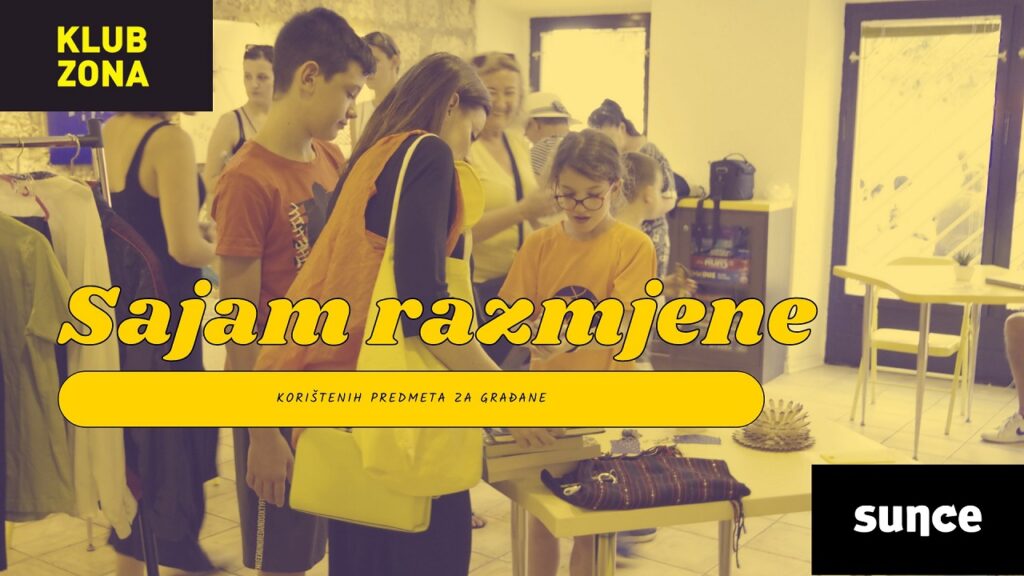
Sunce organizes a Swap Fair every first Tuesday of the month at Klub Zona in Split. Participants can bring up to five well-preserved items and exchange them for vouchers, which can then be used to take other items. This initiative promotes community spirit and sustainable consumption.
Another simple option is giving clothes to friends, family or colleagues. This practice requires no additional cost and encourages shared use of resources within the community.
Disposal of unwearable or damaged clothing
Although this category may seem harder to handle, there are still ways to ensure such textiles don’t end up in mixed waste. They can be taken to recycling yards, textile bins, or repurposed for new uses.
1. Recycling yards
In Split, residents can dispose of textile waste at recycling yards such as Karepovac, Orišac, Pujanke and Kopilica. These facilities allow proper disposal and further processing of textile waste.

Residents who wish to use the recycling yard must contact the facility to learn about waste-acceptance conditions, check the type of waste and confirm that the yard is permitted to receive it.
At the entrance scale, staff collect personal information, weigh the waste, record the type and weight in the Waste generation and flow register, and then direct the person to the appropriate section of the recycling yard.
Users must separate waste by type, property and aggregate state into the correct containers and ensure similar waste types are not mixed. They must also leave the area around the containers clean and tidy.
2. Textile bins
The City of Split has installed mobile recycling units in various locations, including GK Žnjan, Mertojak and Lovret. Citizens are encouraged to place textiles in plastic bags, separated from other materials, to make recycling easier.
3. Repurposing textiles
Damaged clothing can be repurposed for various uses—cleaning cloths, tote bags, or DIY beeswax wraps (fabric food wraps you can make at home). Repairing or repurposing is considered the first step toward achieving a circular economy. This practice encourages creativity and reduces the need to buy new products.

Donate, sell, swap and repurpose
Because of the fast-fashion trend and excessive, often unnecessary shopping, proper disposal of used clothing is crucial for reducing textile waste and protecting the environment. By donating, selling, swapping and repurposing, we manage our clothing sustainably. Local initiatives like Sharing is Caring and the Swap Fair show how community efforts can contribute to a more sustainable future.
So next time you feel like throwing something away—or buying something new—think twice. It’s easy to do the right thing, and it can even be fun!
