In a time of fast consumption and disposable solutions, rediscovering traditional skills has become more than a choice it has become a necessity. Sewing, although increasingly rare in everyday life, offers a practical response to the challenges of modern society, from environmental protection to the development of practical skills. Through needle and thread, we learn patience, develop fine motor skills and creativity, and rethink our own consumer habits. Instead of unnecessary shopping, we create something sustainable, new, and unique. Instead of throwing clothes away and contributing to growing textile waste, we repair them and give them a new purpose. It is from this idea that the ŠIZIKA project was created.
What Is ŠIZIKA?
The name ŠIZIKA is an acronym for Sewing, Patches and Creative Activities (ŠIvanje, Zakrpe i Kreativne Aktivnosti). The project was designed to introduce young people to this useful and increasingly important skill. By participating in sewing workshops, educational sessions on fast fashion, study visits, and volunteering, participants develop practical skills, environmental awareness, and a sense of social responsibility.
ŠIZIKA is a two-year project aligned with the National Youth Programme and funded by the Ministry of Science, Education and Youth. The project is led by Sunce and implemented in partnership with Info Zona, the School of Fine Arts Split, and the Natural Sciences School Split.
“ŠIZIKA shows that sustainability does not have to be an abstract concept. It can begin with a simple patch, a sewn-on button, or a redesigned piece of clothing. This practical skill shows young people that they can create change, for themselves, their community, and the environment,” says Mihaela Mladar, Membership Coordinator at Sunce.
Why is sewing beneficial for young people?
The fast fashion industry has serious consequences for the environment, natural resources, and working conditions. Through the ŠIZIKA project, young people learn to understand this system and actively respond to it. Instead of being passive observers of an industry that encourages excessive consumption, they become active participants in change.
“Special emphasis is placed on mentoring and empowering young people to carry out activities within their communities, as well as involving them in long-term volunteering. Some volunteers will receive additional training to independently lead future workshops, strengthening both their employability and social participation,” explains Mladar.
The sewing workshops are currently led by Renata Botić, a long-time Sunce volunteer.
“I joined the ŠIZIKA project because I wanted to show that sewing is not an ‘outdated’ skill, but a powerful tool for protecting the environment. The project’s goal is clear: reducing the impact of fast fashion through education on textile recycling and reuse. As a workshop leader, I design the sessions to be relaxed and creative. We start with the very basics, from threading a needle to making the first stitches on a sewing machine. The response from young people has been excellent, which makes me especially happy. I can see that they want to move away from mass consumption and are looking for a unique way to express themselves. What fulfils me most is when participants realise that an old pair of jeans or a T-shirt is not waste, but material for creating something new,” shared volunteer Renata.
What does ŠIZIKA look like in practice?
Since the beginning of the project, an introductory workshop on greenwashing and fast fashion, along with one practical sewing basics workshop for students, has been held at the Natural Sciences School Split. The same activities are planned for the School of Fine Arts Split.
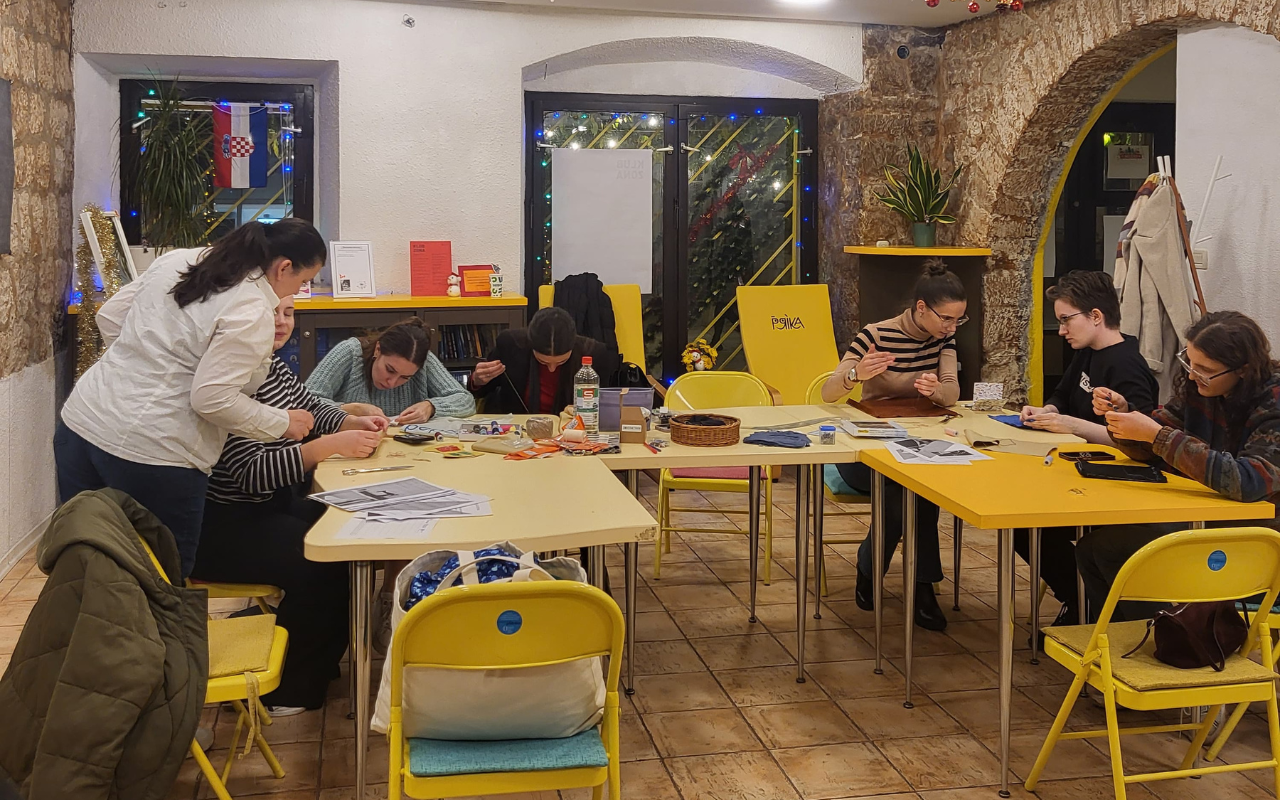
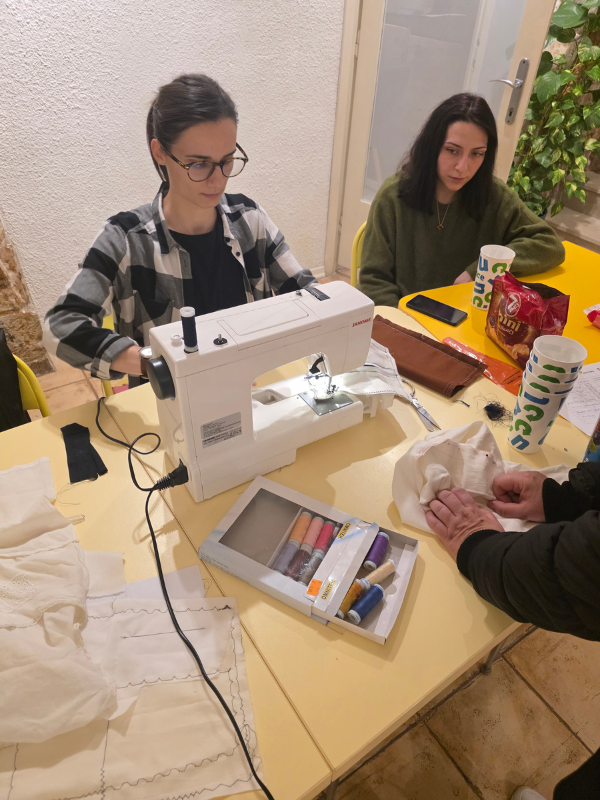
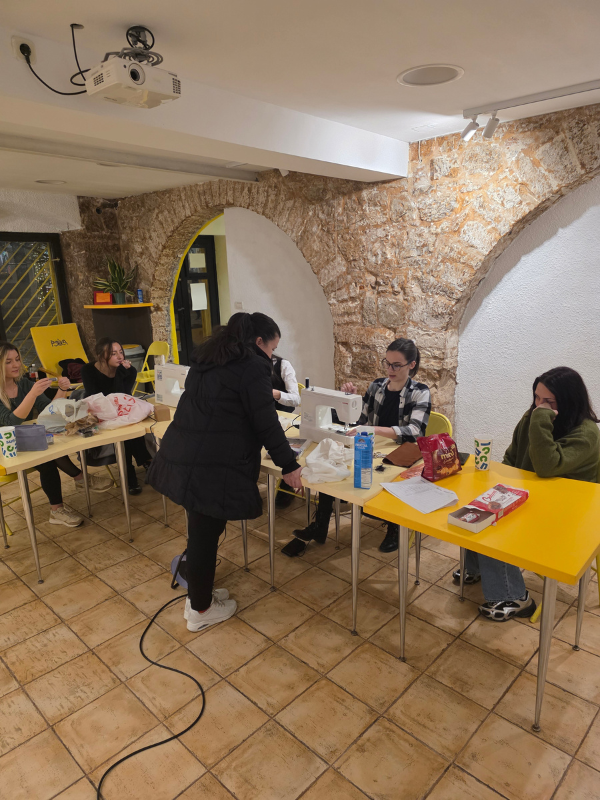
In addition, a total of eight practical workshops for young people have been held at Klub Zona. Under the guidance of experienced volunteer Renata, participants learned about the history of sewing, mending techniques, sewing on buttons and zippers, using a sewing machine, and repurposing old clothing. Over time, participants developed their sewing machine skills, and every completed project reflected their progress and creativity.
“For the second consecutive year, we also marked Fashion Revolution Day, the international day dedicated to combating fast fashion, which aims to promote transparency and socially responsible practices within the fashion industry. The focus was placed on textile waste, one of the biggest sources of pollution in today’s society. This international movement emerged after the Rana Plaza factory disaster in Bangladesh in 2013, when a garment factory in Dhaka collapsed, killing 1,133 workers and injuring another 2,500. It was the deadliest disaster in the history of the garment manufacturing industry,” explains Mladar.
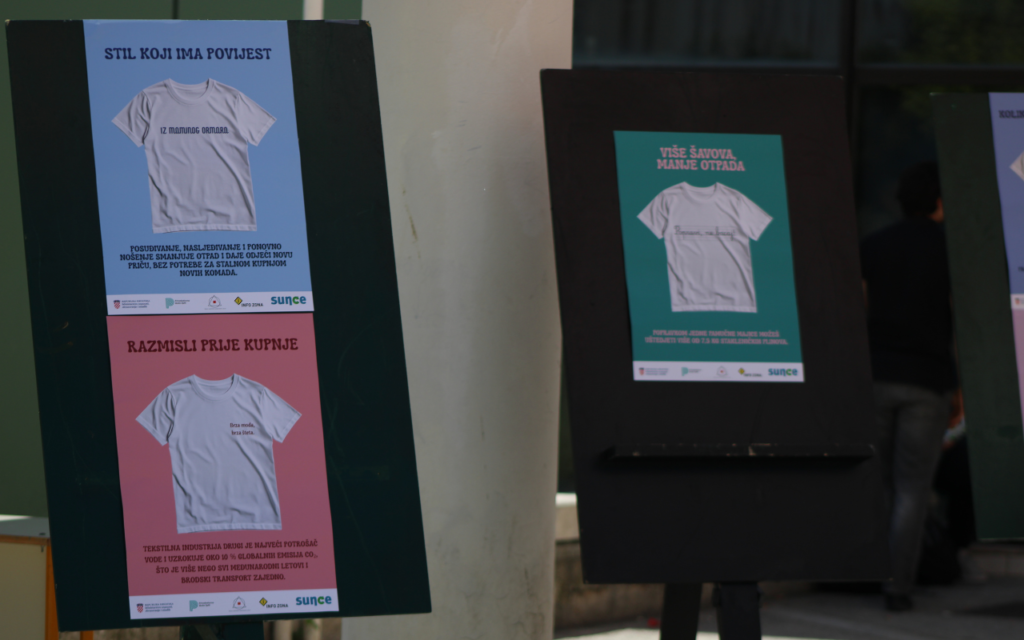
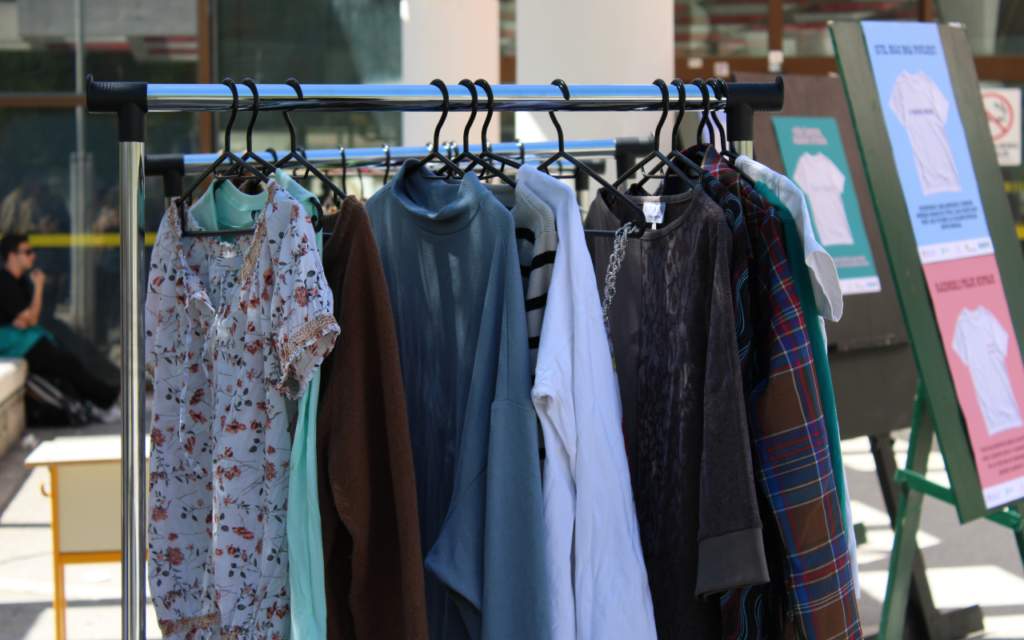
This year, the day was marked with an exhibition of educational posters and a Swap Fair, organised together with students from the Natural Sciences School and the School of Fine Arts. Visitors brought well-preserved clothing and footwear they no longer wore and exchanged them for other items. For each item of clothing or pair of shoes, participants received a voucher that could be used to exchange for another item.
The event also included an educational component, each voucher featured interesting facts about the harmful impacts of the fashion industry, which encouraged conversations among visitors.
What comes next?
In the coming months, students from the Natural Sciences School Split and the School of Fine Arts Split will visit the Galeb textile factory in Omiš. During the study visit, they will learn about textile production processes and discuss sustainability in the textile industry from the manufacturer’s perspective, completing the first year of the project.
After the summer break, a new cycle of sewing workshops for young people will begin at Klub Zona. The workshops will once again start “from scratch,” making them suitable for complete beginners with no sewing experience. Follow Sunce’s social media channels, where registration for the workshops will be announced.
