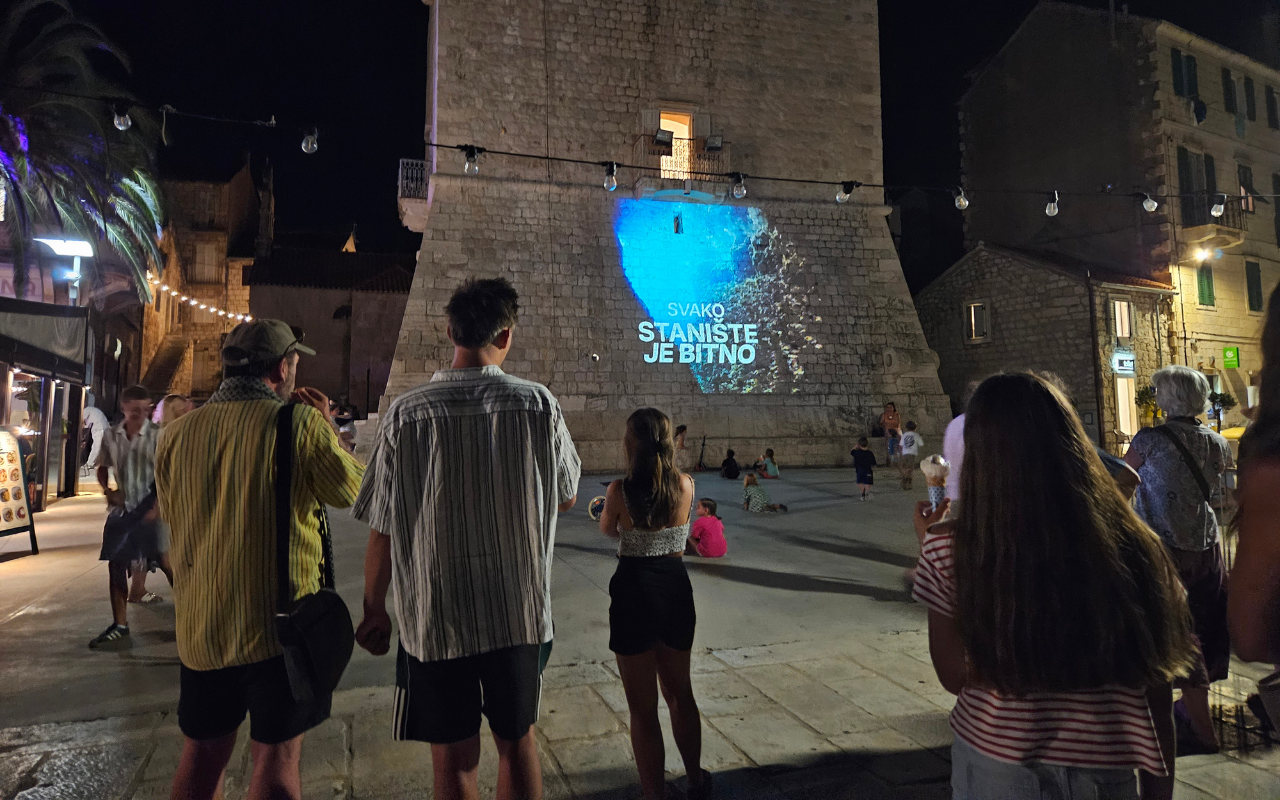
When we talk about nature conservation, we often start from the assumption that adults should educate children. However, the evening of light projections on the facade of the Fishermen’s Museum in Komiža showed exactly the opposite. Through their interest, questions, and curiosity, children often become the best teachers of adults.
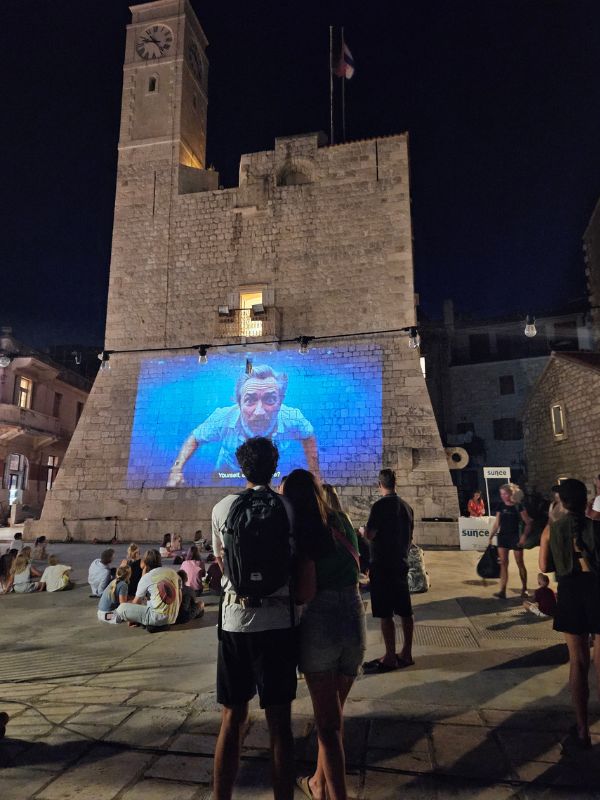
On Thursday evening, the facade of Komuna was transformed into a large open air cinema under the stars. The projections Adriatic Treasures and Voice of the Sea – Posidonia oceanica, created as part of the ASPEH and BIOPRESSADRIA projects, attracted numerous island residents and visitors. Yet it was the youngest visitors who truly marked the entire evening.
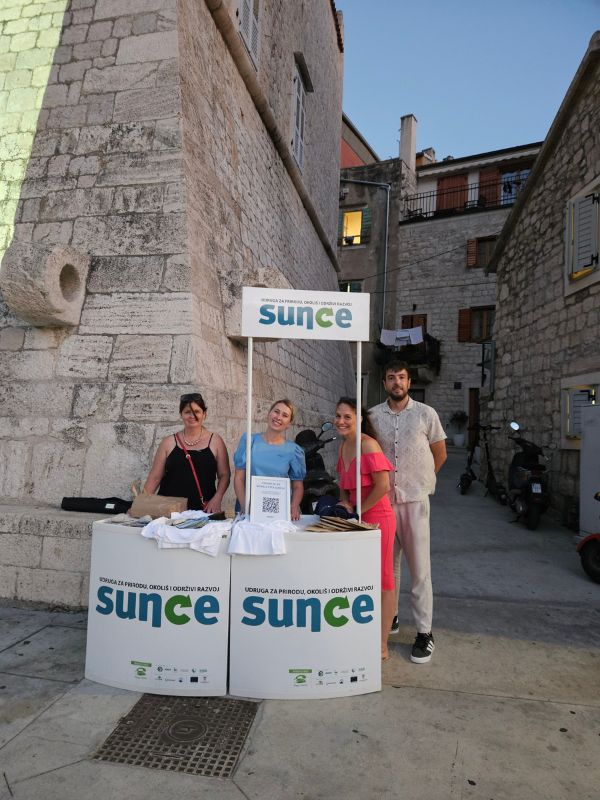
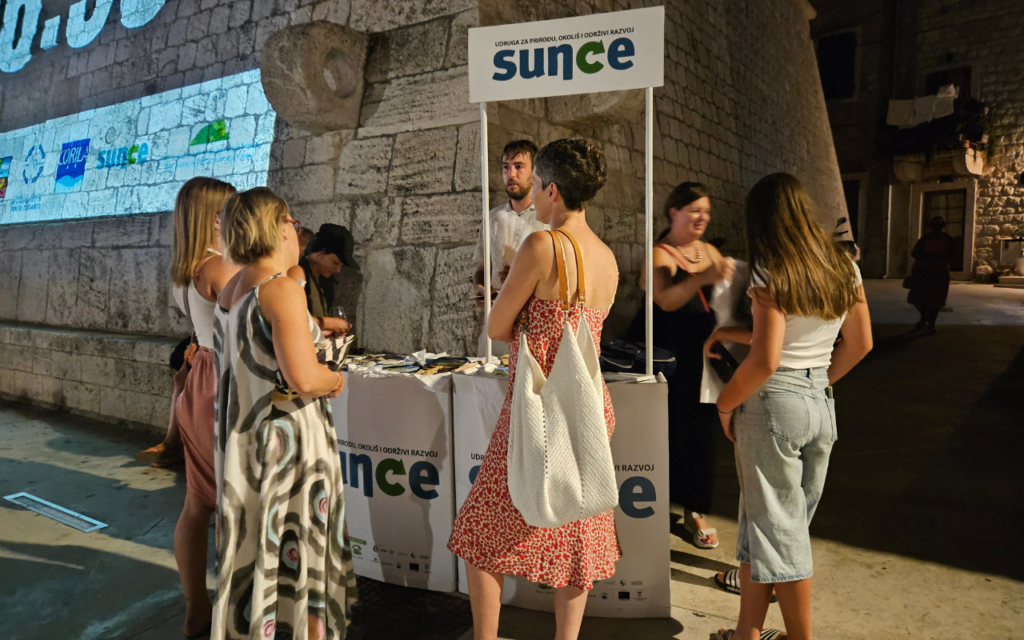
“Children of all ages watched the projection, some of them even several times! Many of them spontaneously sat down on the ground in front of the Fishermen’s Museum together with their parents and, like in a real cinema, became completely immersed in the stories about seagrass meadows, caves, loggerhead turtles, and other inhabitants and habitats of the Adriatic. After the screening, they would often run to the Sunce association’s stand and bombard the Sunce team with questions about the projection,” said Vida Zrnčić, ASPEH project manager at Sunce.
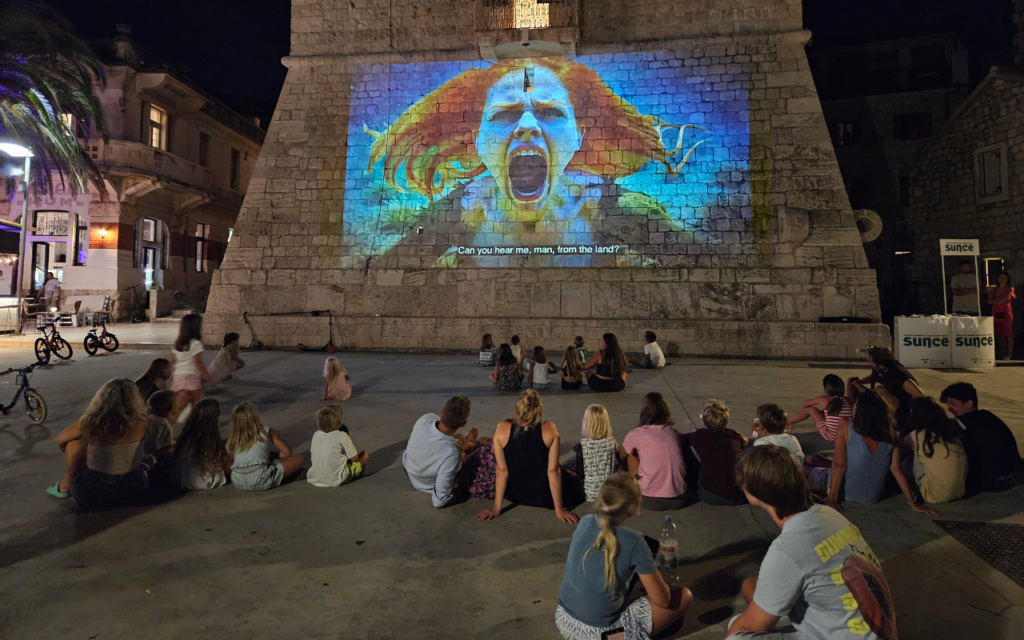
And there was no shortage of questions.
“Education is not a one way process”
“Do we help posidonia if we don’t throw plastic into the sea?”
“Do so many animals really live in posidonia?”
“Do you have another fan?”
These were just some of the questions asked by the youngest visitors during the evening.
The enthusiasm of some of the older primary school students was particularly encouraging.
“We know what posidonia is; we learned about it at school. But we didn’t know that it was so important for the entire sea and that a single anchor can cause so much damage,” commented one seventh-grade student after the projection.
Conversations like these showed how important it is to give children the opportunity to see and experience what they learn in the classroom in a different way. When knowledge is accompanied by images, sound, and emotion, it stays with us much longer.
“Events like this remind us that education is not a one-way process. Children are not just an audience to whom we pass on information. Their questions, reactions, and excitement remind us adults how important it is to remain curious and how much more we can learn by looking at the sea through their eyes,” emphasized Filip Martinić, assistant in the nature protection department at Sunce.
More than an artistic experience
Interest was not limited only to the youngest visitors. During the installation of the projection, many passers-by stopped to ask what was happening on the facade of the Fishermen’s Museum.
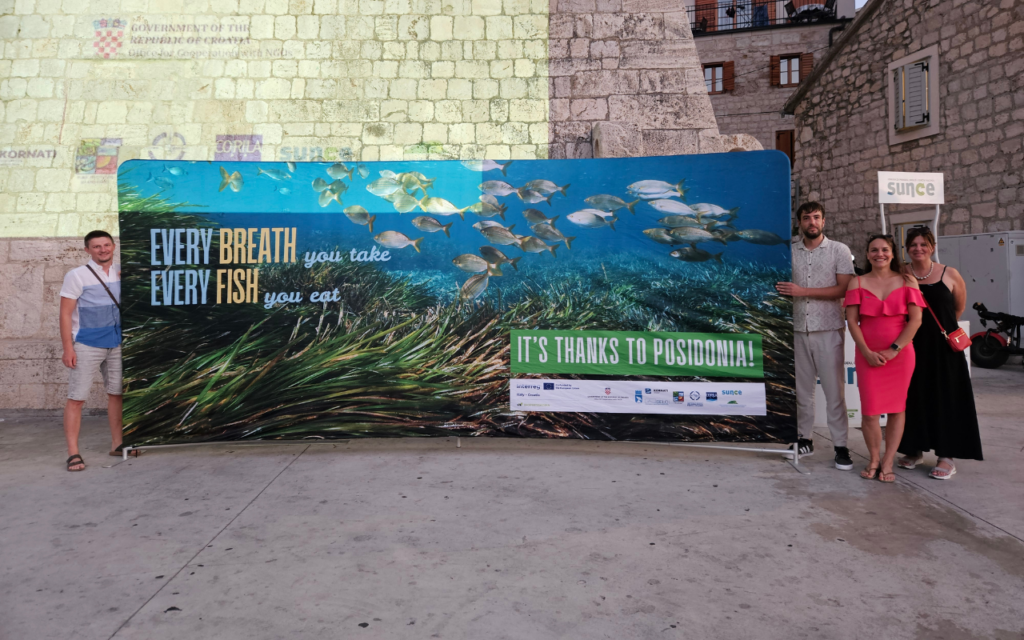
Technician Ante Šmit, who was responsible for setting up the projection, said that he repeatedly explained to passers-by what they were watching throughout the evening.
“People kept asking me what it was about, so I started telling them about posidonia and why it is so important. Honestly, I wasn’t very familiar with this topic myself until I became involved in this collaboration with Sunce. It was clear that many people were hearing for the first time how valuable these meadows are and how easily they can be destroyed by irresponsible anchoring. I think projections like this should be shown in all places in the Adriatic that are under significant pressure from nautical tourism. That is exactly where they can have the greatest impact,” he said.
That was also the main message of the evening. The projections were not merely an artistic experience, but an opportunity to talk about the sea in a different way: outside classrooms, conference halls, and professional gatherings. In a place where the sea lives side by side with people every day.

What are the alternatives?
Alongside questions about posidonia, visitors were also interested in what they could do to protect marine caves, beaches, and the animals that live there.
“The first step is changing our perspective. We explained that the sea is not a space that belongs to us and that we use only during summer for entertainment, but a home to many species, and we are only guests there,” said Zrnčić.
One concrete solution for protecting posidonia meadows and, consequently, the many species that find shelter, breeding grounds, and nursery areas within them are ecological mooring systems. Unlike traditional anchoring systems, they allow vessels to moor safely without damaging the seabed and sensitive posidonia meadows, which recover extremely slowly after damage. This is why they are increasingly recognized as an important tool for reducing pressure on the most valuable marine habitats, especially in areas experiencing intense nautical tourism.
Everything begins with a child’s “why?”
In addition to Sunce, the City of Komiža and the Tourist board of the city of Komiža also participated in organizing the event. The Tourist Board emphasized that the audience’s reactions demonstrated the value of such programs.
“The projection presented the importance of posidonia and marine protection in a very clear, interesting, and accessible way, even to the youngest viewers. Programs like this make a significant contribution to the local community because, through the education of both children and adults, they encourage a more responsible relationship with the sea and the natural wealth that surrounds us,” said the Tourist Board of the City of Komiža.
As images of underwater meadows, marine caves, and their inhabitants changed across the wall of Komuna, it became clear that protecting the sea begins with understanding. And understanding often begins with a child’s question: “Why?”
“The most important lesson of the evening did not come from the stage, but from children’s questions. Children showed that they are ready to learn, but also to remind all of us why the sea is worth protecting. Sometimes it is enough simply to stop, listen to their questions, and allow them to change the way we look at the sea,” concluded Martinić.
