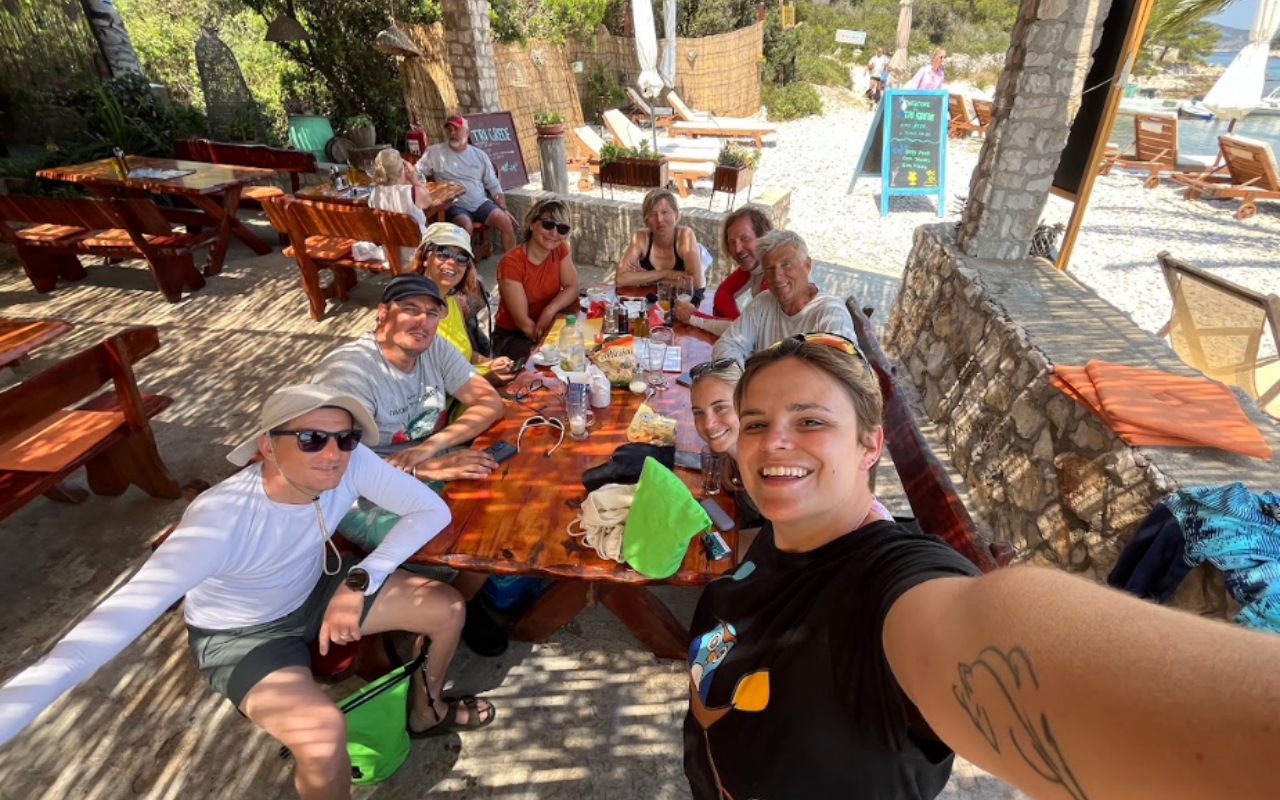
Beneath the surface of the sea lie entire worlds that we rarely have the opportunity to see. Among them are marine reefs, one of the most valuable yet most sensitive habitats in the Adriatic.
With summer upon us, the Sunce diving team also carried out its first field survey of the year. This time, we went diving in the Pakleni Islands, where we began monitoring marine reefs with the aim of collecting data that will allow us to track their condition over time.
Our partners from the Public Institution More i krš and scientist and long-time marine reef researcher Silvija Kipson joined us in the field. Together, we collected data that will serve as a baseline for monitoring the condition of these valuable habitats before the establishment of a strict protection zone. And what did this entire process look like? Find out below.
What does a day in the field look like?
The day starts early, at around 6:30 a.m. Before setting sail, we prepare the diving equipment, as well as all the gear needed to work underwater: underwater slates for recording data, measuring tapes for transects, rulers, calipers for measuring sea urchins, and photo and video equipment.
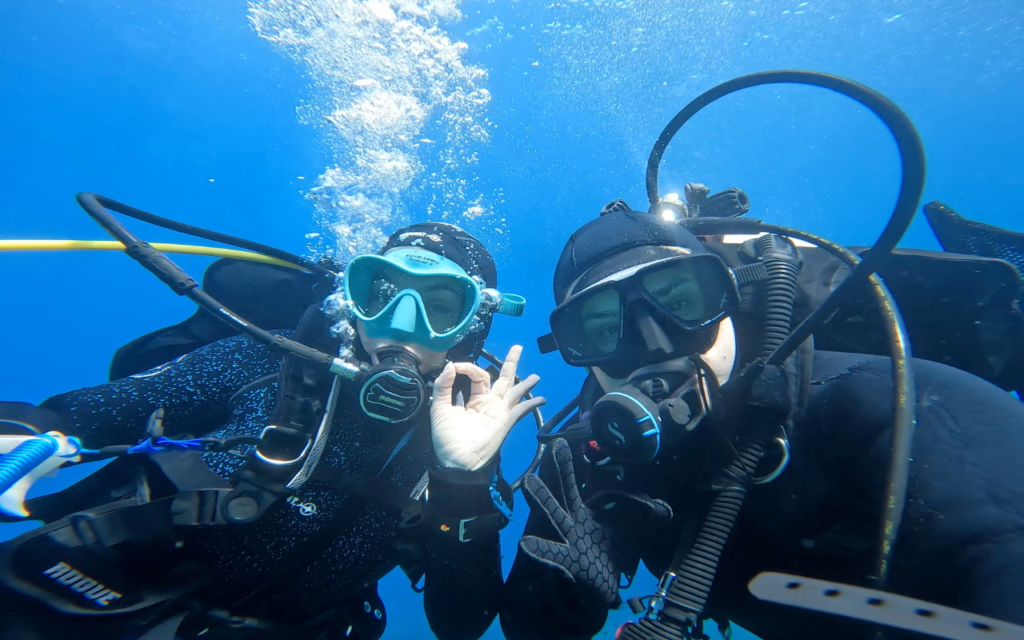
Over the course of six days, we completed a total of twelve dives. The first dive of each day was the deepest, reaching depths of up to 40 metres, where we monitored the condition of gorgonian colonies on coralligenous reefs. Descending to a depth of 40 metres is always a special experience. With every metre, the sea becomes quieter, the light fades, and the temperature drops noticeably.
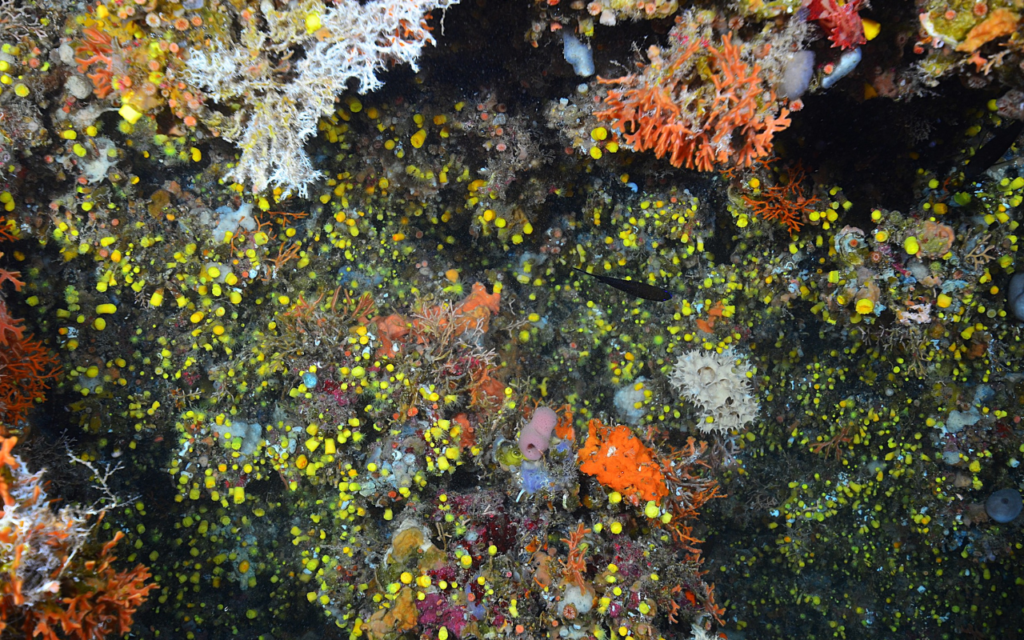
Slowly, the outlines of the reef and the first gorgonian colonies begin to emerge from the blue. That is when the work begins: photographing each colony and recording its height and degree of damage. Every movement has to be deliberate, as one careless fin kick or accidental contact with equipment can damage these sensitive organisms. The second dive took place at shallower depths, where we studied infralittoral reefs. There, we recorded fish species, measured sea urchins, estimated the cover of algae and other organisms, and filmed transects that will help us analyse the condition of the reefs in greater detail.
Fieldwork is not always easy. After several days of early mornings, two dives a day and hours spent in the sun, fatigue gradually began to set in. One morning, we headed towards the site feeling somewhat sluggish, but the sea had other plans. As soon as we arrived, we were greeted by two dolphins. Within moments, the fatigue and sleepiness were gone, everyone was wide awake, our mood completely changed, and the day got off to a much better start.
Gorgonians – silent witnesses to changes in the sea
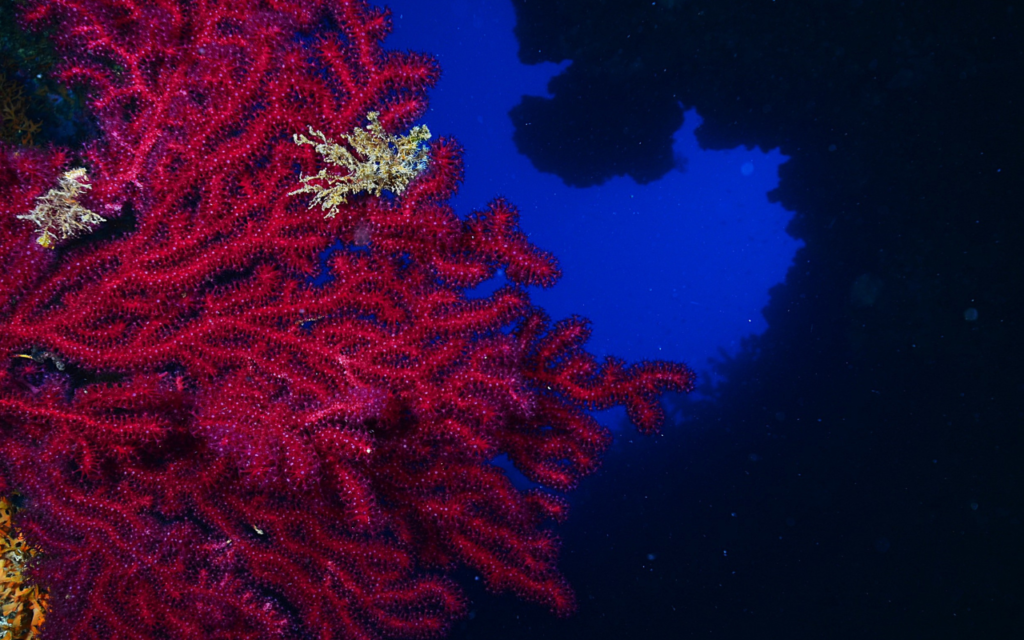
The depths, hidden and inaccessible to most people, are home to organisms that take the breath away of anyone lucky enough to see them. Among them are gorgonians (Paramuricea clavata and Eunicella cavolini), branching colonial animals that resemble underwater trees. Their colonies provide shelter and habitat for numerous other organisms and are an important part of coralligenous reefs.
In recent years, the conditions in which they live have become increasingly challenging. More frequent marine heatwaves have been associated with gorgonian mortality events recorded in many areas of the Mediterranean, including the Adriatic Sea.
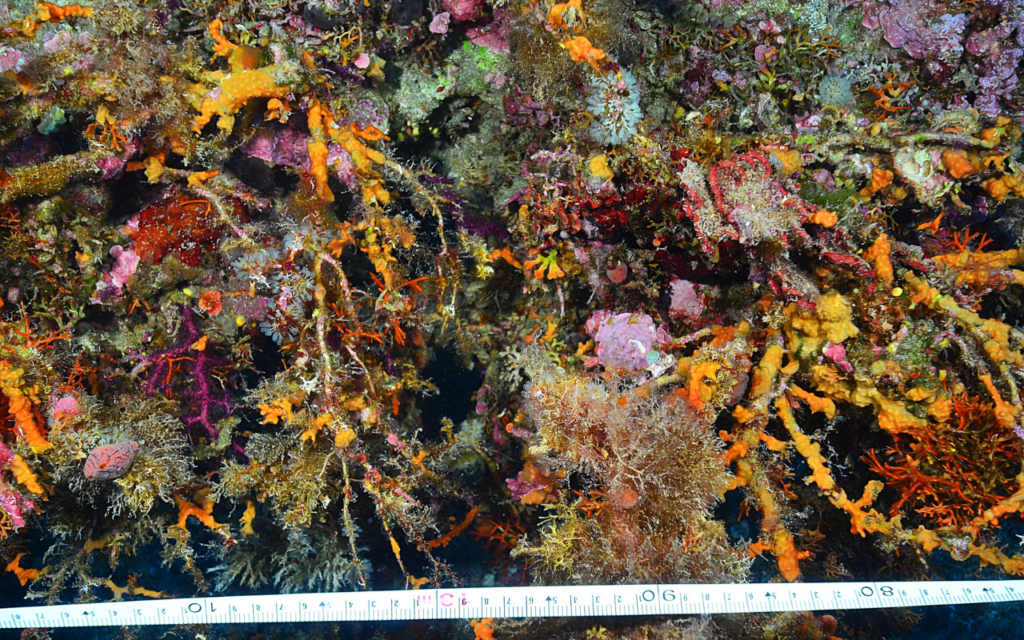
In the field, we saw that the impacts of heatwaves have not spared this area either. Signs of damage and branch mortality were visible on some colonies. Fortunately, however, we also encountered healthy gorgonians, offering hope and reaffirming how important it is to continue monitoring their condition.
What do we monitor on the reefs?
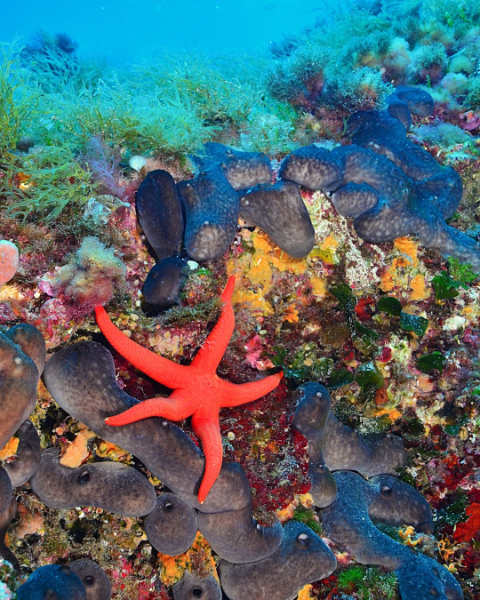
In addition to gorgonians, we monitored the populations of two sea urchin species (Arbacia lixula and Paracentrotus lividus). Their relative abundance can provide valuable information about changes in the environment. While the former species is better adapted to warmer waters, the latter is more characteristic of colder conditions.
During the monitoring, we laid out transects along which we recorded every individual, identified its species, and measured its diameter using calipers. At the same time, we conducted visual fish censuses and estimated the cover of algae and other organisms that make up the reef community. This allowed us to obtain a more comprehensive picture of the condition of the entire ecosystem.
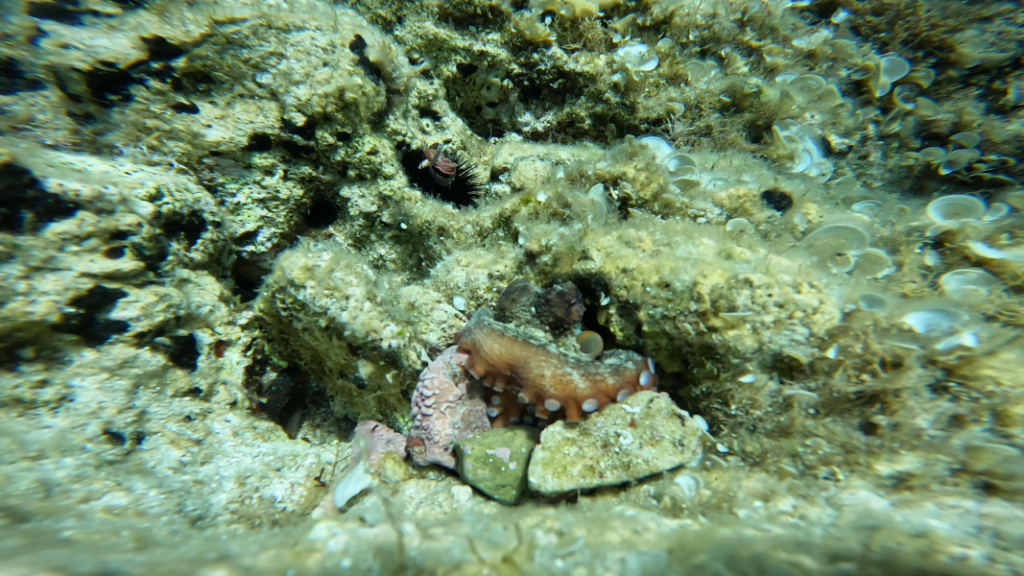
And while we were measuring sea urchins and recording data, we suddenly noticed two large eyes watching us from a small crevice among the rocks. It was an octopus that seemed to be just as curious about us as we were about it. For several minutes, it cautiously peered out of its hiding place, as if trying to figure out what we were doing, before retreating among the rocks once again. Moments like these always bring a smile and remind us that we are only temporary guests in the underwater world.
Why are marine reefs important?
Although most people will never see them, marine reefs are true underwater cities. Their rocky surfaces are home to numerous algae, sponges, corals, molluscs, crustaceans and fish that find shelter, food and places to reproduce there.
This remarkable biodiversity makes them one of the most valuable habitats in the Adriatic, but at the same time, they are also highly sensitive ecosystems. Climate change, rising sea temperatures, anchoring and other human activities are leaving their mark on these valuable habitats.
That is precisely why it is important to monitor their condition regularly, so that we can detect changes in time and plan effective conservation measures.
The work does not end when we leave the sea
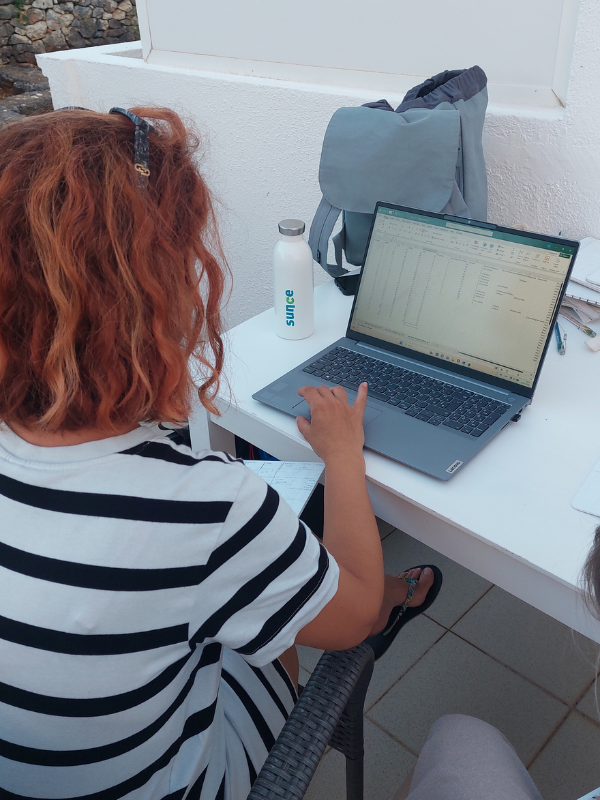
When we finish diving, the work is far from over. Once back on land, we rinse and store the equipment, review photographs and video footage, and enter all the data collected during the dives. Every measurement, every photograph and every recorded species is one piece of a much larger puzzle that will help us understand how marine reefs change over time.
The monitoring we are carrying out is part of the activities of the The MedFund – Support for the Establishment of a Marine Protected Area in the Pakleni Islands project. The project aims to establish the baseline condition of the reefs in the Pakleni Islands before the establishment of a strict protection zone and to develop a long-term monitoring programme for their condition.
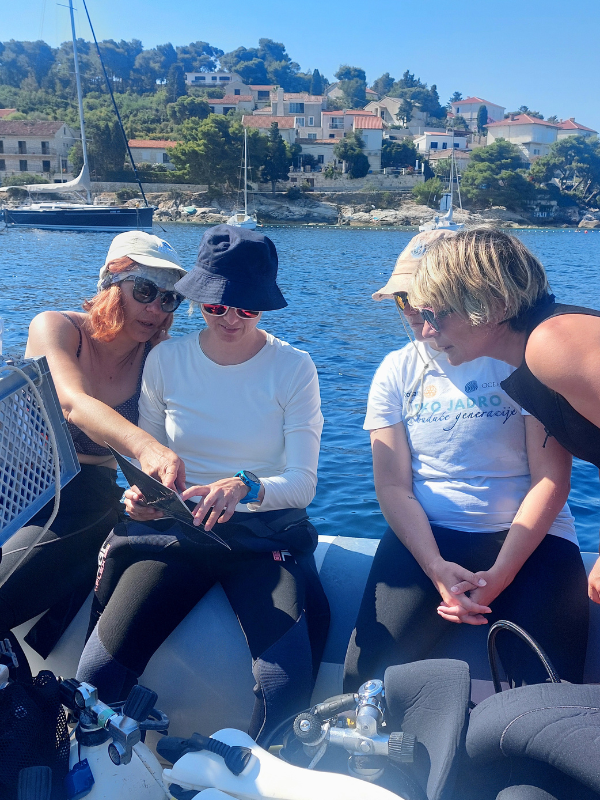
The data collected will provide a foundation for future reef monitoring and assessing the effectiveness of conservation measures. It will help us better understand how climate change and human activities are affecting one of the most valuable habitats in our sea.
Although the days in the field are long and demanding, every dive brings a new insight and yet another reason why protecting our marine reefs is so important.
Cover photo: Tonka Dujmović