In a time of rapid technological development and increasingly pressing challenges related to the environment, climate change, and sustainable development, scientific literacy is becoming one of the key competencies of the future. Research shows that children who develop an interest in science, technology, engineering, and mathematics (STEM) from an early age are better equipped to understand the world around them, develop critical thinking skills, and acquire the competencies needed to actively participate in modern society.
Particular emphasis is placed on introducing science to children in an engaging, practical, and interactive way. When a child reaches conclusions through experiments, workshops, or investigative activities, knowledge is not acquired as a dry piece of information but becomes a lasting experience. Such an approach fosters curiosity, creativity, and independent thinking.
Parents as the First Promoters of Scientific Thinking
Children are often described as “born scientists” because they naturally explore, ask questions, and experiment in order to understand the world around them. Everyday situations, such as a child observing liquid evaporating while a parent is cooking, demonstrate how curiosity naturally leads to investigation.
However, scientific literacy is not an innate skill; it is developed through learning. It includes the ability to ask questions, seek answers, and understand information and evaluate its reliability. In today’s digital environment, where information is abundant and often unverified, this skill is especially important. Children should be encouraged to consider the reliability of information sources by asking who created the information, when, where, and for what purpose it was shared.
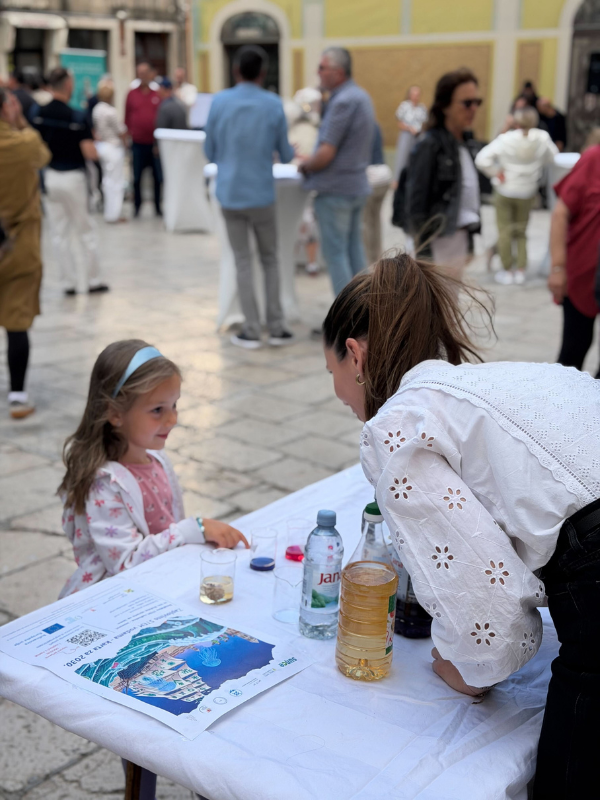
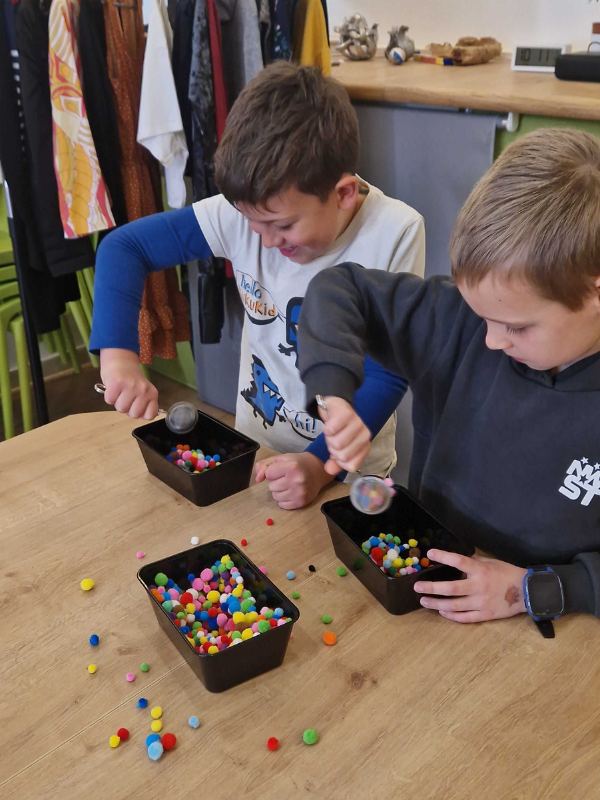
Parents play a crucial role in this process. Through play, conversation, and everyday activities, they can encourage the development of scientific ways of thinking. Activities such as cooking, exploring light and shadows, or building structures can become opportunities to learn basic scientific concepts. This approach promotes critical thinking, problem-solving, and curiosity-driven questioning.
How Can Science Be Brought Closer to Children?
Experts emphasize that parents do not need to be scientific experts to introduce science to their children. It is enough to transform everyday situations into small moments of discovery. Explaining everyday phenomena and encouraging children to observe their surroundings are key steps in developing scientific literacy.
Children can be offered simple activities that involve experimentation, discussion, and exploration. Through play and everyday experiences, basic scientific concepts can be introduced while helping children better understand the world around them.
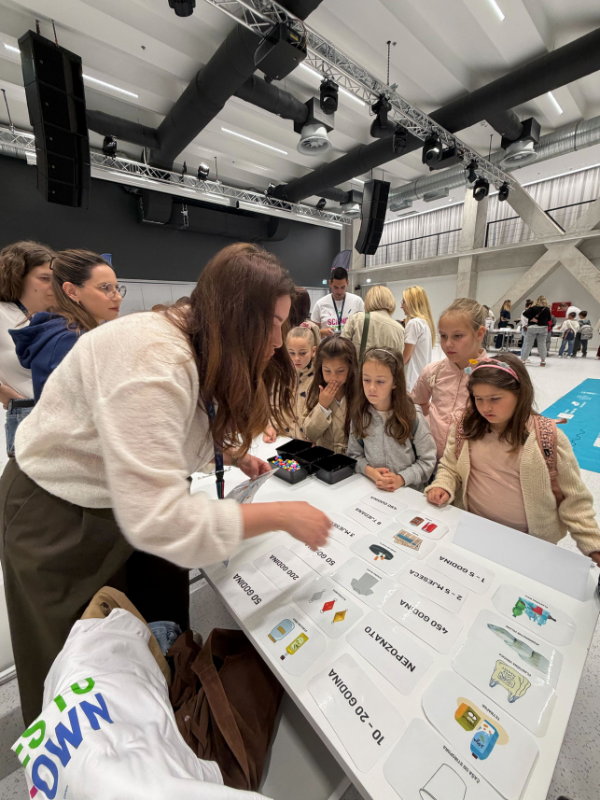
Examples of Activities Include:
- Hands-on experimentation:
Children can investigate which objects sink and which float by testing different items in water, introducing the concept of buoyancy. They can also observe how ice melts under the influence of salt, heat, or sunlight. - Vocabulary development:
Using comparisons such as big–small, rough–smooth, or hot–cold helps children develop observation and descriptive skills. Describing actions with scientific terms further strengthens understanding (e.g., “You pushed the cart with a great force.”). - Open-ended questions:
Questions such as “What do you think will happen if we mix these colors?”, “Why do you think that will happen?”, “How do you think it will happen?”, or “If we add or remove something, will it change the outcome?” encourage prediction, analysis, and critical thinking. - Observation tools:
Introducing simple measuring tools such as magnifying glasses, rulers, or thermometers helps children develop observation and investigation skills. - Learning through nature:
Observing the changing seasons, taking nature walks, and collecting natural materials enable children to better understand the environment and the changes that occur within it.
The STEM Approach and Environmental Challenges
As we face the reality of warming seas and increasingly polluted rivers, the need for knowledge and innovation becomes ever greater. Future generations will be the ones confronting these challenges and seeking science-based solutions.
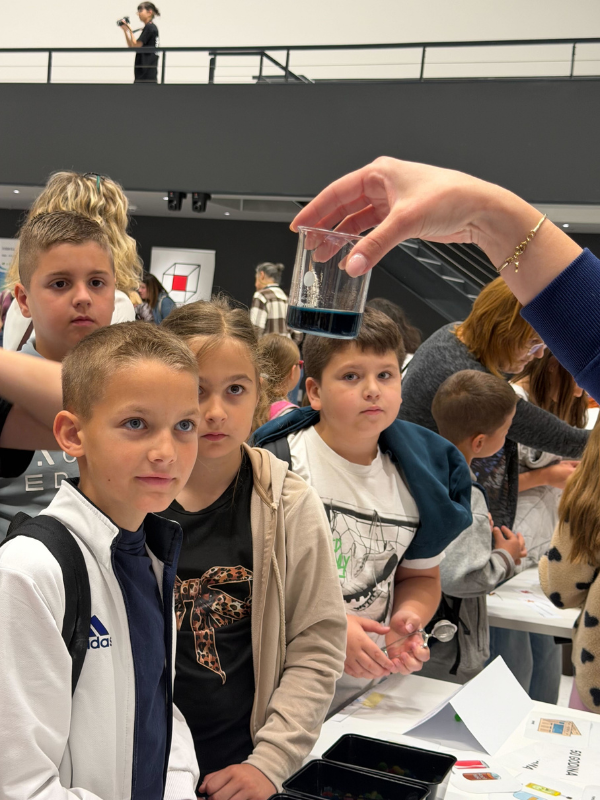
In this context, the project “Let’s Sail Through STEM Waters – A Ticket to 2030” was launched to introduce children to natural sciences through interactive workshops and public events. Topics such as marine litter, eutrophication, coastal land reclamation, and ocean acidification are transformed into opportunities for exploration and experiential learning.
Learning Through Experience and Understanding Misconceptions
During the learning process, children often develop so-called misconceptions – incorrect or incomplete understandings of scientific phenomena. These are a natural part of learning, as children attempt to explain the world based on their own experiences.
For example, when discussing microplastics, children often believe that plastic completely disappears, when in reality it breaks down into tiny particles that remain in the environment. Similarly, students often fail to connect increased atmospheric CO₂ concentrations and global warming with ocean acidification, and may not understand how changes in the atmosphere can affect marine life.
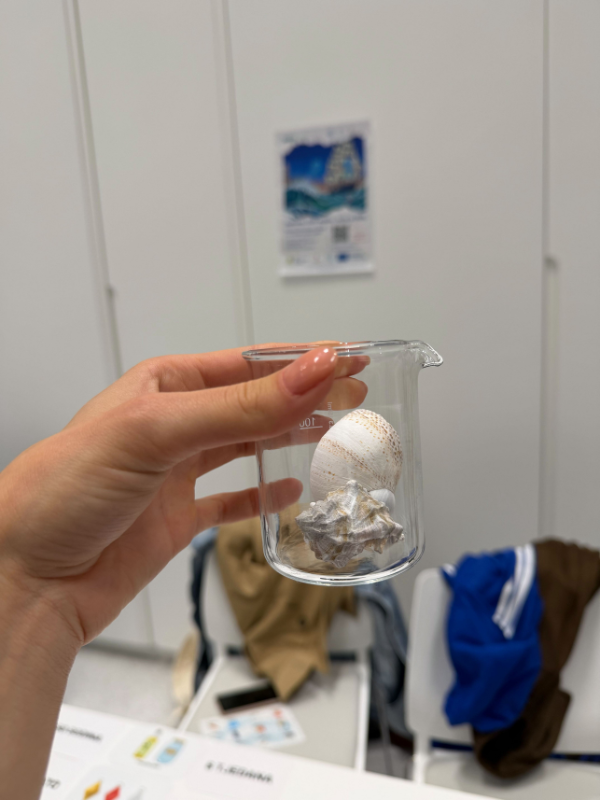
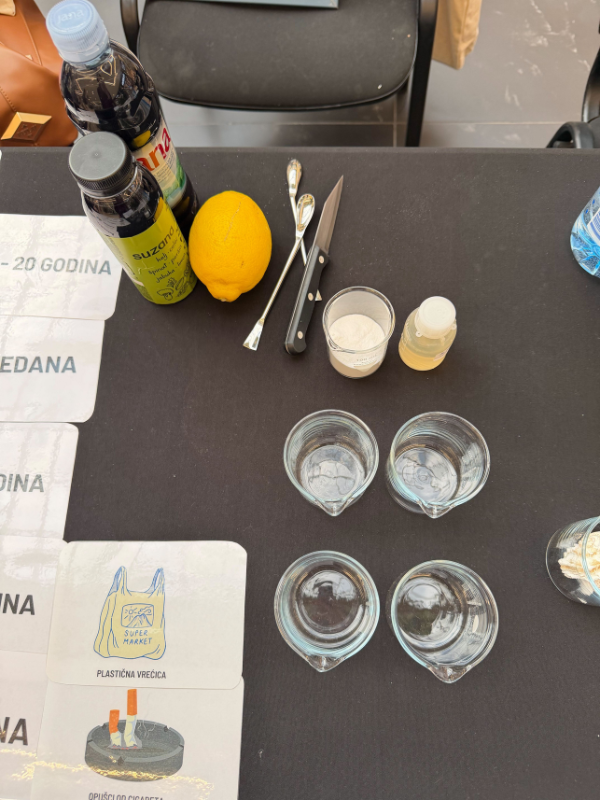
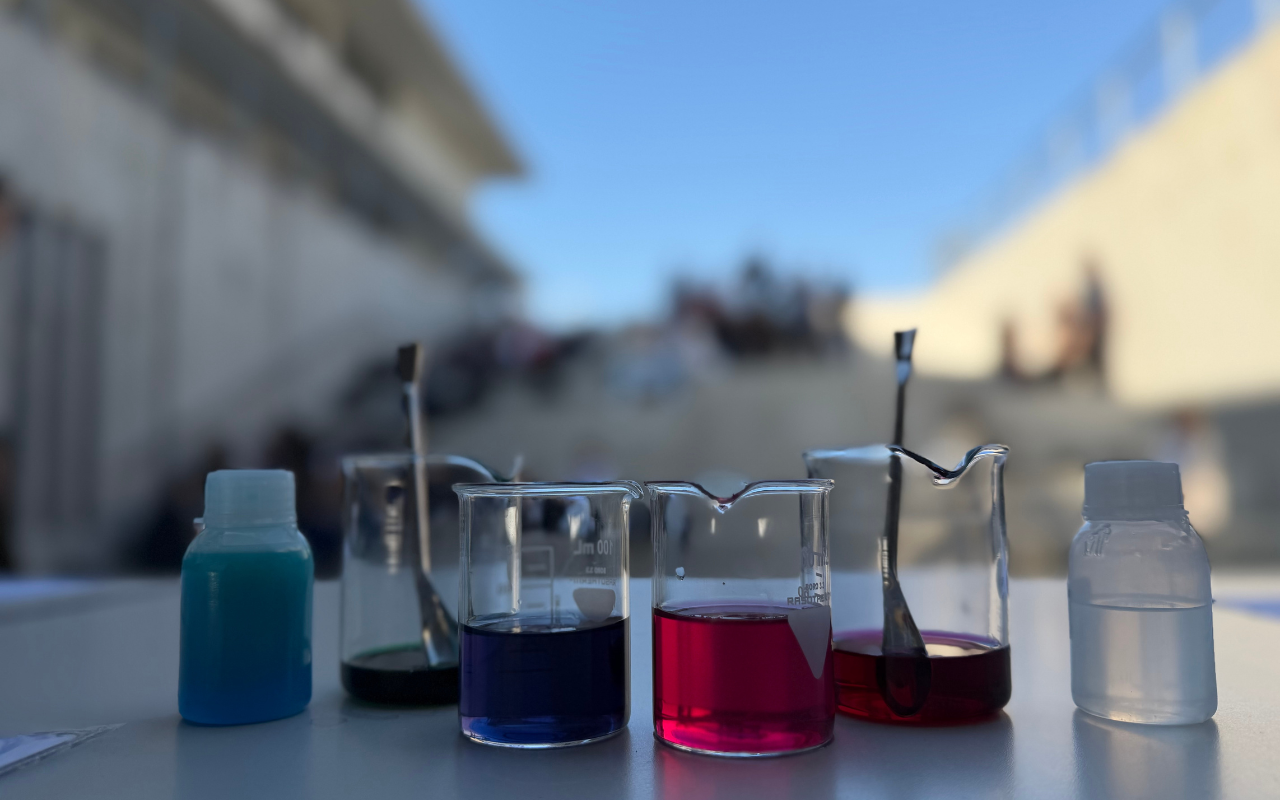
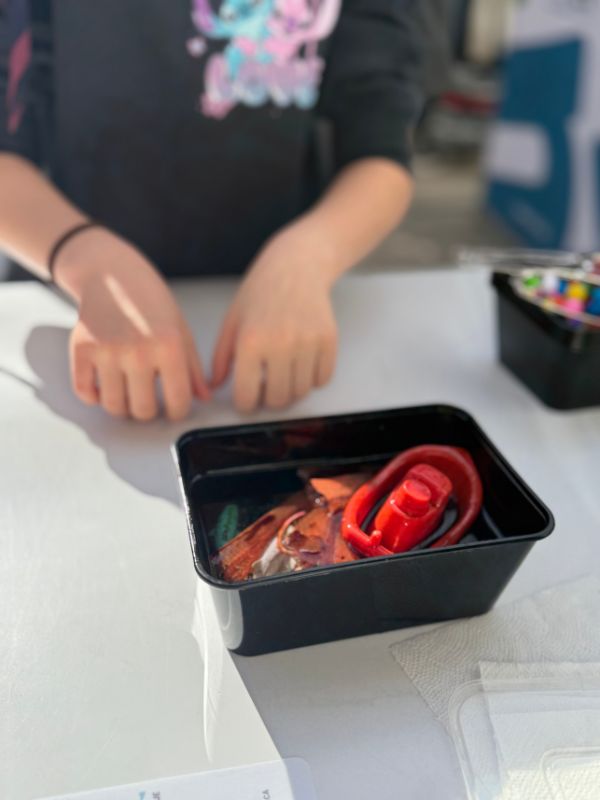
To help students overcome such misconceptions, we use simple experiments and examples from everyday life. One example involves observing a seashell immersed in vinegar. Over time, students notice that the shell’s surface changes and gradually dissolves due to the acid. Through this activity, they more easily understand how increased ocean acidity can affect organisms that build their shells and skeletons from calcium carbonate, such as shellfish and corals. In this way, scientific concepts become more concrete and connected to real environmental issues.
Scientific Literacy as the Foundation of a Responsible Society
Experiential learning encourages the development of critical thinking, questioning, and a deeper understanding of natural processes. Scientific literacy is not only about knowing facts; it is also about understanding the world, making informed decisions, and recognizing reliable information.
By developing these skills from an early age, children become more aware of their role in environmental protection and better prepared to face the challenges of the future.
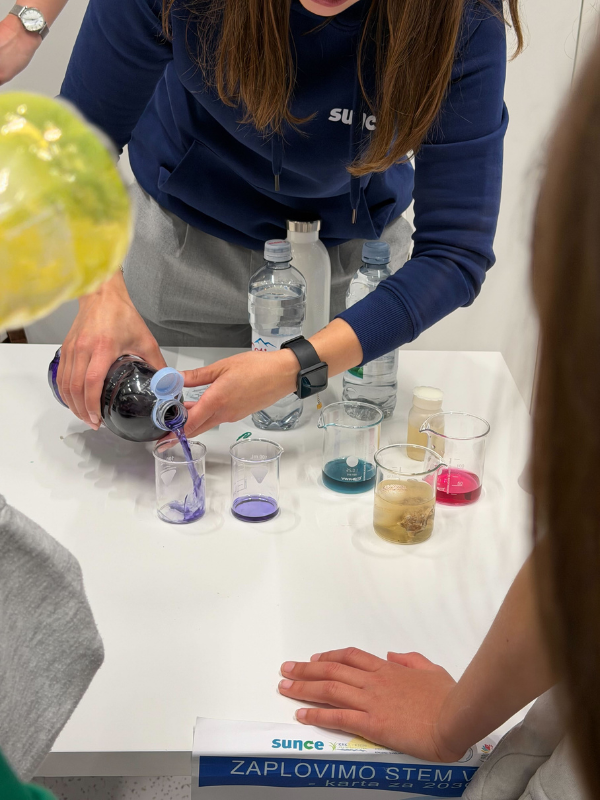

This project is implemented with financial support from the European Union through the European Social Fund Plus (ESF+), within the programme “Effective Human Resources 2021–2027.” It is carried out under the Call for Proposals “Strengthening the Capacity of Civil Society Organizations for the Promotion of STEM,” with the aim of enhancing the capacities of civil society organizations to develop and implement educational activities in the fields of science, technology, engineering, and mathematics (STEM).
The views and opinions expressed are solely those of the author and do not necessarily reflect the official views of the European Union or the European Commission. Neither the European Union nor the European Commission can be held responsible for them.
This project is co-financed by the Government Office for Cooperation with NGOs of the Republic of Croatia. The views expressed in this material are the sole responsibility of SUNCE and do not necessarily reflect the views of the Government Office for Cooperation with NGOs of the Republic of Croatia.