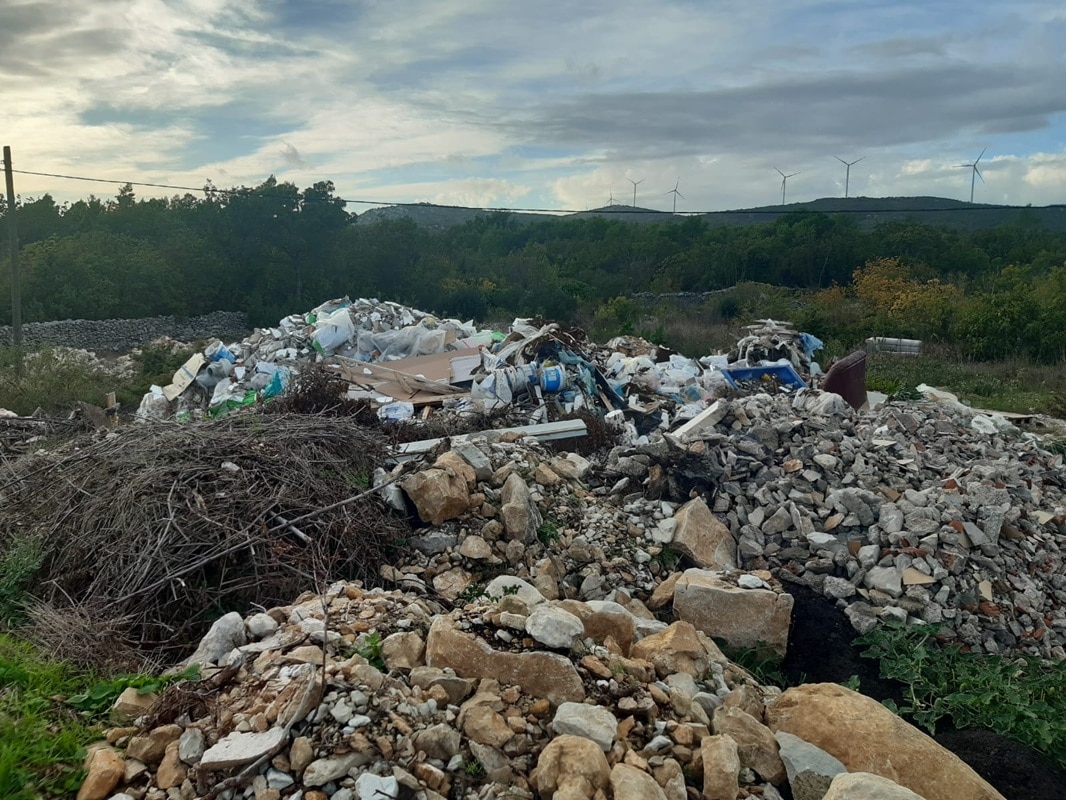
Waste management in Split-Dalmatia County has been one of the most serious environmental and public health issues for years. The Waste Management Plan of Split-Dalmatia County (WMP SDC), currently open for public consultation until December 20, 2025, was meant to be a key document for establishing a sustainable, efficient, and fair system. Instead, the proposed plan fails to address existing problems, lacks concrete measures, and does not ensure enforcement of the law, while waste volumes continue to grow and environmental and health risks to citizens increase.
A waste management system that has failed
With the entry into force of the new Waste Management Act in 2020, the obligation for cities and municipalities to adopt their own waste management plans was abolished. Responsibility for system planning was shifted to the counties, which must develop county-level plans aligned with the national Waste Management Plan of Croatia. The goal of this approach was to ensure more efficient coordination and sustainable waste management at the regional level, but practice has shown otherwise. The shortcomings of this approach are particularly evident in the case of the Split-Dalmatia County Waste Management Plan (WMP SDC).
The WMP SDC is being adopted with significant delay and in a manner that calls its purpose into question. The Plan is being implemented retroactively, as its defined period runs from 2024 to 2029, even though the second year of this period is already underway at the time of public consultation. According to the Waste Management Act, county plans should have been adopted by January 1, 2024, at the latest. Split-Dalmatia County cites the adoption of the National Waste Management Plan in July 2023 as the reason for the delay, which cannot justify nearly two years of delay, especially not a document that contains no concrete or actionable solutions.

A plan without concrete measures or practical value
Despite the delay, the WMP SDC does not establish clear measures for organizing responsible and sustainable waste management across the county. For key areas, such as waste prevention and reuse, the Plan provides neither concrete activities, projects, nor financial investments, reducing its content to general recommendations and the creation of additional plans. This approach further delays the implementation of measures that are already legally required and highlights a lack of real political and institutional accountability.
The Waste Management Act clearly specifies the content a county plan must include, such as defined measures, timelines, responsible parties, and methods for monitoring implementation. Nothing prevented Split-Dalmatia County from starting the plan on time, engaging cities, municipalities, utility companies, and other relevant stakeholders in a participatory process, and beginning to address the chaotic state of waste management that has persisted in the county for years.
Unrealistic goals for separate waste collection
Legal obligations regarding separate collection and recovery of municipal waste are very clear. According to the Waste Management Act and the National Waste Management Plan, Croatia must recover at least 55% of municipal waste by 2025 through recycling and preparation for reuse, 60% by 2030, and 65% by 2035. These same targets are included in the WMP SDC, yet the plan’s own data show that these goals are currently unattainable.
According to the WMP SDC, only 12% of municipal waste in Split-Dalmatia County was recovered in 2024 which is far from the required targets. Meanwhile, the planned capacity of the Lećevica Waste Management Center for mechanical processing is 110,000 tons per year, while the amount of disposed waste in the county in 2024 was 162,066 tons. The total annual waste generated in the county is 187,246 tons, showing a clear mismatch between the waste intended for processing at the Lećevica Center and its actual capacity (LINK).

The Plan does not explain how cities and municipalities will ensure at least 41% of waste, approximately 77,246 tons per year, is separated, or how the remaining waste will be systematically and safely directed to the Lećevica Center. Instead of solutions, the plan leaves many questions unanswered.
Outdated data and lack of real analysis
The WMP SDC contains a large amount of data but lacks real analysis or interpretation. In many cases, data up to five years old are used not to assess trends but merely to present the current situation. For some important waste management categories – such as textiles, packaging, tires, used oils, batteries, end-of-life vehicles, medical, and hazardous waste – there are no reliable or complete data.
The plan does not address the reasons why waste goes unreported, nor does it propose tools or measures to improve this situation in the future. Instead of systematic solutions, the document is largely descriptive and normative, with little practical planning value and no means to monitor the effectiveness of proposed measures.
Shifting responsibility to citizens and financial implications
In multiple parts, the Plan shifts responsibility for a non-functional waste management system onto citizens, emphasizing low environmental awareness and the need for additional education. This approach ignores the fact that citizen education alone cannot be effective without a functioning sustainable waste system and is often counterproductive. Priority should be given to educating those responsible within local government units, utility companies, and the county itself.
Another problem is that waste processing at the Lećevica Center will be charged based on the amount of mixed municipal waste delivered, leading to significantly higher costs for citizens.
Those who generate more mixed waste will pay more! Therefore, it is in the interest of citizens and all local governments to reduce the amount of waste processed at the center by prioritizing measures for waste prevention, separate collection, and recycling. This is particularly important on the islands, where all county residents will bear the extremely high costs of transporting waste to the future Lećevica Center. It is unacceptable that the WMP SDC does not plan for mandatory composting facilities on all islands, even though local treatment of organic waste is a key solution for reducing both waste volumes and system costs (LINK).
Tourism, waste volumes, and the urgent need for Plan revisions
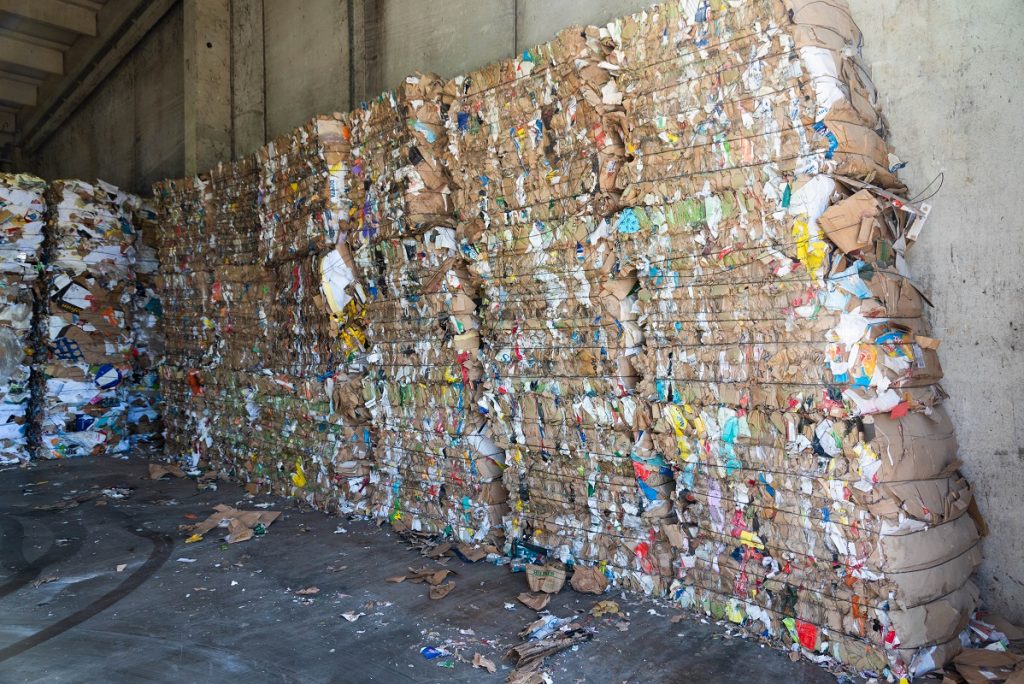
The severity of the situation is highlighted by per capita waste generation. While the national average in Croatia is 486 kilograms per person per year, in Split-Dalmatia County it reaches 606 kilograms per person, clearly reflecting the strong negative impact of tourism and seasonal pressures. Yet, the WMP SDC does not address this problem systematically or seriously.
Given all of the above, it is urgent to improve the Waste Management Plan of Split-Dalmatia County, introducing more effective, actionable, and financially grounded measures at the local level to prevent long-term environmental and public health damage. The positive impact of composting and soil enrichment should be emphasized, as applying circular economy principles to organic waste can help restore degraded soils in the county, including on the islands.
In its current form, the WMP SDC is not a true planning document but rather a formal fulfillment of a legal requirement, lacking clear vision, accountability, and solutions for one of the county’s most serious environmental and health problems. For this reason, we have not found it appropriate to comment on the Strategic Environmental Impact Assessment of this plan, which is also under public consultation.
Get involved and submit your comment
Detailed and reasoned comments from Sunce on the WMP SDC are available at this link.
All citizens can send their comments to [email protected].
If you care about how waste is managed in your city, municipality, or island, participate in the public consultation. You can use the Sunce’s comments, in full or in part, when submitting your own. Every comment submitted influences whether the plan will include real measures for reducing, separating, and recovering waste.
Share this information on social media to reach as many citizens as possible.