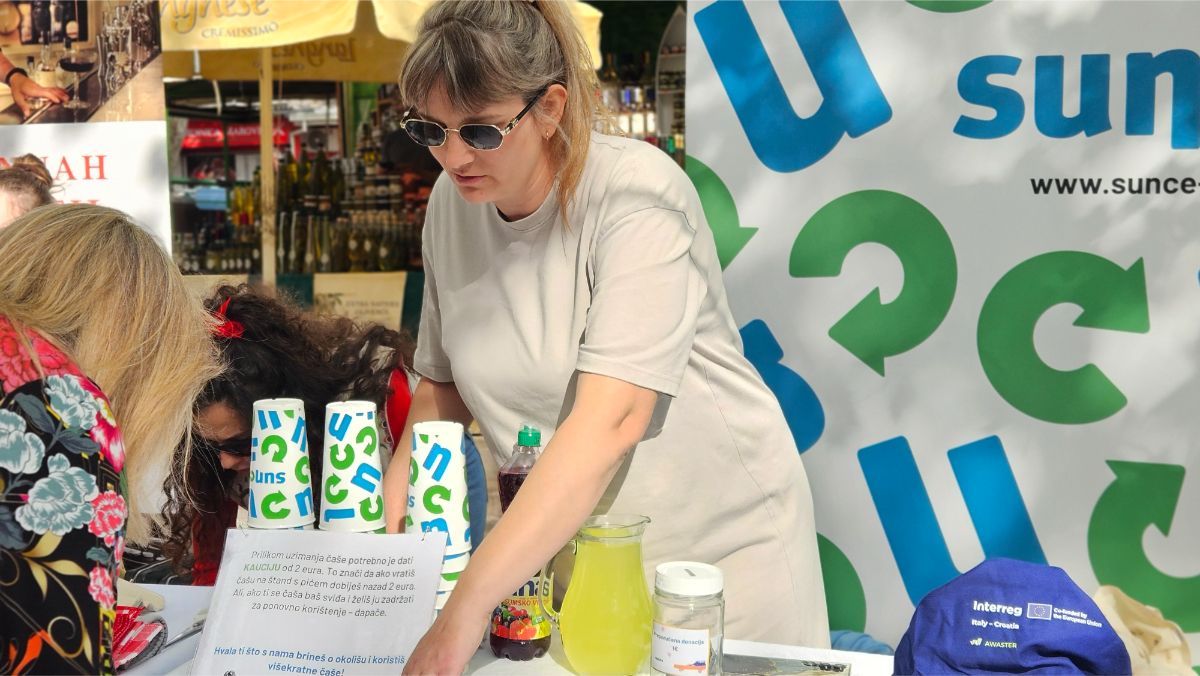
Most of us have attended a concert, festival, or large public event at least once. We enjoy the music, food, and socializing, but afterwards there is often something undesirable left behind that we may not pay much attention to while having fun – large amounts of single-use plastic.
Single-use plastic: durable but not sustainable
Plastic is one of the most widely used materials today. It can be found everywhere – in packaging, clothing, vehicles, electronics, and many other products. Thanks to its durability, availability, low cost, and ease of production, plastic has become an indispensable part of everyday life.
This is not necessarily a bad thing. However, events with large numbers of visitors can generate enormous amounts of unnecessary waste in just a few hours. Much of this discarded single-use plastic eventually finds its way into forests, the sea, and the wider environment.

Due to its durability, plastic hardly decomposes in nature and can remain present for hundreds of years. There is no part of the planet untouched by plastic pollution, which poses a threat to both people and the natural world.
This is precisely why the concept of a “plastic-free event” is becoming an important part of sustainable event management.
To help event organizers implement such practices, Sunce has developed the brochure Together Without Plastic, which provides practical guidelines and examples for organizing public events without single-use plastic.
The guide was created as part of the ongoing AWASTER and Refill Hvar projects, which focus on reducing plastic waste and encouraging sustainable habits within local communities.
Planning is the most important step
Organizing a plastic-free event begins during the planning phase.
It is important to define rules in advance for co-organizers, exhibitors, caterers, and partners. Organizers can require the use of reusable alternatives instead of single-use plastic products.
The catering segment of an event often generates the largest amount of single-use waste, but this can also be addressed. In cooperation with food vendors, organizers can arrange the use of reusable cutlery, ceramic tableware, and waste separation systems.
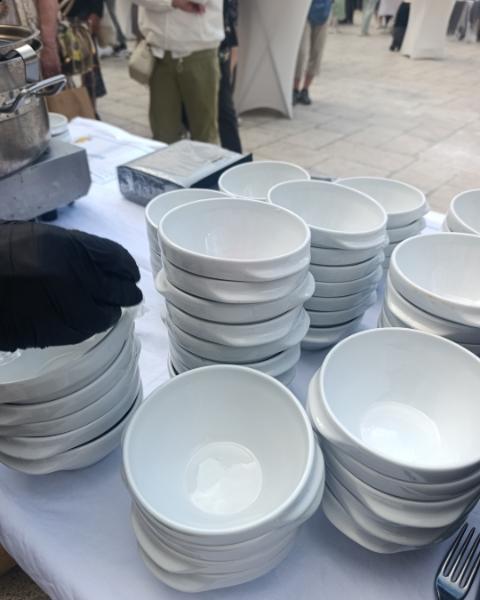
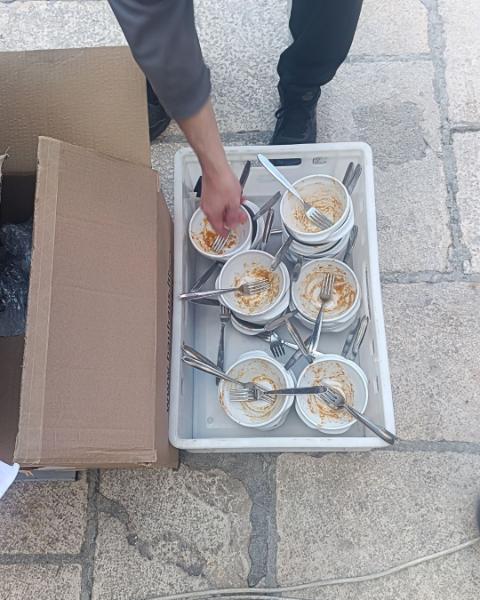
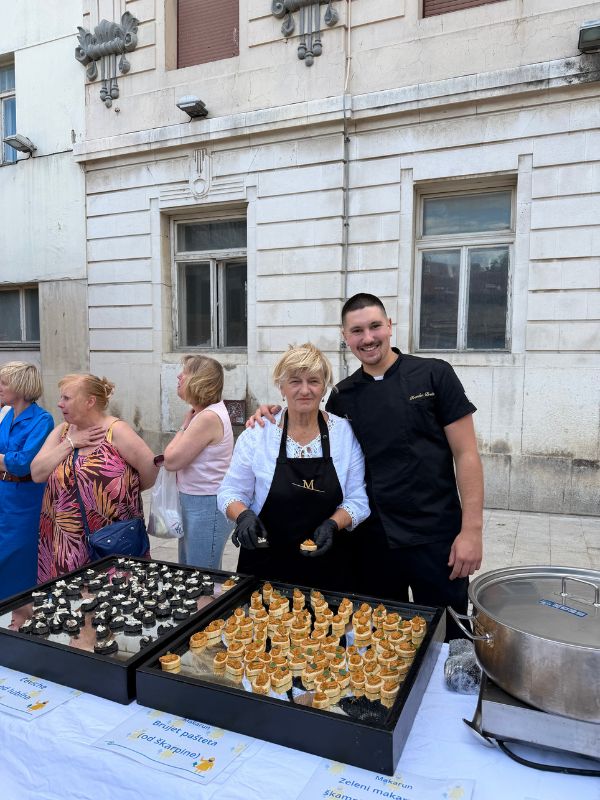
Sunce always organizes plastic-free events. One of the latest examples was the Fishers and Fishermen’s Bargaining Festival, held as part of the Interreg Italy-Croatia FishNoWaste Project.
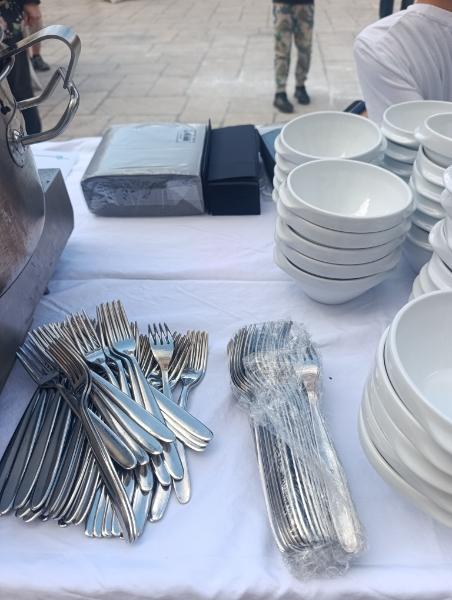
The festival placed a strong emphasis on reusable solutions. In addition, restaurants from Split prepared food according to zero-waste principles, adding another sustainable component to the event. All visitors were provided with stainless steel cutlery and ceramic bowls. After eating, the tableware was collected in one location, washed, and reused.
To reduce waste and protect the environment, it is important to choose reusable cups, dishes, and cutlery whenever possible. Such solutions are not only more environmentally friendly but are also more cost-effective in the long run.

Small steps, big results
Completely eliminating plastic may not always be possible, but even small changes can have a significant impact. Replacing single-use products with reusable alternatives, improving waste management, and adopting more responsible procurement practices can substantially reduce the environmental footprint of an event.
By choosing reusable solutions, organizers not only reduce waste and conserve resources but also contribute to more sustainable business practices within the community.


Among the most practical reusable materials are:
- Hard plastic – lightweight, durable, and easy to maintain
- Glass – strong, long-lasting, and fully recyclable
- Ceramics – aesthetically pleasing and suitable for repeated use
- Stainless steel – durable, hygienic, and long-lasting
In addition to material selection, it is important to use products thoughtfully and introduce sustainable practices:
- Cups – implement a deposit-return system or encourage participants to bring their own reusable cups
- Straws – avoid them entirely or use alternatives such as metal or bamboo straws
- Bottles – use large returnable glass bottles or high-capacity dispensers
- Cutlery – use reusable or wooden cutlery instead of disposable options
- Bags – encourage the use of cloth and other reusable bags
- Decorations – make them from natural materials or involve visitors through decoration-making workshops

Public events often distribute flyers, balloons, and low-quality promotional plastic items that quickly become waste. These materials can be replaced with:
- Digital flyers and QR codes
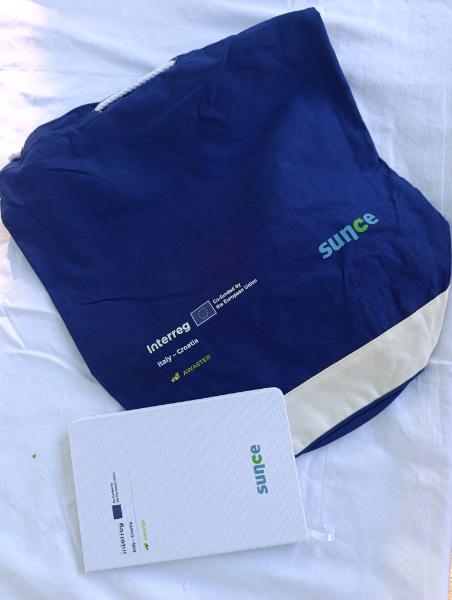
- Cloth bags or useful reusable products
- Decorations that can be reused
- Natural or recycled materials
Such an approach not only reduces waste but also sends a clear message about the organizer’s commitment to responsibility and sustainability.

Educate your visitors
Visitors are more likely to understand and support the concept of a plastic-free event when organizers explain the reasons behind it.
Therefore, plastic-free events can also serve as excellent opportunities for public education. Information boards, short workshops, volunteers, and clear communication can help visitors understand why reducing single-use plastic is important.
For example, organizers can demonstrate how much waste was avoided through sustainable event practices. Visitors are then more likely to embrace these changes and apply them in their everyday lives.

Changing the way we produce, consume, and think
It is becoming increasingly clear that we need to change the way we produce, consume, and think about waste.
The traditional linear economic model is based on the principle of “take – make – use – dispose.” This approach consumes large amounts of raw materials and energy while generating increasing amounts of waste. A single large public event can produce hundreds of kilograms of waste in just a few hours – waste that could be avoided with proper planning.
The circular economy is a model of production and consumption that involves sharing, leasing, reusing, repairing, refurbishing, and recycling materials and products. This extends product life cycles and keeps materials in use for as long as possible. When a product reaches the end of its life, recycling allows its materials to be reintroduced into the system and given new value.
Sustainable events organized according to circular economy principles are not only an environmentally responsible choice but also a way of creating a higher-quality and more responsible experience for participants.

The goal is to reduce environmental impacts while raising awareness among organizers and visitors about ways to protect the environment.
The solution is not to eliminate plastic entirely, but to use it responsibly and transition to reusable products whenever possible.
If you organize public events and would like additional support or printed copies of the brochure, feel free to contact us at [email protected] or +385 21 360 779. We would be happy to help you transition to more sustainable and responsible practices.