Sunce at the fish market sent a strong message: ‘Fishing is tradition, marine litter is not’
May 25, 2026
Bruna Tomić
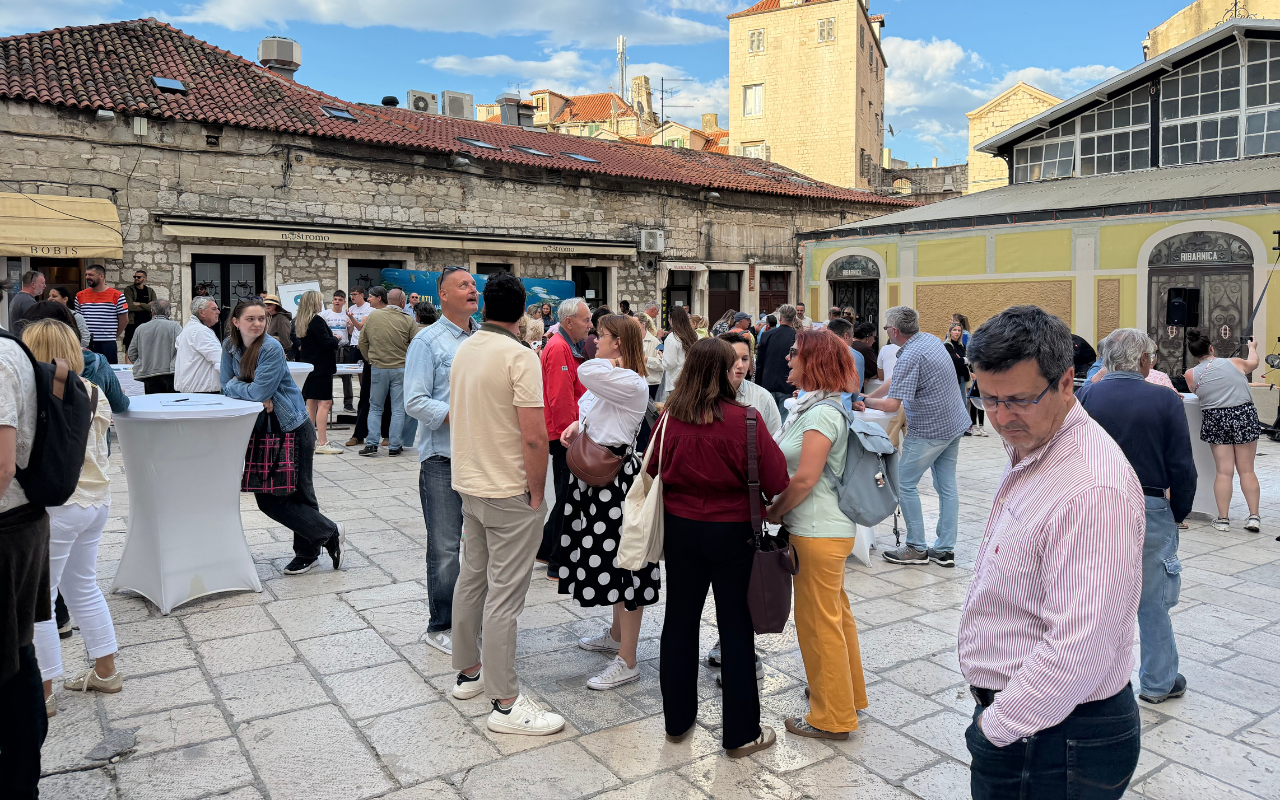
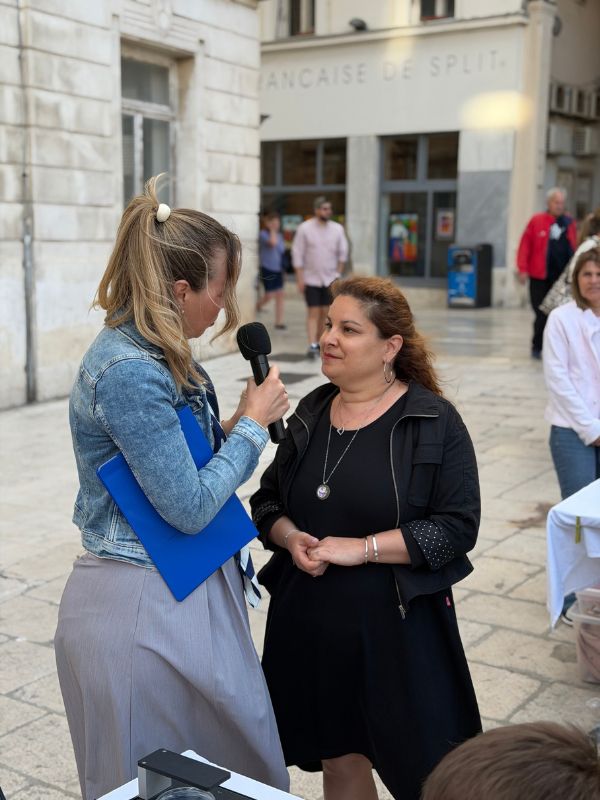
For centuries, fishing has been at the heart of Dalmatian identity. But in recent decades, that identity has faced a new, invisible, and deeply destructive enemy – litter. That is precisely why Split’s historic fish market, a place that lives and breathes stories of the sea every day, became the setting last night for the plastic-free festival Fishermen and Fishermen’s Talk.
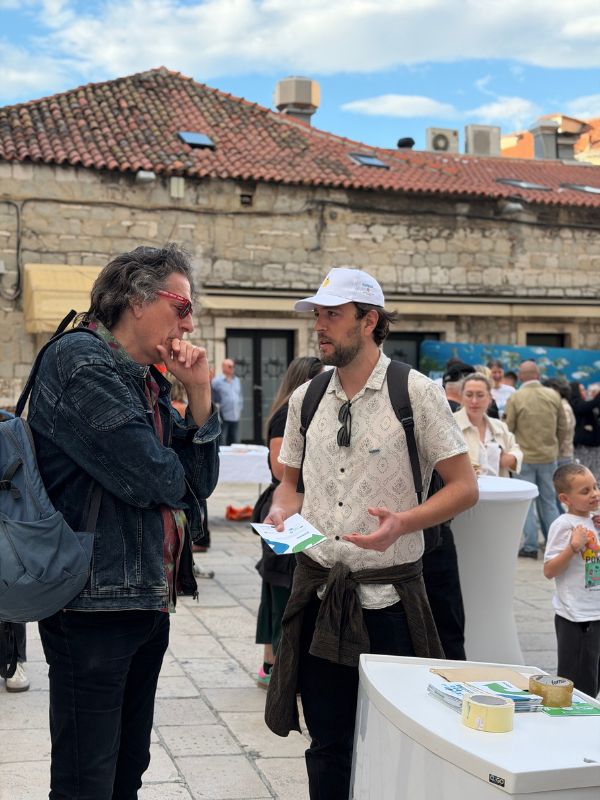
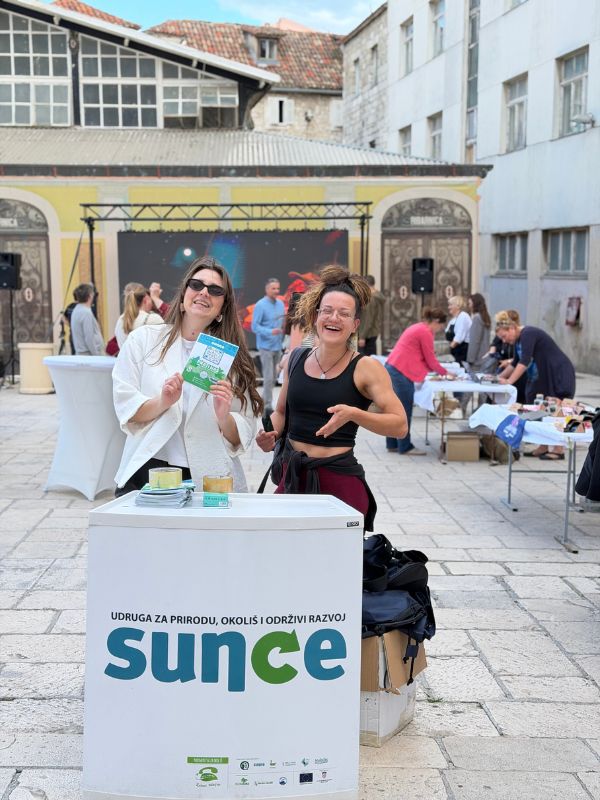
Organised by the Association for Nature, Environment and Sustainable Development Sunce as part of the Interreg Italy–Croatia project FishNoWaste, the event brought together local residents, tourists, fishermen, scientists, and creatives with one shared goal: celebrating Adriatic tradition while sending a clear call to protect our sea.
Waste has become part of every fisherman’s story
Through the FishNoWaste project, Sunce is tackling the issue of waste in fishing ports and developing practical solutions to reduce it. No one understands the seriousness of the situation better than the people whose livelihoods depend on the sea. Today’s fishermen are among the first witnesses to the state of the marine environment. Alongside fish, their nets are increasingly filled with plastic, cans, and other discarded waste.
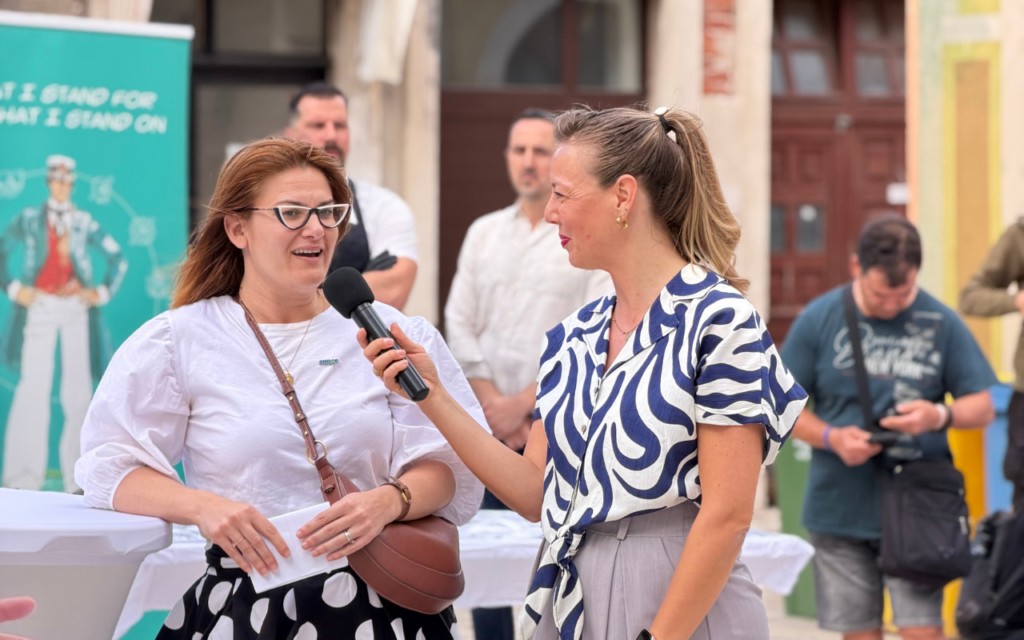
– This is an enormous problem because a single plastic bottle takes more than 450 years to decompose. And even then, it never truly disappears, it simply turns into microplastics. Whether we like it or not, litter has become part of fishermen’s everyday reality, – warned Tea Kuzmičić Rosandić, project manager at Sunce.
The scale of the issue was highlighted by data collected through scientific collaboration with fishermen as part of the project. Over the past five years alone, fishermen in the port of Tribunj have collected and categorised as much as five tonnes of marine litter from their nets.
Fortunately, younger generations are increasingly aware of the problem.
– I’ve been connected to the sea my whole life and to all the litter hidden beneath its surface. As students, we’re very aware of how much plastic ends up in the sea. We take part in many clean-up actions and help however we can, – said Ljiljana Krističević, a student from the Split Maritime School’s fishing and nautical programme. She participated in the festival through Erasmus+ activities under the slogan “(p)LOVITI se mora”, continuing the promotion of “Blue Careers” led by Croatia’s Ministry of Agriculture, Forestry and Fisheries.
Support also comes from local fishing cooperatives such as RZ Friška riba from Kaštel Sućurac, whose representatives emphasised the demands of the profession:
– Our fishermen from Kaštela are awake from early morning until late at night. They fish from Istria all the way to Dubrovnik and spend most of their lives at sea. We support them however we can: through projects, equipment, materials, and everything else they need.
‘Six out of seven breaths come from the sea’
The festival’s scientific programme was led by experts from the Institute of Oceanography and Fisheries in Split. Visitors had the opportunity to discover the hidden micro-world that surrounds us. Dr. sc. Darija Ezgeta Balić introduced different species of shellfish and sea snails, emphasising the importance of tiny, often invisible organisms that are essential for marine ecosystems:
– Besides Posidonia seagrass, which is incredibly important, I would also highlight plankton, which produces half of the oxygen on our planet. Did you know that six out of every seven breaths we take come from the sea, while only one comes from forests and land?
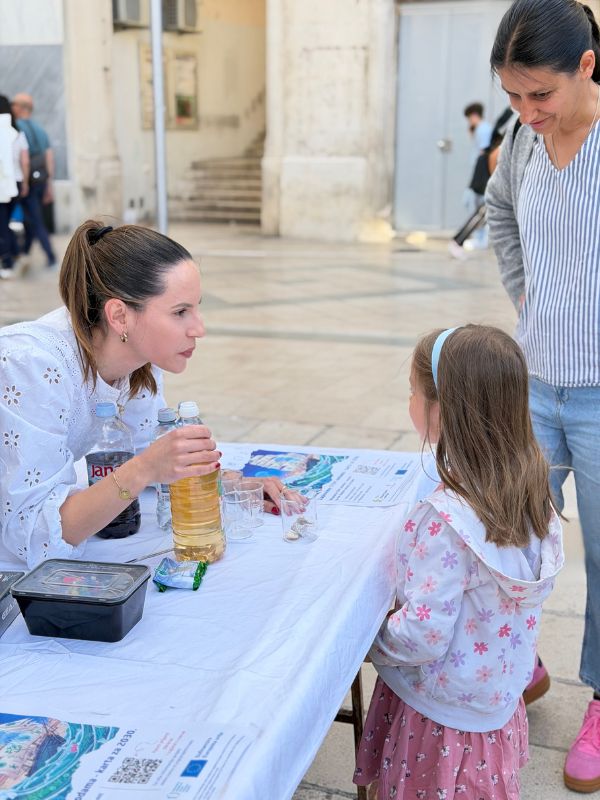
While adults learned from scientists, younger visitors gathered in Sunce’s STEM zone. Through games, practical experiments, and interactive workshops developed within the project Sailing into STEM – A Map for 2030, children and young people learned about the harmful effects of pollution and microplastics.
Free tastings delighted visitors
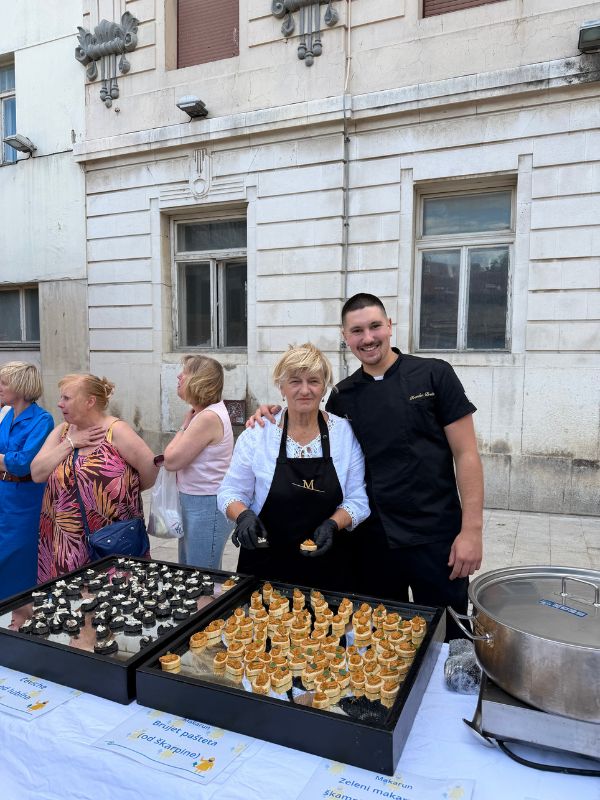
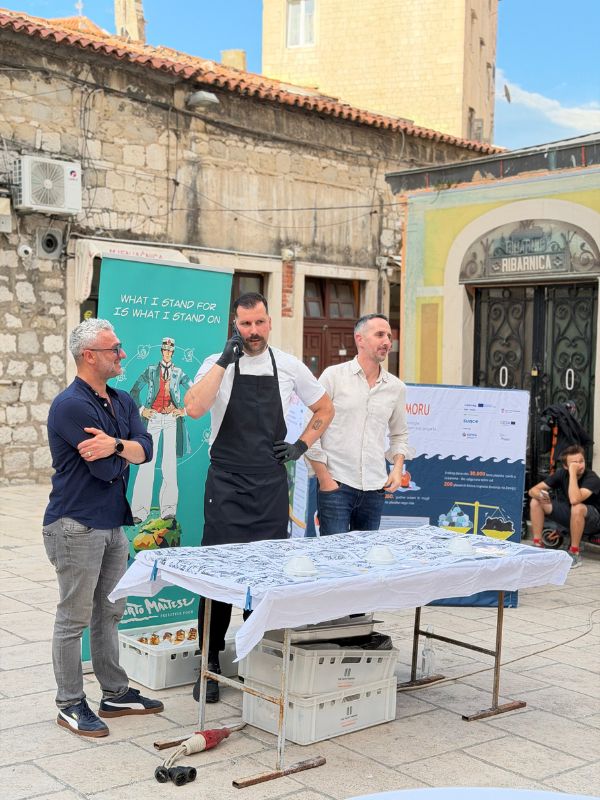
The gastro zone was, unsurprisingly, one of the festival’s main attractions. Popular Split restaurants Corto Maltese and Makarun demonstrated how zero-waste cooking works in practice – making full use of ingredients while minimising waste.
Both culinary teams stressed that they are guided by one simple idea: “Why throw something away when it can still be used?”. And judging by the visitors’ reactions, the approach was a success. Corto Maltese’s komiška/viška pogača, prepared using “old” bread and tomatoes with stems attached, disappeared within minutes. The same happened with Makarun’s three seafood dishes, made using every single part of the fish.
One visitor perfectly captured this sustainable yet creative reinterpretation of traditional dishes, enthusiastically describing it as “a fusion of something old and something new, presented in a modern and artistic way.”
Circular economy in action
The festival also showed that creativity knows no limits when it comes to recycling and reusing fishing-related litter.
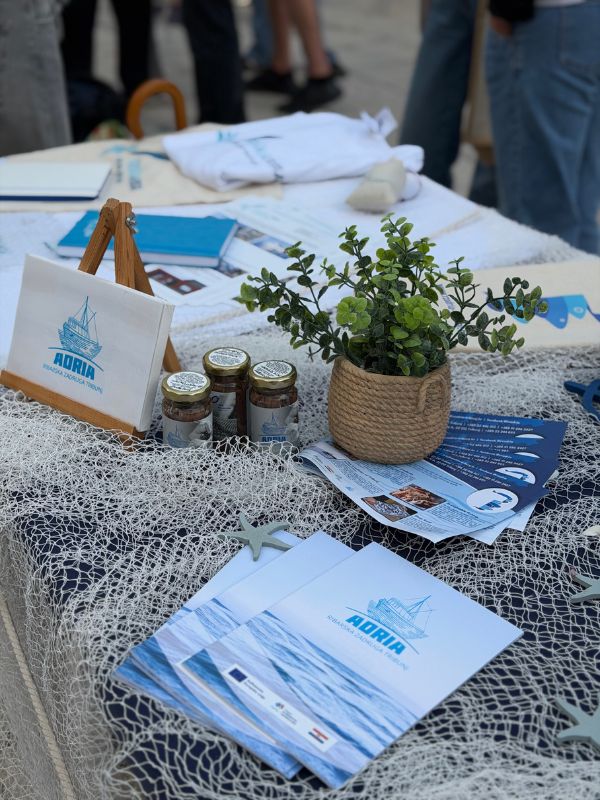
The Adria Fishing Cooperative from Tribunj presented its traditional handmade production methods — from salting and packaging to labelling products. Special attention was given to their eco-project, in which old fishing nets were transformed into unique bracelets, promoting the importance of reusing materials.
A similar innovation was presented by Božidar Blaslov from Provir Design.
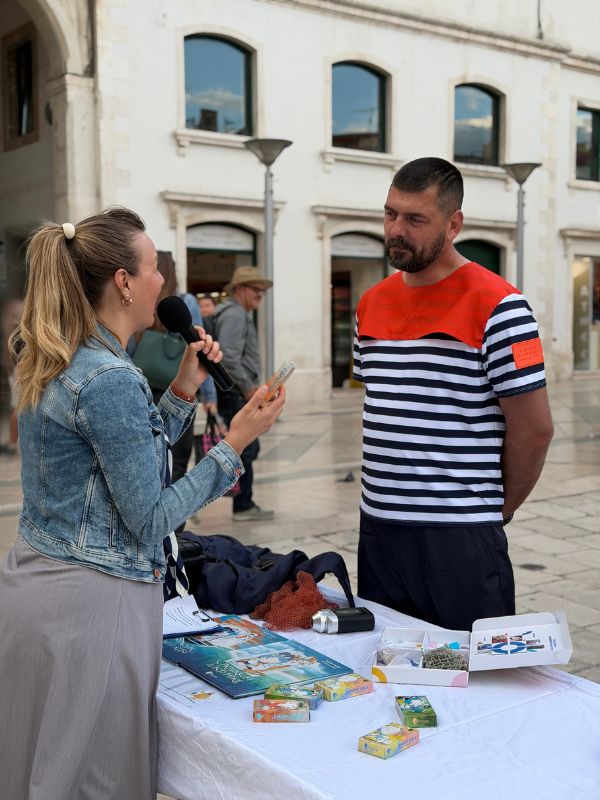
– Today we brought our educational picture books and canned Adriatic sardines that we catch ourselves. In cooperation with Krie Design, we also developed the idea of recycling old fishing nets into new products. The shirt and trousers I’m wearing today were actually made from old fishing nets, – said Blaslov, a fourth-generation fisherman.
His story, alongside that of fisherman Luka Bonačić from the Brižine port – who has patiently repaired fishing nets since 1978 – carried a powerful message: fishing is tradition, but marine litter is not.
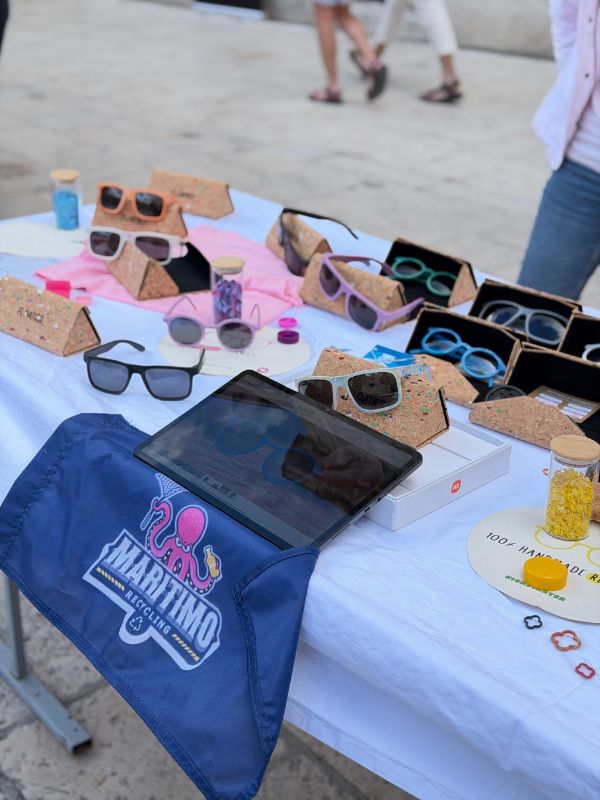
Meanwhile, Dubrovnik-based association Maritimo Recycling showcased sunglasses made from recycled plastic bottle caps collected from the sea.
– Thanks to recycled marine plastic, no two pairs of glasses are identical. The lenses are resistant to seawater, dust, and corrosion, and are up to 800% more durable than standard lenses. And just like the bottle caps we recovered from the sea, the sunglasses float – which is why we named them Floaties.
Audiovisual installations and photography exhibitions
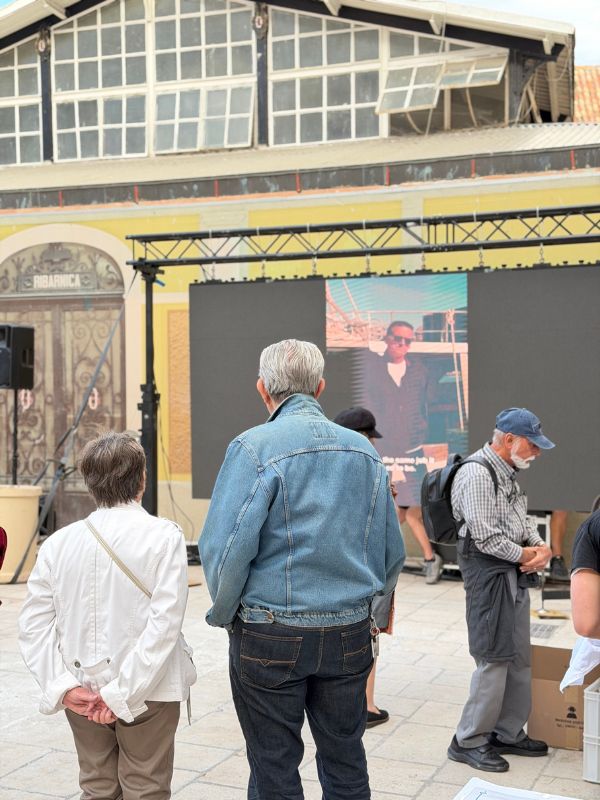
As the evening progressed, the walls of the fish market transformed into an open-air cinema. Visitors watched nine emotional and educational short films from the FishNoWaste series, sharing real stories from fishermen about the growing problem of litter in their nets, but also about their enduring love for the sea and their sense of community.
One particularly moving moment was the audiovisual installation “Voice of the Sea – Posidonia oceanica”, created within theBIOPRESSADRIA project. Combining art, science, and technology, the installation gave a voice and physical presence to Posidonia seagrass – often called the “lungs of the sea” – educating visitors about its importance and vulnerability.
The evening’s educational focus was rounded off by two exhibitions. Inside the fish market, Sunce presented the informative exhibition “Plastic Nightmare”, which explored the challenges of marine litter and offered practical tips on how individuals can reduce their impact.
At the same time, the photography exhibition “Adriatic Treasures”, organised as part of the ASPEH – Adriatic SPEcies and Habitats of Coastal Areas project, remains open in Marmont Street until 24 May. Featuring striking photographs by Croatian and Italian authors, the exhibition captures both the beauty and fragility of Adriatic species and habitats.
– Last night’s event at the fish market proved that solutions do exist. Combining tradition, science, creative recycling, and responsible gastronomy is the formula for a sustainable future for the Adriatic, – concluded Tihana Arapović, Expert Associate at Environmental Protection and Sustainable Development Department at Sunce.
Sign up and read the latest news from the world of ecology and sustainability, and each month learn how you can get involved in protecting nature and the environment!