
The Mediterranean region is facing urgent and interconnected climate challenges, marked by rising temperatures, severe droughts, extreme weather events, and biodiversity loss. These impacts threaten key sectors such as agriculture, tourism, and fisheries, while simultaneously worsening socio-economic inequalities. Despite the region’s particular vulnerability, adaptation strategies remain fragmented and insufficiently implemented.
This regional report, developed under the DesirMED project, serves as a baseline assessment of climate adaptation in the Mediterranean. It highlights specific vulnerabilities shared across most Mediterranean areas (complex geography, densely populated centres, and diverse socio-economic contexts) while underscoring the need for tailored, region-specific approaches to climate resilience. Key findings from the initial assessment of conditions in eight partner regions reveal similar climate risks, including rising temperatures, water scarcity, and increasing risks of wildfires, droughts, and floods.

The report also emphasises the transformative potential of Nature-based Solutions (NbS) as cost-effective and widely applicable measures adaptable to diverse contexts. Integrating these approaches into adaptation strategies will strengthen the region’s ability to reduce climate risks while enhancing biodiversity and community well-being.
A comprehensive review of the policy landscape demonstrates progress in adaptation frameworks. However, significant gaps persist in governance, financing, and the integration of NbS into national, regional, and local adaptation plans across the Mediterranean. Effective and transformative governance is further limited by disparities in resources and administrative capacities, constraining the scalability of successful practices.
This report identifies three key areas for policy action to advance adaptation measures, including nature-based solutions, across the Mediterranean:
- Multi-level and transformative governance: establish collaborative, multistakeholder frameworks and coalitions across governance levels and society to address shared climate risks and enable truly transformational solutions.
- Inclusive and just adaptation and resilience: address high socioeconomic disparities through policies that recognize and prioritize vulnerable communities, support community-led NbS projects, and foster inclusive participatory planning processes.
- Bridging regional disparities: develop mechanisms to bridge gaps in adaptation capacities and practices within the Mediterranean region.
Introduction
Climate change is one of the most urgent global challenges, and its effects are increasingly visible, particularly in Europe. Within Europe, temperatures in the Mediterranean region are rising 20% faster than the global average, making the region a hotspot of vulnerability due to its unique environmental and socio-economic conditions (UNEP). Rising temperatures, severe droughts, and more frequent extreme weather events threaten agriculture, tourism, and fisheries, further deepening existing inequalities in resources and governance.
This regional policy report on Transformational Governance for Climate Adaptation and Resilience in the Mediterranean, produced under the DesirMED project, serves as a baseline assessment of adaptation needs, capacities, and experiences across eight participating Mediterranean regions.
The report examines:
- the existing challenges and impacts of climate change in the Mediterranean and the need for adaptation measures;
- the policy landscape, including an overview of existing policies, an evaluation of adaptability and transformation in governance frameworks, and an assessment of multi-level governance;
- strategies for more effective adaptation, including Nature-based Solutions (NbS).
It concludes with examples of good practices and a series of policy action areas tailored to the Mediterranean context.
Current situation in the Mediterranean
1.1. Challenges and the need for climate adaptation
The Mediterranean region is recognised as a climate change hotspot. Rising temperatures, extreme weather events, and biodiversity loss threaten the region’s health, agriculture, and water resources. The IPCC Sixth Assessment Report highlights increased risks of desertification, drought, and coastal degradation for the Mediterranean.

Addressing these challenges to bolster resilience to the coastal risks climate change poses to ecosystems and MED communities, as emphasized by the Mediterranean Experts on Climate and Environmental Change (MedECC, 2024), requires integrated resource management across interconnected sectors including water, energy, food, and ecosystems.
A survey conducted through the DesirMED project reveals similar vulnerabilities across eight Mediterranean regions. Respondents confirm that these regions are already experiencing climate impacts anticipated in the assessment reports cited above.
Key documented impacts include prolonged droughts, extreme rainfall, soil degradation, and biodiversity loss. Southern Europe faces heightened risks of desertification, agricultural pests, and wildfires, with cascading impacts such as soil erosion, biodiversity loss, agricultural loss, depopulation and health concerns. Coastal tourism-dependent regions, such as Croatia and Spain, face challenges from water scarcity and heatwaves, while Italy’s Sardinia and Potenza provinces grapple with severe agricultural and water management issues.
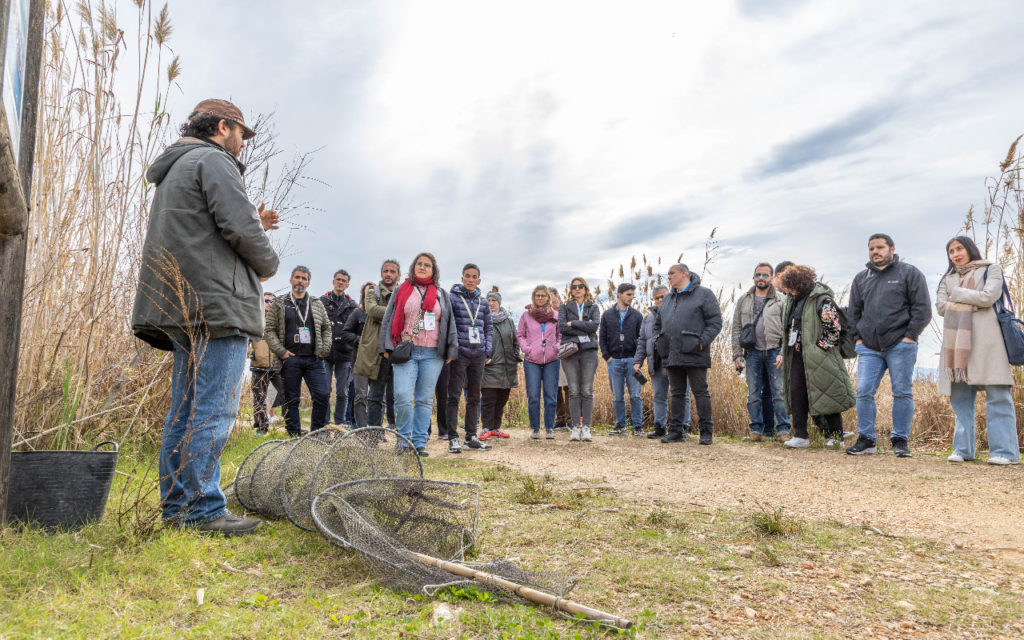
The Mediterranean Basin is undergoing significant environmental transformations, posing challenges to the resilience of both natural and anthropogenic systems. This dynamic is further complicated by rapid and spatially diverse socio-economic development within the region, particularly in terms of demographic trends and settlement patterns, resulting in heightened exposure to environmental hazards (MedECC, 2020, p.542). Moreover, socio-economic disparities among and within MED countries add additional complexity to the climate crisis. Many regions in the Mediterranean areas have limited resources available for climate adaptation and resilience-building, leading to uneven vulnerability across the region. This asymmetrical exposure not only exacerbates existing regional disparities, it also underscores the pressing need for cohesive climate action throughout Europe.
The above findings reconfirm the urgent need for coordinated strategies and action to strengthen adaptation capacities and practices across the MED region.
Effective adaptation needs to:
i) address existing climate vulnerabilities without exacerbating them or creating new vulnerabilities;
ii) locate deliberation within multi-level governance frameworks;
iii) centrelize the role of nature in adaptation so as to address the global risks related to biodiversity losses and the human-nature relationship.
Adaptation strategies and actions need to recognize a new scale of climate phenomena, new and extended forms of exposure, new forms of social vulnerabilities or the exclusion of social groups from adaptation benefits. These recent developments call for the scale and ambition of adaptation strategies and action to be transformed and require robust governance and inclusive policy frameworks tailored to the region’s unique features. Moreover, the role of Nature-based Solutions should be central to these strategies, offering an essential pathway to enhance resilience and sustainability across the Mediterranean region.
2. Policy landscape
2.1. Overview of existing adaptation policies in the EU and MED region
Since the inception of the first European Adaptation Strategy in 2013, the EU has emphasized the importance of Member States’ commitment to climate adaptation. This strategy establishes an initial comprehensive framework and mechanisms aimed at elevating the EU’s preparedness to address both current and future climate change impacts. It underscores the necessity of encouraging and supporting Member States in their adaptation efforts, thereby facilitating more informed decision-making and enhancing the resilience of key economic and policy sectors to climate change effects (European Commission, 2013).
The recently revised EU strategy for Adaptation, Forging a Climate-Resilient Europe – the New EU Strategy on Adaptation to Climate Change (EC 2021), reinforces the significance of national adaptation policies and urges Member States to amplify and enhance the efficacy of their adaptation strategies and actions. It delineates a vision for achieving a fully climate-resilient EU by 2050.
Simultaneously, in 2021, five EU Missions were established by the European Commission to realize practical solutions to significant societal challenges, including climate adaptation. The missions aim to provide designated EU countries, regions, and cities with help in combining new forms of governance and collaboration (European Commission, 2024d).
The enactment of the updated Natural Restoration Law (2024/1991) is a recent EU initiative aimed at enhancing the climate adaptation abilities of its Member States. This law aims to support the restoration of biodiversity in the EU, curb further loss, and increase food security for European citizens. Alongside national restoration plans, the law further enhances EU efforts to recognize and exploit the potential of Nature-based Solutions and biodiversity for adaptation to climate change (European Commission, 2024c).
EU Member States have been mandated to report regularly on their national adaptation actions since the adoption of the Monitoring Mechanism Regulation (MMR) in 2013.
The MMR (Regulation (EU) No 525/2013) requires Member States to submit biennial reports on their climate actions, including adaptation measures. This reporting framework was later reinforced and expanded under the European Climate Law (Regulation (EU) 2021/1119), which formalizes the EU’s goal of climate neutrality by 2050 and mandates more detailed monitoring and reporting of adaptation efforts.

These reports include information on National Adaptation Strategies (NAS), National Adaptation Plans (NAP), and other frameworks including Climate Risk Assessments (CRA) and Sectoral Adaptation Plans (SAP), Climate Laws (which incorporate adaptation measures), and Regional Adaptation Plans (RAP).
The available data indicates that the majority of reporting countries have established NASs and NAPs: 31 and 22 Member States, respectively. In contrast, the dissemination of other adaptation initiatives –specifically Climate Laws, CRAs, SAPs, and RAPs – is markedly lower, with RAPs and SAPs engaged with the least: in 4 and 5 Member States, respectively.
In the context of MED countries, it is noteworthy that only Portugal and Spain have implemented RAPs and SAPs, with the remaining MED countries having concentrated their efforts on the adoption of NAS and NAP as essential adaptive measures. Although these strategies represent critical initial steps toward climate adaptation, they primarily delineate broad policy frameworks rather than offering comprehensive action plans that are specifically tailored to local and regional action.
Despite high levels of exposure and vulnerability, adaptation action in MED countries remains underdeveloped, while adaptation efforts across the area are not at the requisite level. Even if plans and strategies exist, tangible implementation remains lacking. According to Pietrapertosa et al. (2023), who investigated urban areas, policy progress is unevenly distributed even across the Mediterranean countries, with a concentration of efforts in a few countries and in larger urban areas. Approximately 30% of the MED cities analyzed in their study have developed Local Climate Adaptation Plans (LCAP). Italy, which has the highest number of cities in the MED sample (42.5%), reports both the lowest number of LCAPs and an even lower level of implementation, with only two cities having implemented plans of this sort. At the level of planning for adaptation at national and sub-national level, of the seven countries with demonstrating or replicating regions involved in the DesirMED project, while all seven have a National Adaptation Strategy, only five have translated their strategy into a National Adaptation Plan.
2.2. Evaluation of adaptability and transformation in governance frameworks
Governance systems that effectively promote and manage transformative adaptation actions have several key characteristics, according to a recent ETC-CA Report 2/2024.
Firstly, successful governance frameworks exhibit a high level of multi-level coordination, integrating national, regional, and local governance structures to ensure comprehensive adaptation planning. This is particularly important, given the complex and cross-sectoral nature of climate change impacts.
The report emphasizes that binding legal frameworks, such as national climate laws that include adaptation provisions, enhance governance effectiveness by providing clear mandates for adaptation policy planning, implementation, and monitoring. However, while most EU countries have adopted National Adaptation Strategies (NAS) and National Adaptation Plans (NAP), there is significant variation in their implementation, with some countries having proceeded further with the integration of legally binding measures into their frameworks.

A key feature of governance systems capable of fostering transformative adaptation is their reliance on evidence-based policy-making, supported by comprehensive Climate Risk Assessments (CRAs) and robust Monitoring, Evaluation, and Learning (MEL) systems. Countries with legally mandated CRAs tend to have more effective adaptation strategies, as these assessments provide critical data on climate vulnerabilities and inform decision-making.
However, many countries still struggle to integrate these assessments with MEL processes, which would allow for adaptive management and iterative improvements to policy measures. Additionally, governance
systems that promote adaptive capacity tend to institutionalize mechanisms for mainstreaming adaptation across sectoral policies, ensuring coherence between climate adaptation goals and other policy areas such as water management, agriculture, and infrastructure development. (ETC-CA, 2024).
Finally, transformative adaptation governance requires inclusive stakeholder engagement and cross-sector collaboration. The 2024 report identifies participatory planning and the involvement of civil society, private sector actors, and scientific institutions as crucial factors in the success of adaptation policies. Countries that have established legally mandated coordination bodies – such as inter-ministerial working groups or national adaptation councils – are better equipped to manage cross-sectoral adaptation efforts.
However, securing adequate funding and investment for adaptation actions remains a persistent challenge, particularly at the sub-national level, where financial constraints often limit implementation. Overall, while there has been significant progress in strengthening governance systems for climate adaptation in Europe, the report underscores the need for enhanced legal mandates, better integration of scientific assessments, and stronger institutional coordination to achieve transformative adaptation.
2.3. Assessment of multi-level governance
The articulation of governance systems over different levels across different sectors and stakeholder groups in society is key for the design of inclusive and holistic approaches to adaptation action.
Multi-level governance is defined by decision-making processes that involve not only public authorities, but also private and other stakeholders operating across various geographic scales and sectors (Keskitalo, 2010, p. 4). This framework is particularly significant in addressing the complexities of climate change, which necessitates coordinated efforts at international, national, regional, and local levels, while also demanding collaboration amongst diverse sectors (Keskitalo, 2010).
Simultaneously, adaptation to climate change necessitates multi-level responses that may vary depending on the prioritization of climate issues within different countries, regions, and localities (Keskitalo, 2010). To effectively evaluate adaptive capacity within this governance context, it is essential to assess the designation of responsibilities pertaining to climate change adaptation (Keskitalo, 2010).
Within the EU, there exists an urgent need to integrate awareness of general adaptation requirements across sectors combined with specific needs at national and local levels into EU-level strategies (Ellison, 2010, p. 91).

A more centralized approach to governance is warranted, as insufficient adaptation efforts in one member state can have significant repercussions for neighbouring countries. Such interdependencies provide a compelling justification for the EU adopting a more coordinated and comprehensive approach to adaptation measures than it has done historically.
Centralizing responsibility for adaptation strategies within a singular institution can enhance the coordination of policy objectives in two crucial dimensions:
- across various issue areas, including energy, agriculture, water, and land use, and
- among the individual Member States (Ellison, 2010).
Prioritizing ecological systems and adopting a holistic perspective on climate change mitigation and adaptation would allow the EU to devise a more effective and comprehensive strategy to tackle these complex challenges (Ellison, 2010).
The necessity and utility of multi-level governance for climate change adaptation are widely recognized, as the findings from the DesirMED project make clear. Data collected from regions in Portugal, Spain, and Croatia highlight varied levels of collaboration in implementing Nature-based Solutions (NbS).
For example:
- the Spanish partner region reported recent efforts to involve stakeholders in designing and executing NbS-related actions,
- the Portuguese partner cited multiple regional or local projects without detailing the extent of cross-level collaboration.
All eight surveyed regions identified regulatory frameworks facilitating NbS implementation, but also the persistence of significant barriers, including insufficient financing, lack of economic incentives, and limited research on long-term returns.
These challenges are compounded by deficiencies in regulatory efficacy and the need for better spatial
planning.
In conclusion, while multi-level governance is essential for addressing climate change – an issue that affects all countries yet manifests unevenly – the processes involved at various governance levels continue to present challenges.
Even under the latest framework established by the European Green Deal and the corresponding
development of EU Missions, significant obstacles remain. These include, but are not limited to, insufficient financial planning and collaboration regarding NbS, unclear objectives in spatial planning, and ineffective implementation of spatial planning by some Member States.
What can be done?
3.1. Effective adaptation strategies in the EU and the MED region
The 2023 European Commission assessment of Draft Updated National Energy and Climate Plans highlighted some adaptation progress, but also identified persisting gaps.
Key issues restricting broader adoption included insufficient investment assessments, a lack of dedicated budgets, and limited Nature-based Solutions (NbS) integration.
Challenges in evaluating adaptation impacts and the absence of robust monitoring and reporting mechanisms were also identified as hindering progress. The assessment concluded that strengthening financial support and administrative capacity was crucial to prevent maladaptation (European Commission, 2023).

Despite these obstacles, effective adaptation measures have emerged across Europe, including in the Mediterranean.
The table below presents two standout initiatives per DesirMED country, selected on the basis of effectiveness, scalability, innovation, stakeholder engagement, and socio-economic benefits, as documented by ClimateADAPT (2024c).
These cases demonstrate significant progress toward a sustainable, climate-resilient future, yet they remain isolated efforts rather than comprehensive strategies.
As extreme weather intensifies, there is an ever more urgent need to strengthen adaptation measures, highlighting the need for more established, government-led holistic strategies across the Mediterranean and the EU.
3.2. Nature-based Solutions (NbS)
Nature-based Solutions (NbS) encompass a range of interventions aimed at leveraging ecosystems to address societal challenges such as food security, climate change, and natural disasters. The International Union for Conservation of Nature (IUCN) defines NbS as actions that protect, sustainably manage, and restore natural or modified ecosystems, delivering both societal benefits and biodiversity gains (IUCN, 2020). Similarly, the European Commission (2024) describes NbS as “solutions that are inspired and supported by nature, which are cost-effective, provide simultaneous environmental, social, and economic benefits, and help build resilience”.

Over the past two decades, NbS have gained international traction, culminating in their inclusion in key agreements like the United Nations Environment Assembly resolutions and the UNFCCC’s COP27 Sharm el-Sheikh Implementation Plan. In the European context, the Nature Restoration Law underscores the importance of NbS in restoring ecosystems and mitigating climate change impacts, with financial support from EU programs such as Horizon Europe and the LIFE Programme.
While there is a growing positive discourse surrounding the significance, initiatives, and funding of NbS at both regional and global levels, significant gaps remain concerning their implementation within individual countries and with regard to crossborder cooperation and financing.
Findings from the participant regions involved in the DesirMED project reveal that Croatia and Portugal note their relatively limited exposure to NbS, potentially due to NbS having been prioritized recently as climate adaptation solutions. That being said, Portugal has proceeded with NbS projects. Conversely, while Spain claims substantial experience in certain NbS domains, this experience does not extend uniformly across all areas. Both Portugal and Spain report infrequent occurrences of knowledge-sharing and capacity-building initiatives in relation to NbS, suggesting a low level of the cross-border and cross-sectoral cooperation that is critical for effectively addressing the impacts of climate change. All three countries emphasize significant challenges associated with NbS implementation, mainly stemming from uncertainties regarding long-term investment returns, along with a lack of clear financial incentives and – an issue highlighted by Portugal, in particular – a limited availability of suitable investment instruments.
While Nature-based Solutions (NbS), such as urban nature restoration and greening interventions, are widely recognized for their cost-effectiveness, issues of water scarcity, heat extremes, and dense coastal settlements in Mediterranean regions present significant implementation challenges. Water scarcity is projected to worsen in the coming decades, while the need to mitigate heat extremes and urban flooding through renaturation adds further complexity. Addressing these constraints through innovative and holistic urban planning, including the careful design of green infrastructure, is critical to making NbS a viable adaptation strategy for climate resilience in the region.
Actions and recommendations
Based on the analysis presented in this regional policy report on Transformational Governance for Climate Adaptation and Resilience in the Mediterranean, the DesirMED project identifies shared climate risks in the Mediterranean region, transboundary impacts of climate change, and a fragmented policy framework related to adaptation. These findings highlight an urgent need for cohesive, region-specific responses. To address these challenges, the DesirMED team emphasizes three critical areas for policy intervention at both the EU and Mediterranean levels.

DesirMED therefore invites EU and national policy makers in the Mediterranean to consider the policy recommendations connected to the following policy action areas:
- Multi-level and Transformative Governance
Establish collaborative, multistakeholder frameworks and coalitions across governance levels and society to address shared climate risks and enable truly transformational solutions. - Inclusive and Just Adaptation and Resilience
Address high socio-economic disparities through policies that recognize and prioritize vulnerable communities, support community-led NbS projects, and foster inclusive participatory planning processes. - Bridging Regional Disparities
Develop mechanisms to bridge gaps in adaptation capacities and practices within the Mediterranean region.
By implementing the proposed recommendations, Mediterranean nations can foster resilience, protect livelihoods, and ensure sustainable development in the face of escalating climate challenges.