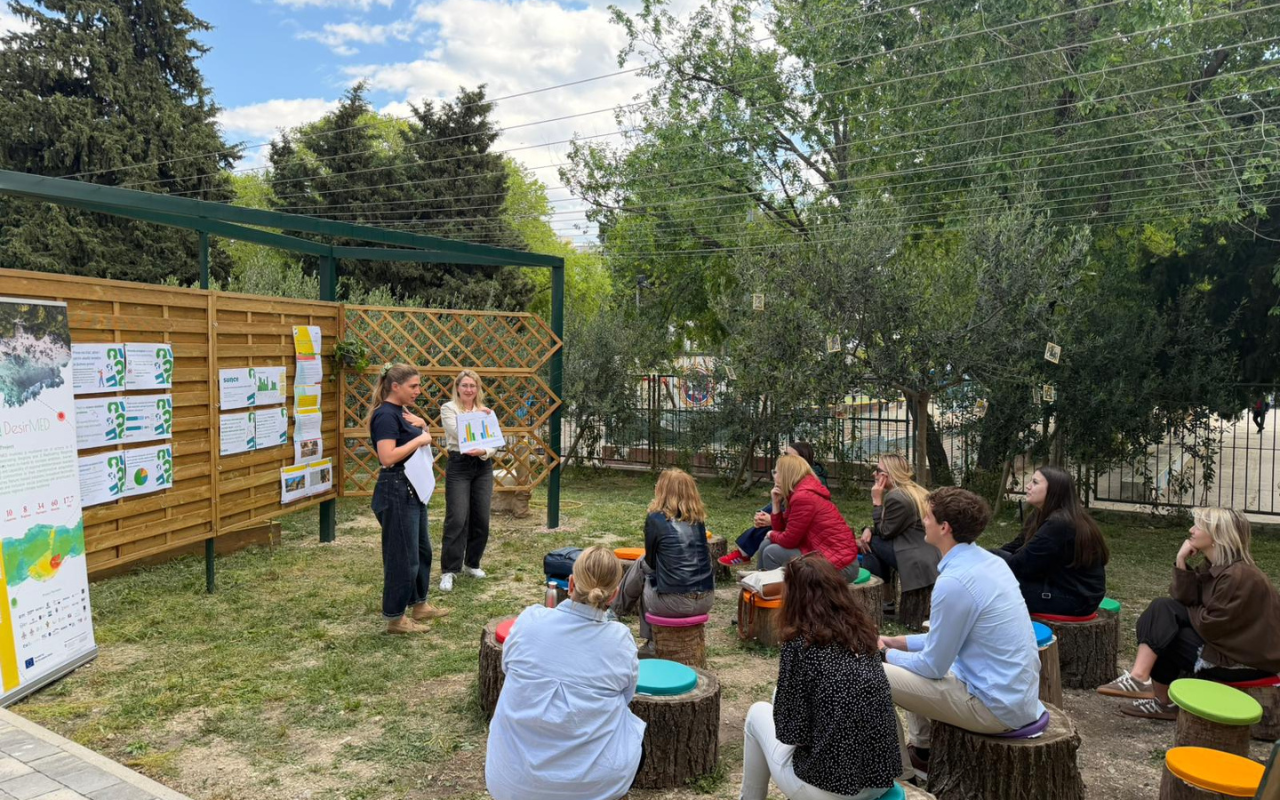
On Earth Day, April 22, the Brda Primary School in Split became a hub for meeting, exchanging ideas, and exploring practical solutions among education professionals working toward a greener future. Schoolyards and kindergarten playgrounds can become living classrooms of sustainability! With that goal in mind, the Sunce Association has launched the DesirMED call for schools and kindergartens in Split-Dalmatia County.
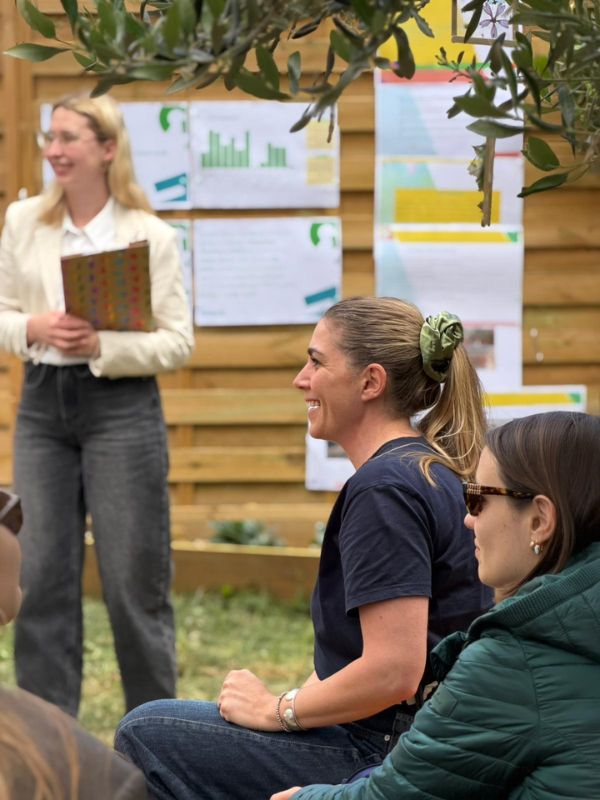
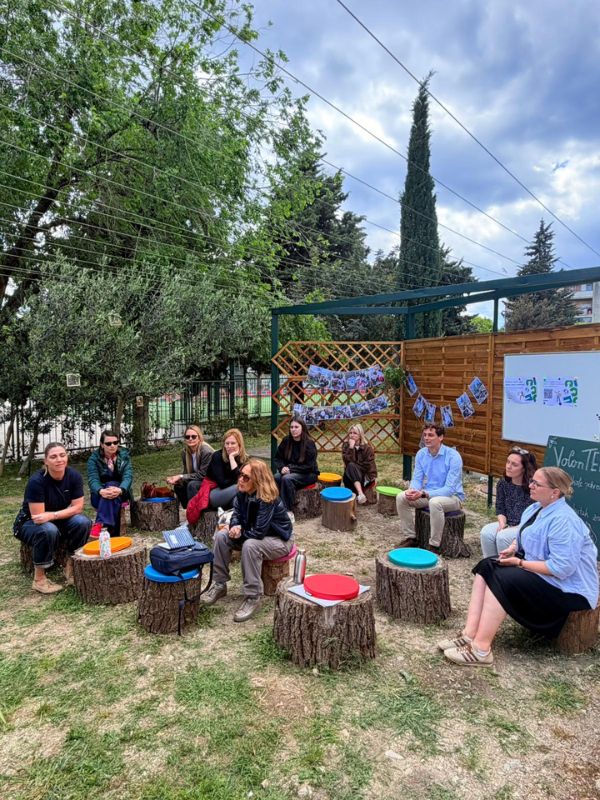
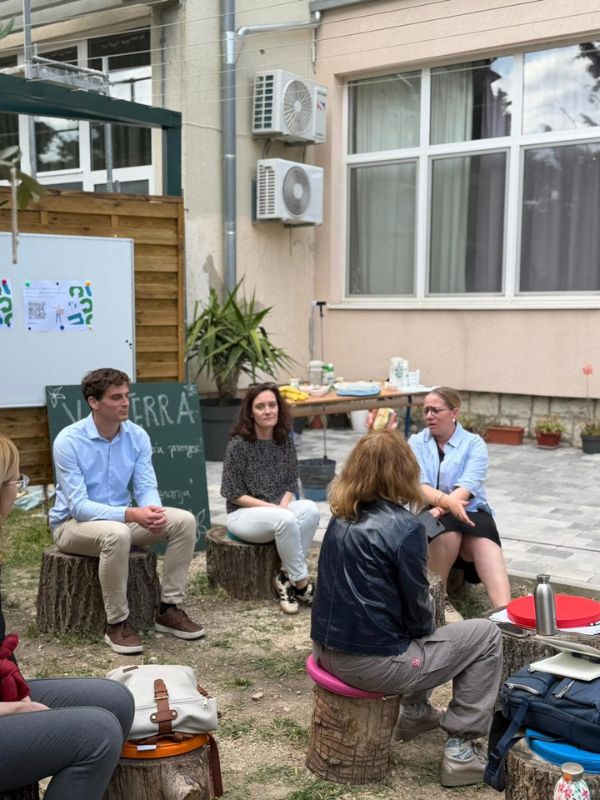
As part of the event, held in the unique setting of an outdoor classroom, which itself showcases nature-based solutions, participants had the opportunity to hear the results of two important studies and discuss both the challenges and opportunities for strengthening environmental awareness among young people.
– The idea behind this gathering was not only to mark Earth Day, but also to explore ways we can encourage young people to take action for the environment. The right to a clean, healthy, and sustainable environment is a fundamental human right that belongs to everyone from birth, regardless of race, gender, language, religion, or origin – but in today’s world, it’s a right we must constantly protect, – said Margita Radman, Head of the Education and Information Department at Sunce, at the opening of the event.
Young people are aware, but not active enough
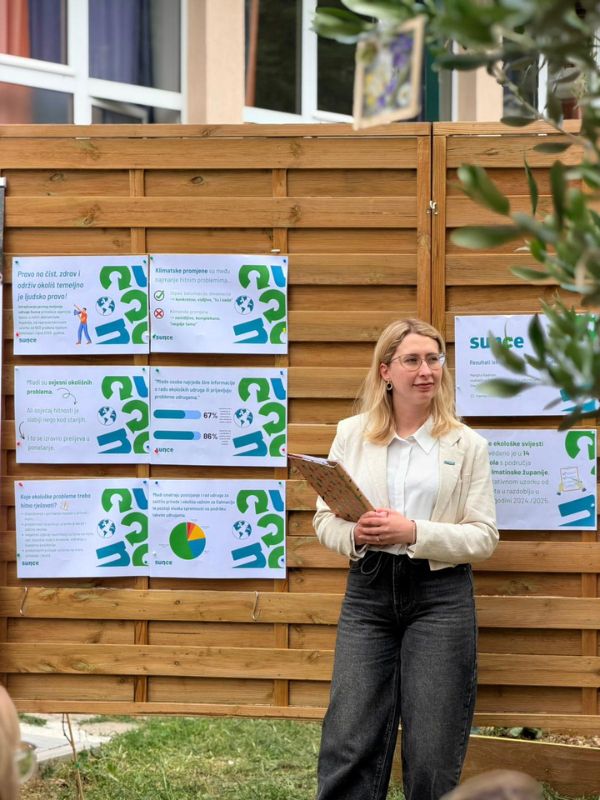
Findings from the study (available only in Croatian) “Perception of the Association Sunce in Four Dalmatian Counties,” conducted by Ipsos on a representative sample of 603 citizens in August and September 2025, show that young people are aware of key environmental issues. However, their sense of urgency is weaker compared to older generations, which directly affects their behavior.
They identified the most pressing problems as pollution and waste accumulation in nature and the sea, development projects that ignore construction and environmental regulations, and the negative impact of nautical tourism on the marine environment – such as wastewater discharge from boats, anchoring in seagrass meadows, and excessive pressure from tourism on the sea, coast, and environment.
These are issues they experience directly and visibly, while climate change is often perceived as abstract and distant, making it less concerning to them.
– As representatives of civil society organizations who work with young people, as well as educators, we need to strengthen children’s understanding of the link between everyday life and the climate crisis. Take, for example, the severe storms that hit Zagreb this year and Split last year, leaving significant damage behind. While trees were sometimes part of the damage, it’s important to emphasize how crucial trees and urban greenery are in protecting us from even more extreme weather in the future – as well as from unbearable heat, flooding, polluted air, and other consequences of climate change, – said Bruna Tomić, communications and advocacy officer at Sunce.
Another striking finding is that in the past two years, as many as 67% of young people have not shared any information about environmental NGOs (neither in person nor online), and 86% have not reported a single environmental issue. At the same time, most consider the work of environmental organizations important for Dalmatia and express a strong willingness to support them.
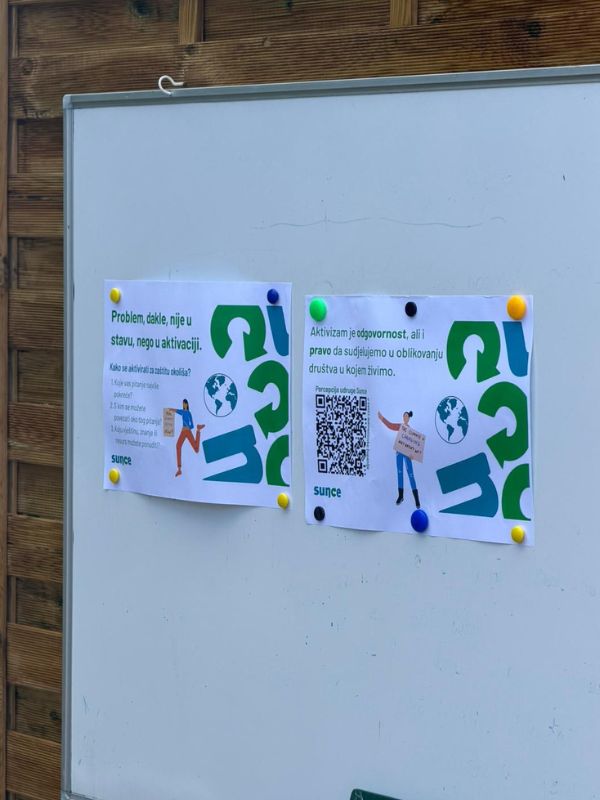
– The conclusion is clear: the issue isn’t attitudes—it’s activation. Young people are generally not inclined toward activism, or perhaps they simply don’t know how to get involved or what kind of impact they can have. At Sunce, we’ve repeatedly seen how citizen action can have real effects and drive concrete changes on the ground, – Tomić added.
High school students: awareness is there, but motivation is lacking
Additional insights were provided by a study on young people’s environmental awareness, conducted during the 2024/2025 academic year on a representative sample of 892 final-year students from 14 secondary schools in Split-Dalmatia County. The study was designed in collaboration with the Faculty of Humanities and Social Sciences in Split (Associate Professor Ivanka Buzov and Assistant Professor Mila Bulić), while the data were analyzed by sociology students Lovre Bralić and Lucija Tudić.
The findings show that most students have a well-developed environmental awareness and recognize the seriousness of the issues, especially when it comes to waste, marine and river pollution, and coastal degradation.
– What shocked us the most was the fact that as many as 80% of students do not participate in any extracurricular activities – not just environmental ones, but anything at all. So it’s perhaps not surprising that their willingness to engage more actively in environmental protection – whether by talking to others, joining organizations, or launching initiatives, is mostly moderate or low, – Radman explained.
It is also concerning that nearly half of the students (48.8%) believe there is no point in protecting the environment if others are not doing the same, pointing to the need to strengthen the sense of personal responsibility and individual impact. Combined with the finding that students rate their own awareness higher than that of their peers, this suggests there is significant potential in Split-Dalmatia County to foster a more active approach among young people toward environmental protection.
An opportunity for real change
As a concrete step forward, the event also presented the new DesirMED call for schools and kindergartens in Split-Dalmatia County – moving from ideas to action, precisely where it is most needed: in the outdoor spaces of educational institutions.
This is an opportunity for primary and secondary schools, as well as kindergartens, to design and implement projects for transforming their outdoor areas using nature based solutions, with both financial and professional support.
– This call is not just about infrastructure—its greatest value lies in its educational and social dimension. Children have the chance to actively participate in designing and implementing solutions, learning through experience, developing a sense of responsibility, and gaining practical knowledge about sustainability, – explained Maja Jurić, DesirMED project manager at Sunce.
The total prize fund amounts to €12,000, and projects will be evaluated based on quality, innovation, and the application of sustainable principles. The number of awarded projects will depend on the expert jury’s assessment, with the goal of supporting ideas that contribute long-term to climate resilience and the quality of life for students.
– Last summer, measurements showed that ground surface temperatures around educational institutions in Split, Kaštela, Solin, and Trogir exceeded 36°C levels that can pose risks to health and the environment, and make these spaces difficult to use. We need to green these areas and make them more comfortable for children and young people. Such spaces not only help mitigate the effects of climate change, like extreme heat, but also create healthier, more pleasant, and more stimulating learning environments. That’s why we invite educational institutions across the county to apply and become drivers of change, – Radman emphasized.
The call is open until May 31, 2026. More information and application materials are available via link.


Towards a greener future together
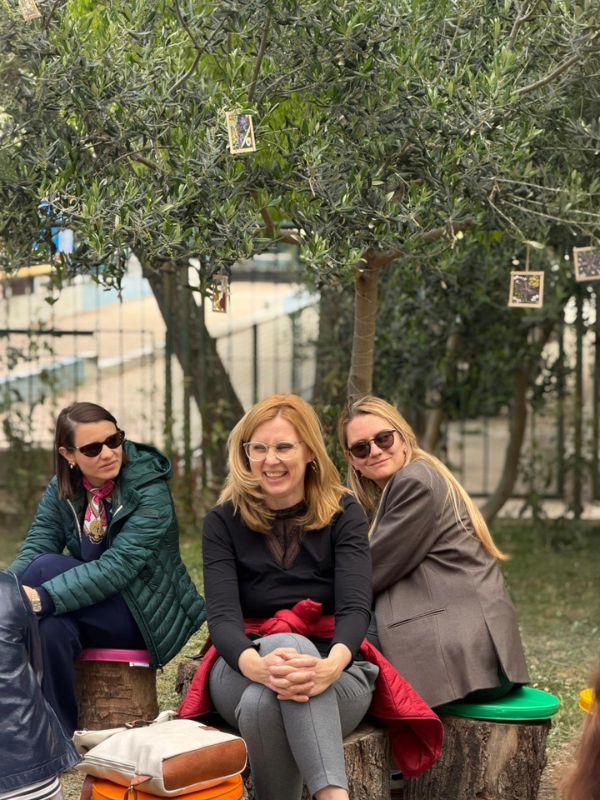
The event concluded with informal networking and exchange of experiences, along with a clear message: the education system, parents, and the wider community all play a crucial role in empowering young people to engage with environmental issues and showing them that their involvement matters.
Young people are already aware of environmental problems—and concerned about them. What they need are opportunities, support, and practical tools to become part of the solution.
And transforming a schoolyard might just be the first step.
