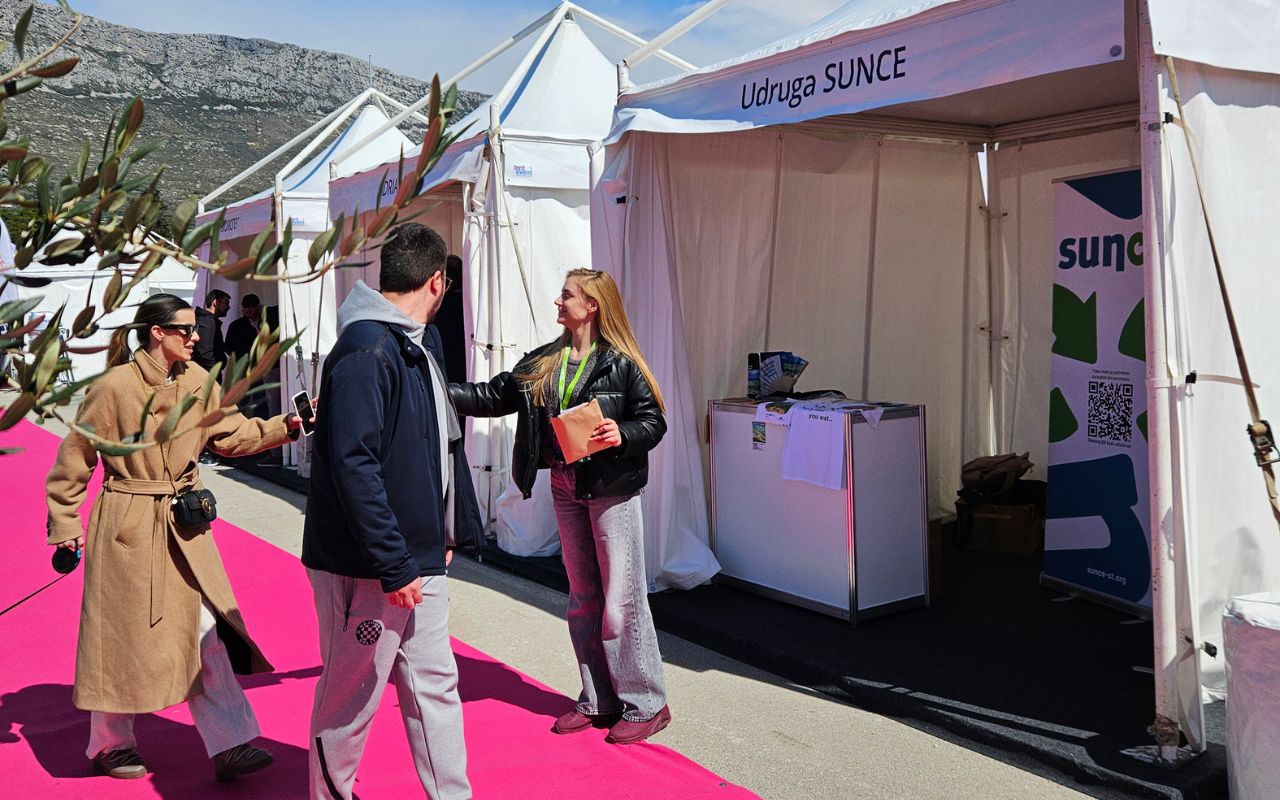
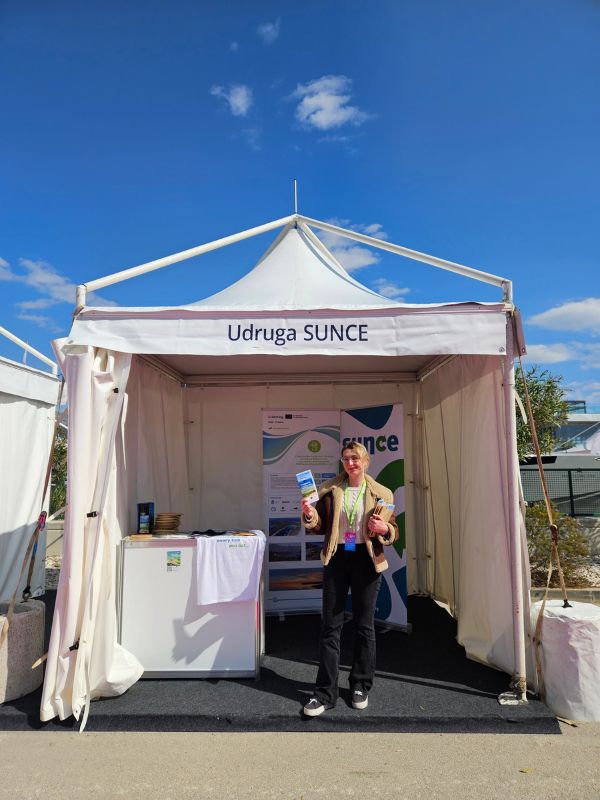
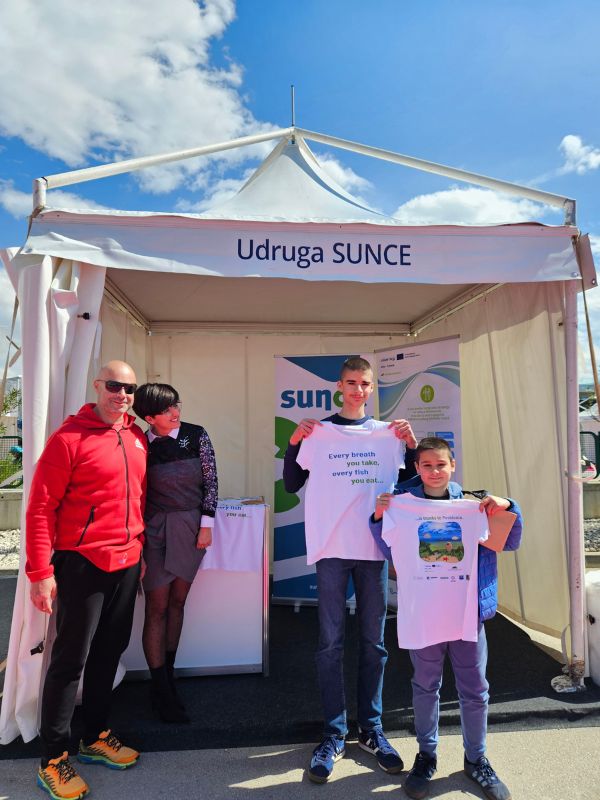
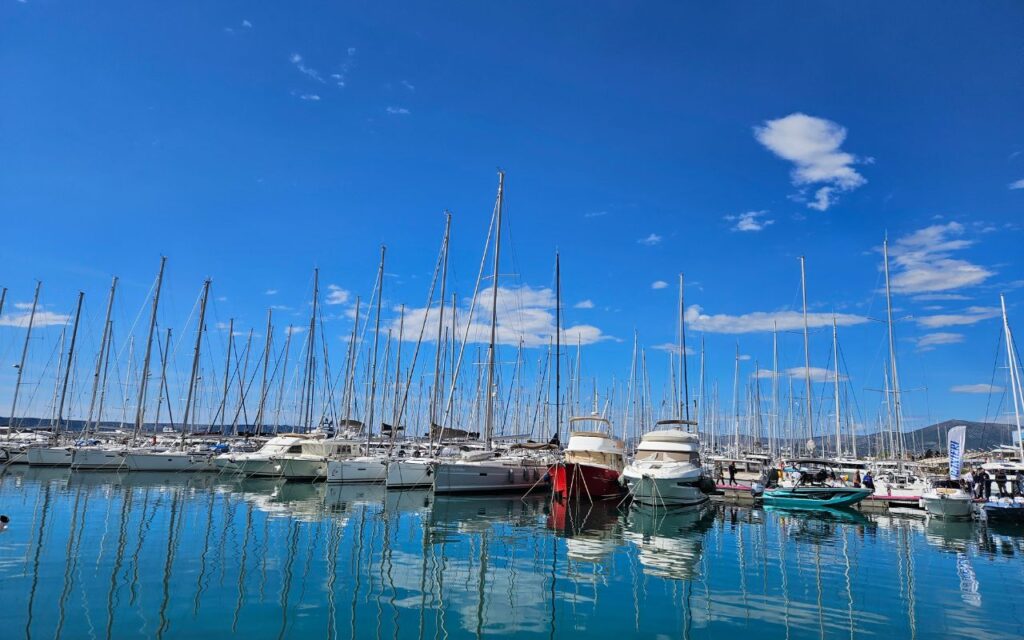
The Sunce Association once again took part in the Croatia Nautic Show, which held its 18th edition from March 26 to 29 at Marina Kaštela. Despite unfavorable weather conditions, visitor interest was high, and the Sunce booth attracted numerous citizens and sailors, as well as innovators and experts interested in preserving the Adriatic Sea.
Through conversations, education, and interaction with visitors, Sunce once again demonstrated how important it is to be present at such events – not just as an observer, but as an active participant in shaping a sustainable future for the sea.
‘Pay attention to where you anchor!’
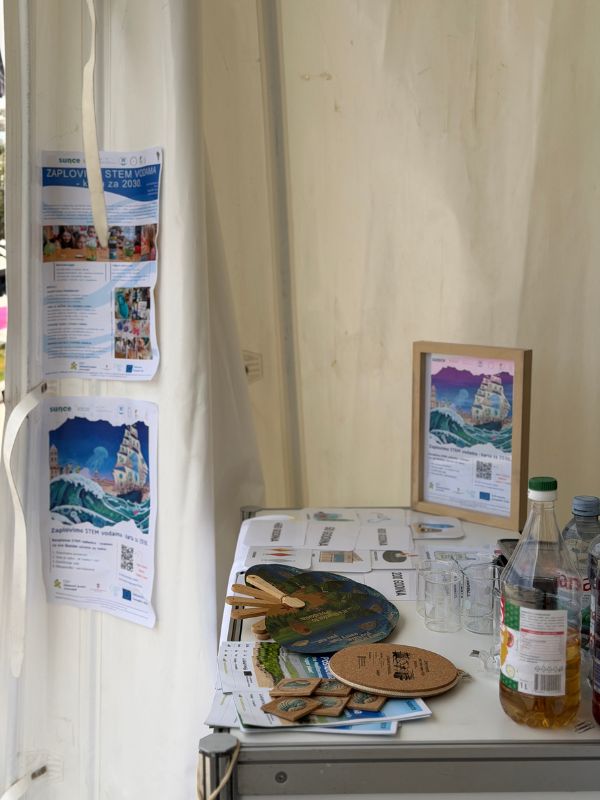
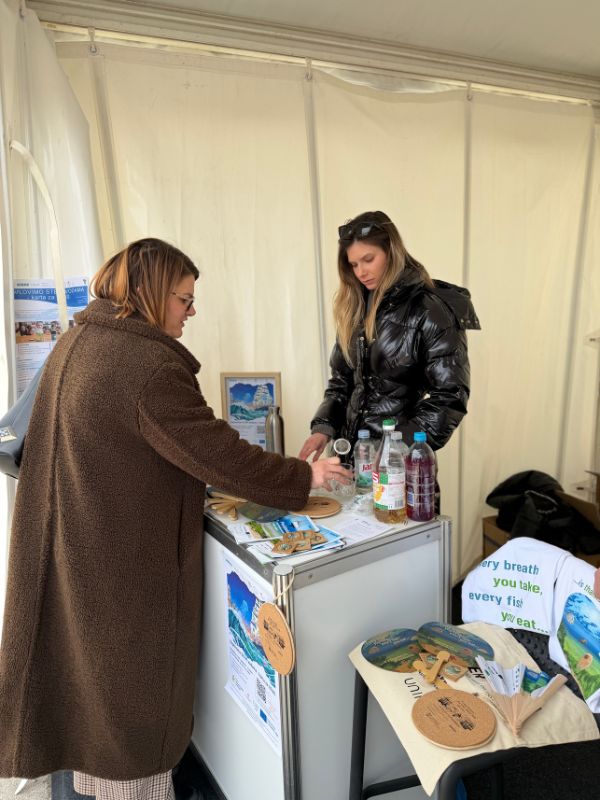
One of the most effective ways of engaging with visitors was by asking a simple question: “Do you know what Posidonia is?” This was enough to spark conversations that often turned into short but meaningful educational exchanges about one of the most important marine flowering plants in the Adriatic.
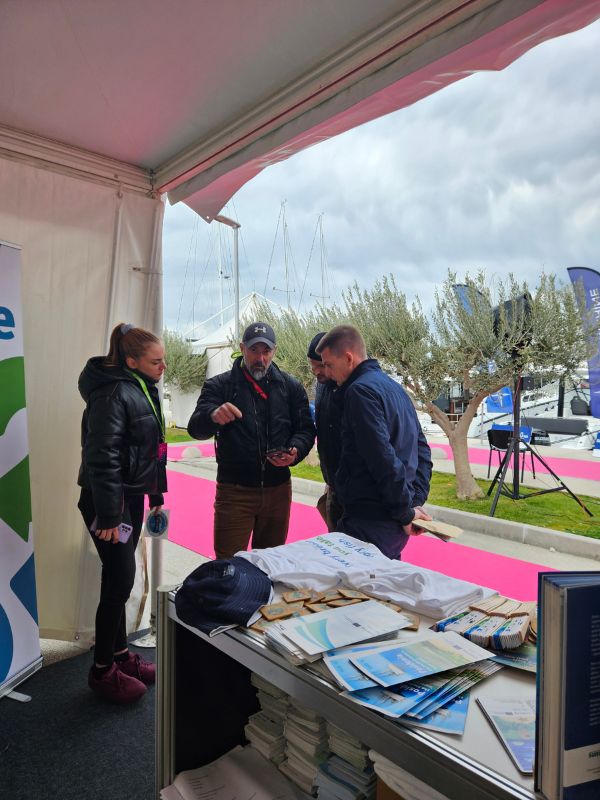
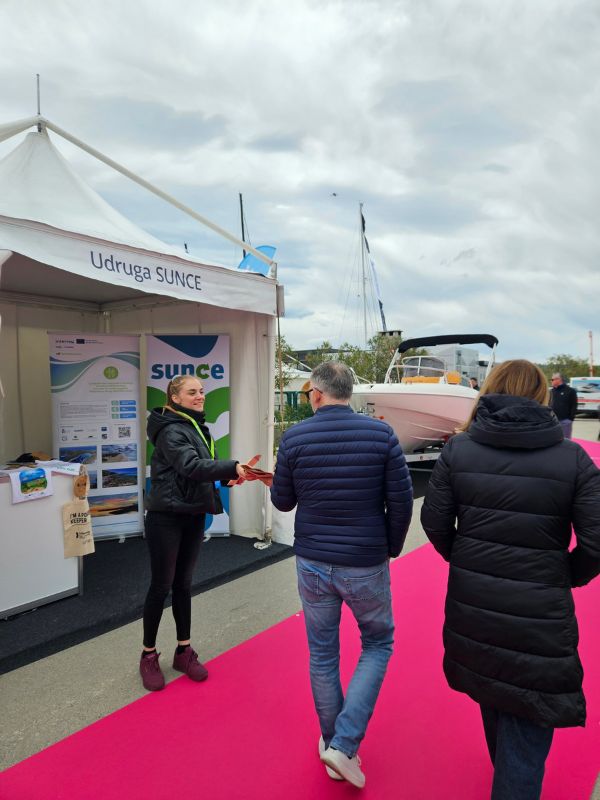
Although many visitors recognized Posidonia as “sea grass” or “dark areas in the sea,” only a few were familiar with its role in preserving biodiversity, stabilizing the seabed, producing oxygen, and storing carbon dioxide.
After a brief conversation and explanation, the message visitors took away was clear: “Next time, pay attention to where you anchor!”
– We realized that many people lack concrete information about how their behavior can contribute to protecting the sea. That is why distributing educational materials about Posidonia, prepared within the Interreg Italy–Croatia BIOPRESSADRIA project, was a valuable tool for raising awareness, – said Karla Jelić, Assistant at Nature Conservation Department at Sunce.
Interactive STEM activities particularly captured the attention of younger visitors. Through these activities, children were able to learn in a simple and engaging way about ocean acidification, microplastics, and changes in marine ecosystems. This public event, organized within the Let’s Set Sail into STEM Waters – Ticket to 2030 project, proved to be an excellent way to bring science and environmental topics closer to younger generations.

Citizens as key allies in marine protection
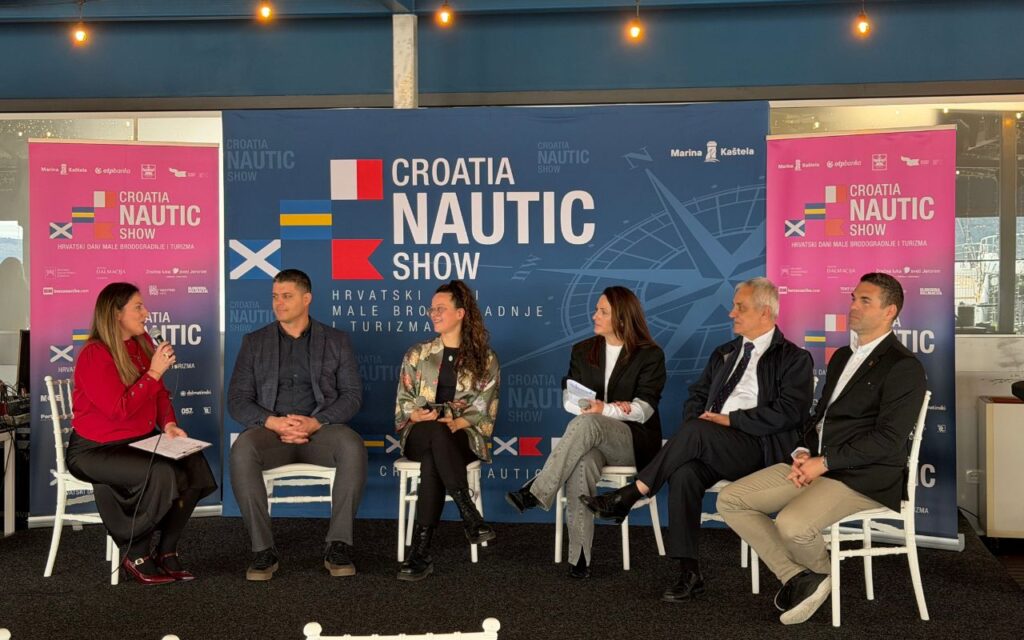
As part of the CNS, we also held a panel discussion titled “Citizens as allies in marine protection: how can we improve the marine pollution reporting system?”. The discussion brought together institutional representatives, experts, and stakeholders from the nautical sector with the aim of opening dialogue on marine protection and improving reporting and surveillance systems for pollution.
Before the panel, Eva Šore, an intern in Sunce’s Communications and Advocacy Department, presented the results of an analysis of marine protection cases based on reports received via Sunce’s Green Phone for 2024 and 2025. According to the Analysis, conducted within the project Green Phone – Lend Your Voice to the Environment III! (co-financed by the Environmental Protection and Energy Efficiency Fund), Sunce receives around 200 citizen reports annually from the Split-Dalmatia and Dubrovnik-Neretva counties, with a significant portion related to marine issues.
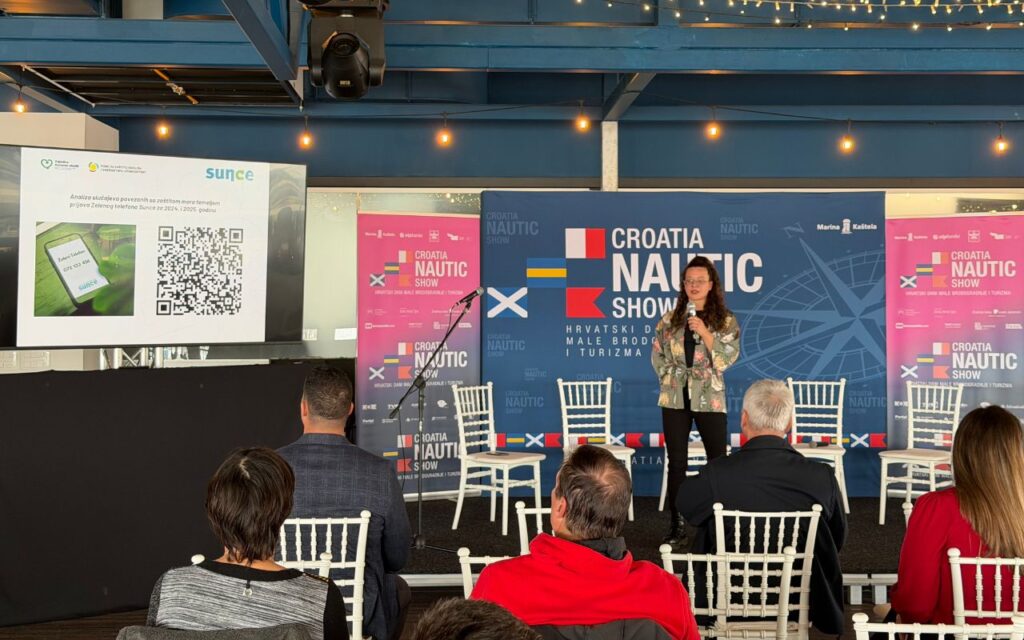

Of the total number of reports, some citizens were advised on how to act independently, while in many cases Sunce directly contacted the relevant institutions.
– We have noticed that feedback from institutions is often lacking. Key challenges include insufficient coordination between institutions handling environmental issues, a limited number of inspections, infrastructure problems such as a lack of reception stations and limited institutional capacity. We also identified a lack of public awareness, weak field surveillance, and insufficient sanctions for violations, – said Šore.
How can the marine pollution reporting system be improved?
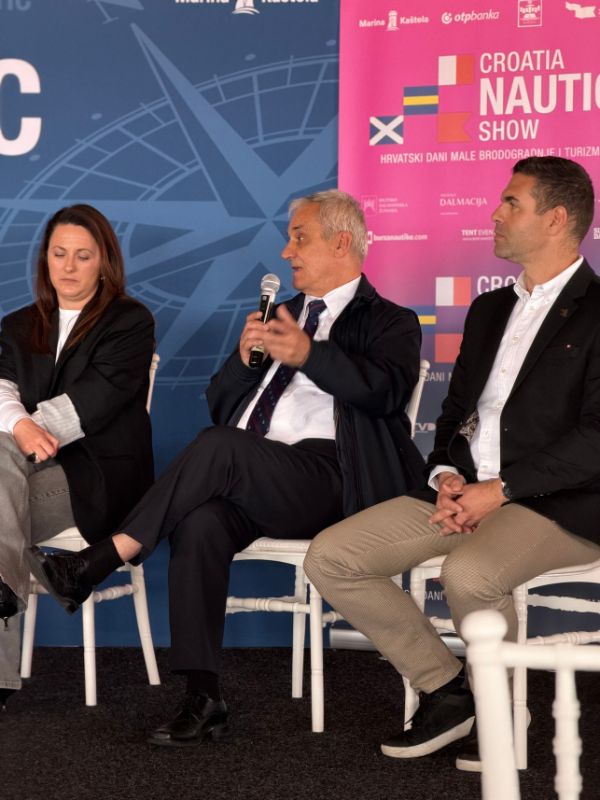
The panel attempted to address these challenges and explore solutions through a discussion with Tomislav Vidić (advisor at the Administrative Department for Tourism, Maritime Affairs and Transport of Split-Dalmatia County), Gabrijela Katalinić Grabić (maritime officer, Split), Željko Kuštera (Harbor Master, Split), Zlatko Vodanović (CEO of Adriatic Sailing), and already mentioned Eva Šore.
As highlighted in the Analysis, reports exist, but responses from authorities are often missing. So where lies the problem?
– When we receive a report of marine pollution, we forward it to the relevant harbor master’s office and dispatch eco-boats if necessary. Sometimes we are not allowed to provide feedback due to court orders, but we regularly submit all our reports to the Ministry of the Sea, Transport and Infrastructure, – explained Vidić.
– When it comes to pollution caused by discharging wastewater from tankers within three nautical miles of the coast, the issue is that there are often many vessels in such areas, making it difficult to identify which one discharged the tank. We rarely can prove exactly which vessel was responsible. At the same time, we cannot inspect all vessels or check cabins and valves. We simply do not have the capacity, and by the time we would arrive at the scene, the sea would have already carried out biological purification. – Kuštera noted.
If solving the problem directly isn’t always possible, we asked the panelists whether more could be done in terms of prevention. For example, whether someone could be deployed during the season to proactively monitor areas under the greatest pressure.
– Harbor master’s offices do carry out preventive actions and we know where the hotspots are. However, when we receive ten reports at once, we must prioritize the most urgent cases and send our available vessel there. Naturally, cases involving human life take precedence over pollution incidents. Our priorities are navigation safety and rescue, – Kuštera added.
The system must be more efficient, transparent, and accessible
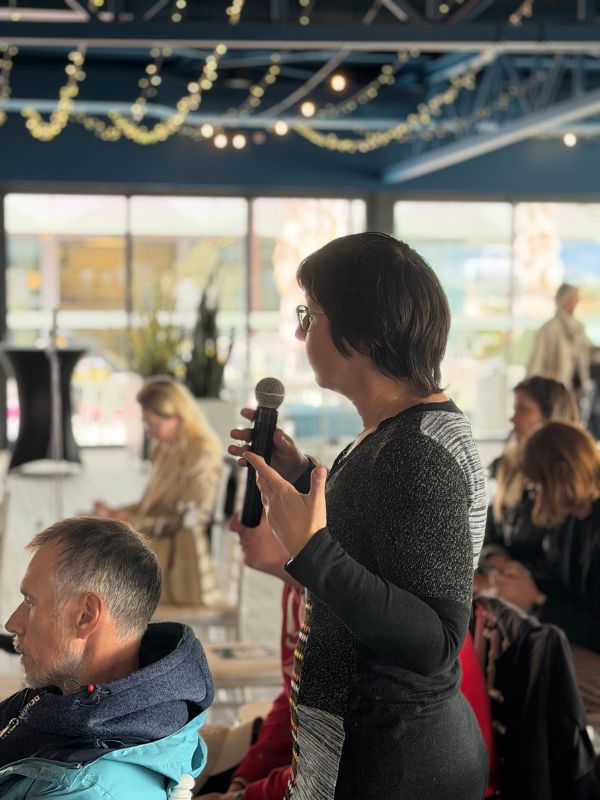
Much of the discussion on the panel focused on priorities, with both some panelists and members of the audience suggesting that there are more pressing issues in the Adriatic that need to be addressed. Still, some participants offered possible solutions.
– Croatia has the most modern charter fleet in the world. Why? To remain competitive. Because of continuous investment, most charter vessels are equipped with the latest tank technology, which can help reduce wastewater discharge. Perhaps crewed vessels are a solution – removing bareboat rentals could allow for greater control over behavior at sea. Still, compared to other countries, I would say we are relatively aware and not in a bad position in the Mediterranean when it comes to wastewater issues, – said Vodanović.
Although some marinas, such as Marina Kaštela, have introduced penalties for tank discharge, the panel emphasized that this alone is not sufficient. A key challenge remains the insufficient number and capacity of reception facilities, especially during peak season when many vessels use the infrastructure simultaneously. Improving infrastructure across marinas in the Adriatic would reduce wastewater pollution near beaches and bays – precisely the areas that attract most nautical tourism to Croatia.
Ultimately, the panel confirmed what Sunce has long recognized: although the number of marine pollution reports is increasing, institutional responses largely depend on field priorities and procedures. The system for addressing marine pollution must become more accessible, efficient, and transparent, if the case allows it.
The Adriatic is our shared responsibility
Participation in the Croatia Nautic Show once again demonstrated the importance of fostering dialogue between citizens, experts, and institutions.
– The fact that our participation made sense was confirmed by many visitors who said they appreciated seeing a civil society organization among the exhibitors, alongside the usual offer of boats and nautical equipment. This confirmed that awareness of the importance of marine protection exists, but also that there is a need for further education of the citizens, clearer regulations, and a more effective protection system, – concluded Bruna Tomić, Expert Associate at Communications and Advocacy Department at Sunce.
Protecting the Adriatic is not the responsibility of a single group, but a shared duty of all who love, use, and depend on the sea.
