Did you know that around 75% of the world’s main types of food crops depend, at least in part, on animal pollination? Apples, strawberries, almonds, and many other foods are linked to the work of pollinators, among which bees play an important role. According to the Food and Agriculture Organization of the United Nations (FAO), pollinators contribute to approximately 35% of global crop production by volume. This does not mean that 75% of all food would disappear without them, but it does show just how important they are for the diversity of our diets.
Bees and other pollinators enable many plants to reproduce, contribute to the maintenance of ecosystems, and support biodiversity. That is why protecting them is not just a topic for beekeepers, but also part of the broader story of nature conservation, habitat protection, and climate change.
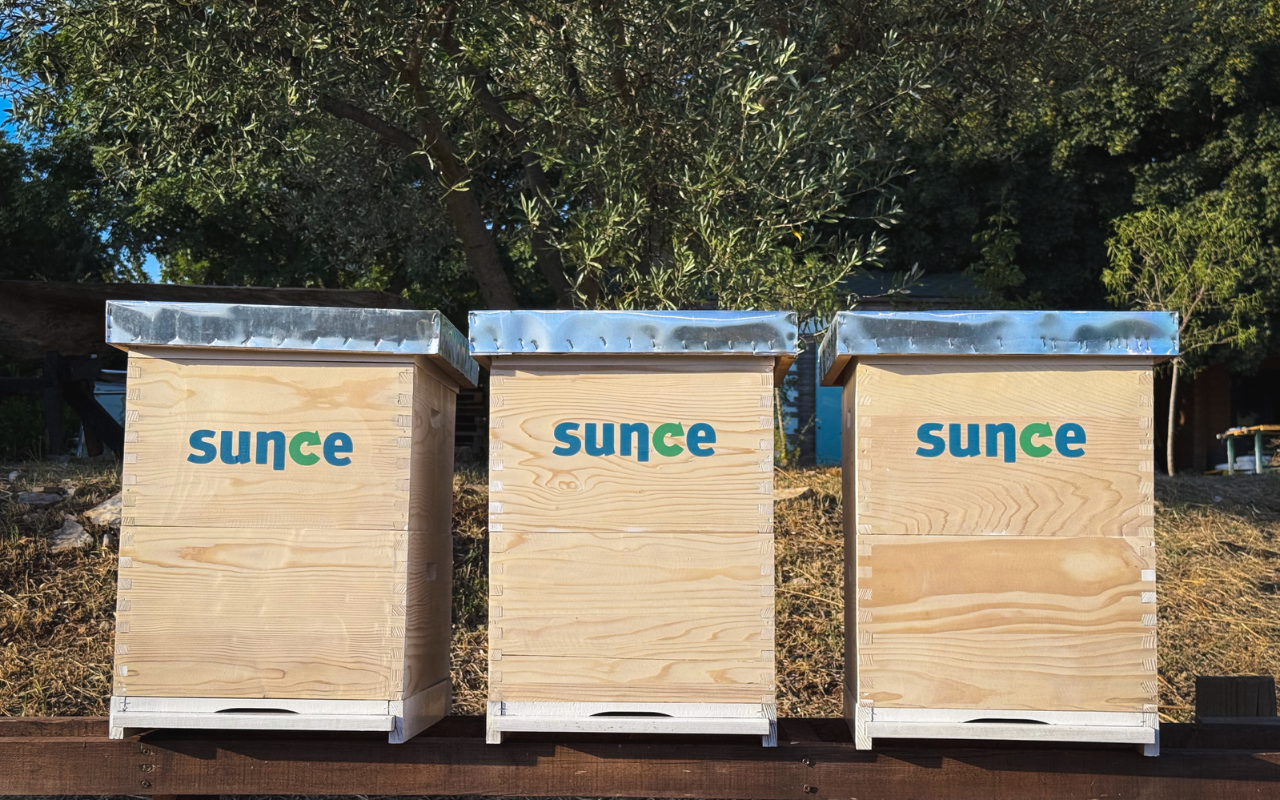
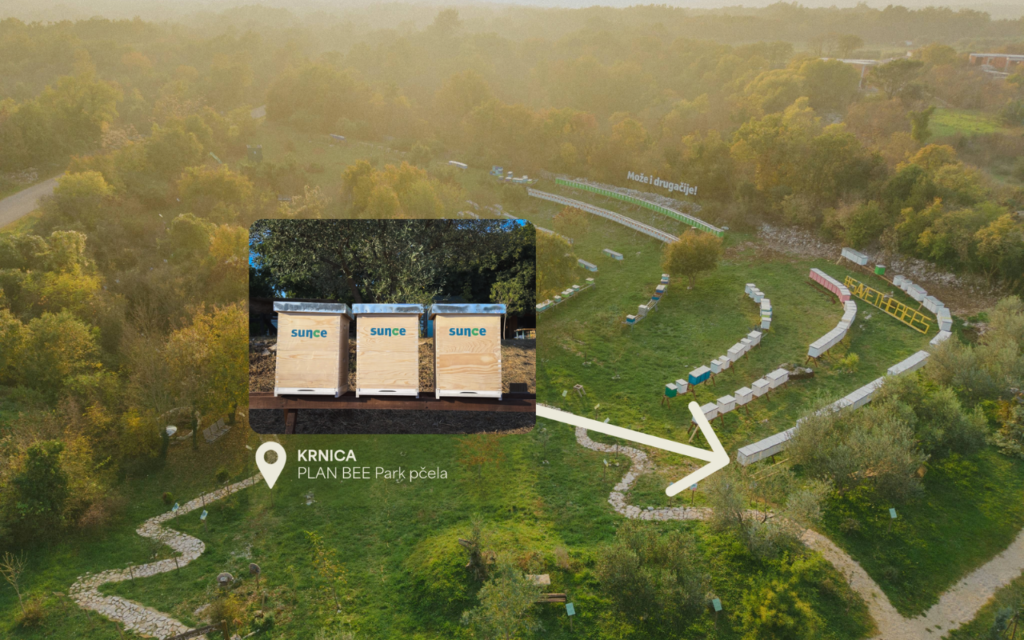
For this very reason, Sunce has partnered with the Plan Bee initiative by adopting three beehives in Krnica, Istria. Through this collaboration, we want to show that sustainability does not have to remain just words, but can be translated into concrete decisions and support.
Why are bees important even when we are not producing honey?
Bees are much more than honey producers. Their most important role is pollination, or the transfer of pollen that enables plants to be fertilised and produce fruits and seeds. In this way, they contribute to the reproduction of wild plants that provide food and shelter for other organisms, and they are also essential for the production of numerous agricultural crops.
As Filip Raponja, beekeeper and founder of the Plan Bee initiative, explains, the role of bees extends far beyond honey production.
– They are part of a complex network of relationships in nature, in which pollination supports the diversity of plants and animals. A decline in the number of pollinators can have consequences for entire ecosystems, agriculture, and food availability. Protecting bees therefore also means preserving the natural processes on which we depend. – our interviewee explains.
How is climate change affecting the lives of bees?
In addition to habitat loss, diseases, pests, and pesticide use, bees are also facing the consequences of climate change. Changes in temperature and weather patterns affect the timing of plant flowering, food availability, and the conditions in which bee colonies live.
For example, fruit trees may blossom earlier due to an unusually warm period and then be affected by a late frost. Prolonged rain and strong winds can prevent bees from leaving their hives to collect food, while drought reduces the amount of nectar and pollen available. Changes in the timing of plant flowering can also create a mismatch between the period when flowers are available and the period when pollinators are active.
– Such changes make it more difficult to find food and affect the development of bee colonies, while the challenges faced by beekeepers can also affect honey production. Although bees play an important role in nature, they cannot adapt to all changes on their own if they are simultaneously losing their habitats and food sources. That is why it is important to preserve diverse environments and create conditions in which pollinators can find food throughout as much of the year as possible. – Filip points out.
Sunce adopts three beehives in Istria
The collaboration with the Plan Bee initiative began after Filip Raponja, a beekeeper who wants to introduce people to the world of bees and encourage them to protect these insects, contacted us. Through this initiative, he aims to highlight the importance of bees to nature and the need to support their survival.
As part of the “Become a nature hero” campaign, Sunce adopted three beehives located in Krnica, on the southeastern coast of Istria. In this way, we support the care of bee colonies, and through this collaboration, we want to encourage discussion about the importance of pollinators and the need to actively protect them.
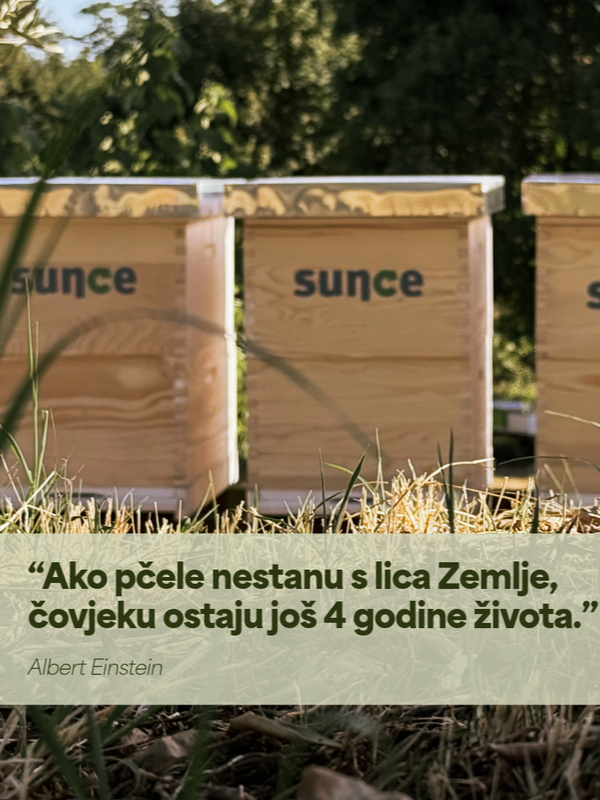
– The project brings together social responsibility, honey production, and bee conservation. By purchasing a beehive, organisations do not simply get an opportunity to display their logo; from the very beginning, they help establish a new bee colony of 50,000 bees. The more beehives a company takes on, the greater its contribution to nature conservation. The company owns the beehive for one year, and in return receives high-quality honey from its own bee colony. – Filip explains.
By adopting three beehives, Sunce provides a home for as many as 150,000 bees, which will pollinate up to 6 million flowers every day. Over the course of a year, this amounts to as many as 30 trillion pollinated flowers, while also contributing to the production of 210 new jars of honey.
At the same time, it is important to remember that honeybees are not the only pollinators that need our care. Protecting biodiversity also means safeguarding the many wild species that have their own needs and roles within ecosystems.
What can we do for bees and other pollinators?
Alongside honeybees, wild bees, bumblebees, butterflies, and other insects play an important role. Many wild bees are solitary and depend on the availability of food and natural nesting sites. Excessive mowing, the removal of old trees and dead wood, and the conversion of diverse green spaces into uniform lawns reduce their chances of survival.
Each of us can help by making simple changes in our gardens, on our balconies, or in our communities:
- Plant a variety of plants that flower at different times of the year and provide pollinators with food over a longer period.
- Leave part of your garden or lawn unmown so that wild plants can flower and provide nectar and pollen.
- Protect trees, hedges, and natural shelters that provide many organisms with places to live and reproduce.
- Avoid unnecessary pesticide use and choose ways of maintaining green spaces that cause less harm to insects.
- Install an insect hotel as an additional nesting place for certain species of wild bees, provided it is properly constructed and maintained.
It is important to note that an insect hotel is not a substitute for natural habitats and is not intended for all bee species. The most important thing is to preserve diverse environments in which pollinators can find food, shelter, and places to reproduce.
Get involved in nature conservation
Climate change and biodiversity loss are major challenges, but we can all contribute to change. Through the DesirMED project, Sunce is involved in promoting and implementing nature-based solutions that help the Mediterranean adapt to climate change. Would you also like to contribute to a more climate-resilient future? You can become a DesirMED Climate Ambassador! Share your examples, ideas, and activities that contribute to climate change adaptation, and inspire others to get involved.
At Sunce, we believe that change happens when people come together around a common goal. Become a member of Sunce, volunteer, and take part in our activities. Together, we can preserve biodiversity, protect the environment, and contribute to a more resilient and sustainable future.
