Have you already heard that the amount of waste is constantly increasing and that almost 80% of marine litter comes from land? This means that the plastic packaging that you thrown into the wrong bin could end up on the beach where you plan to swim. It is becoming increasingly clear that change must start with everyday habits — in households, educational institutions and the business sector. With this idea in mind, the AWASTER project – Adopting WASTE as Resource -was developed to promote the principles of the circular economy and waste reduction through educationand practical solutions.
That these changes are not just theoretical is confirmed by real-life experiences. During 2024. and 2025., Sunce provided composters for use at the Makarun restaurant, the Mendula restaurant, and the Orkulice kindergarten in Sali. Although these are completely different environments, the result is the same — less waste and greater awareness of how we manage it. These experiences show how project goals can be translated into real life through small but meaningful changes in everyday operations.
Examples of composting practices in Split restaurants
Everyone talks about the “circular economy,” but few explain what it actually looks like when, in the middle of a busy working day in a restaurant, you need to manage bio-waste. In the dynamic hospitality environment, every gram of waste represents both a cost and a logistical challenge.
At Makarun and Mendula restaurants, composters quickly became part of the kitchen’s daily routine. Food scraps and organic waste no longer end up in bins as waste but become a valuable resource. Kitchen staff adapted quickly, and the devices proved simple to use and suitable for the fast-paced hospitality environment.
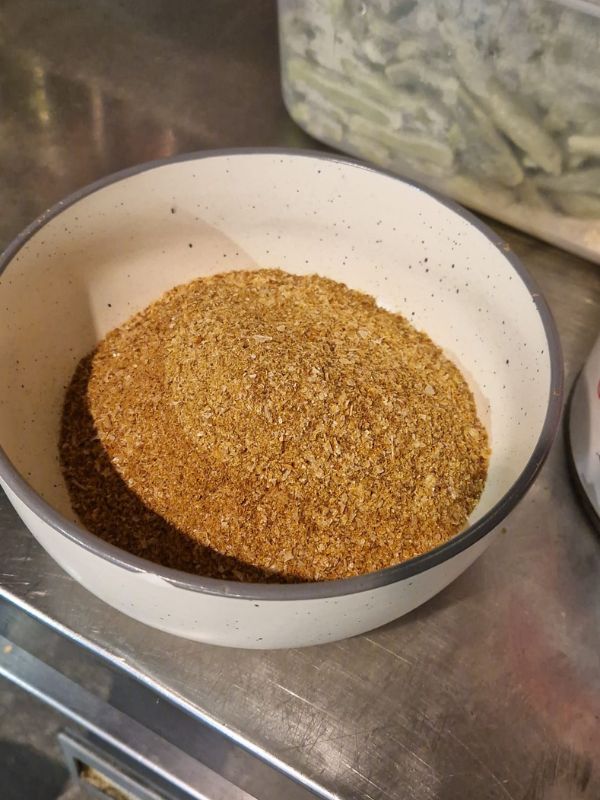
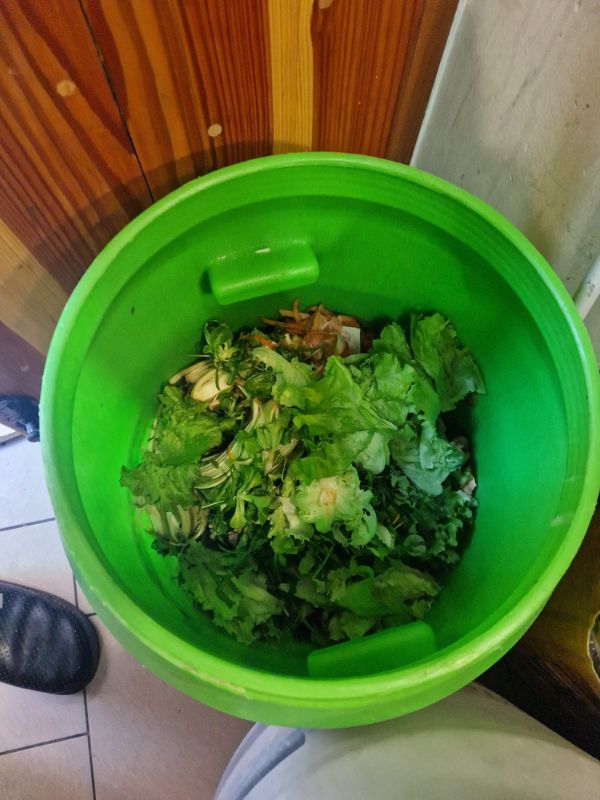
As employees of Makarun restaurant point out, the biggest change was in mindset: “We started looking at food leftovers differently. What we once considered waste, we now see as something useful.”
However, the experience also raised important questions. In restaurants, it became clear that the capacity of the composters is often insufficient for the amount of waste generated during the tourist season. Such experiences are valuable because they show what needs to be improved to make these solutions even more efficient and better suited to larger users.
Education and habit change at Orkulice kindergarten
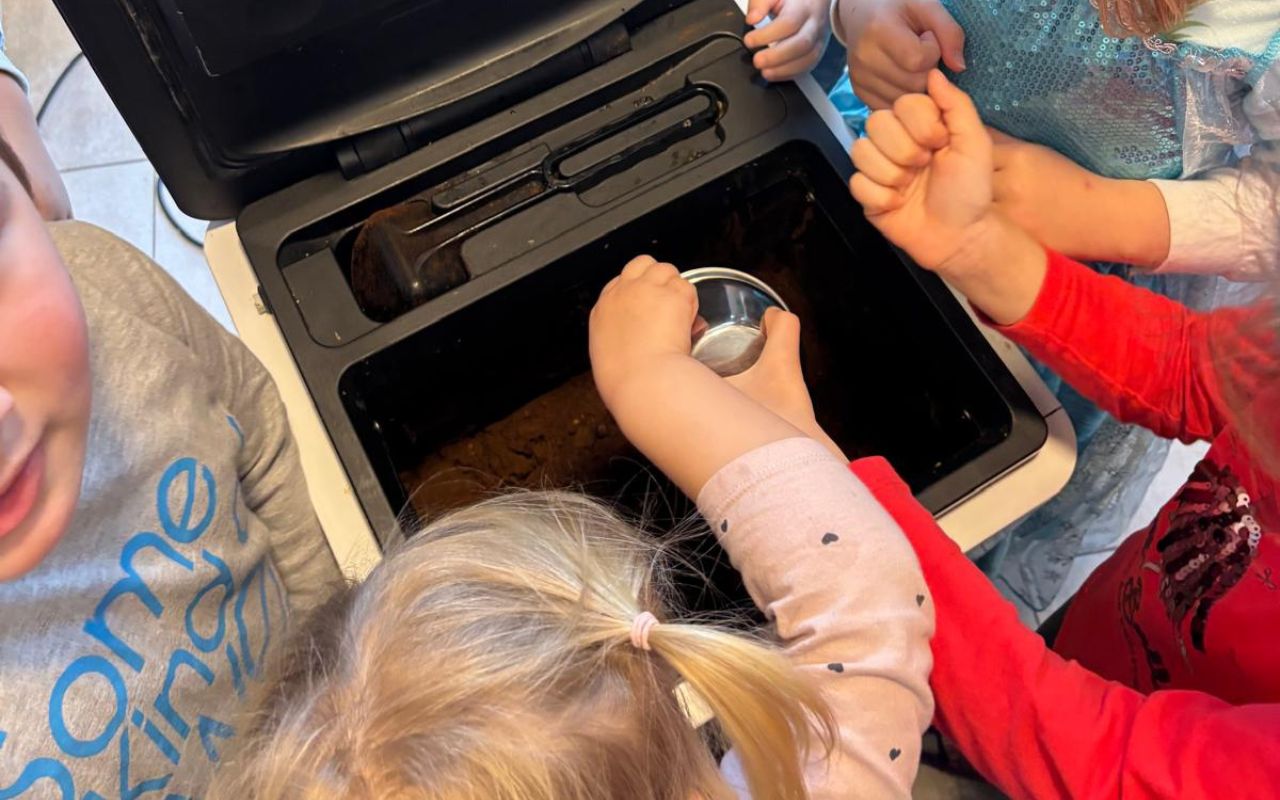
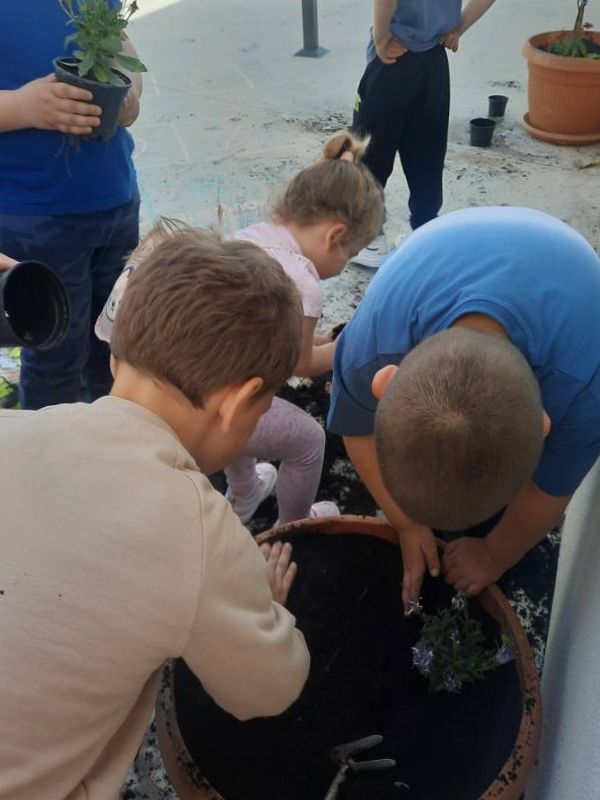
While restaurants focus on logistics, the Orkulice kindergarten in Sali focuses on education. Here, the composter became a living laboratory of nature. Children participate daily in waste separation, learn about natural processes, and observe how food scraps transformed into compost are later used in the garden.
One of the key activities of the AWASTER project is education, especially from an early age. The experience of Orkulice kindergarten clearly demonstrates how effective this approach can be.

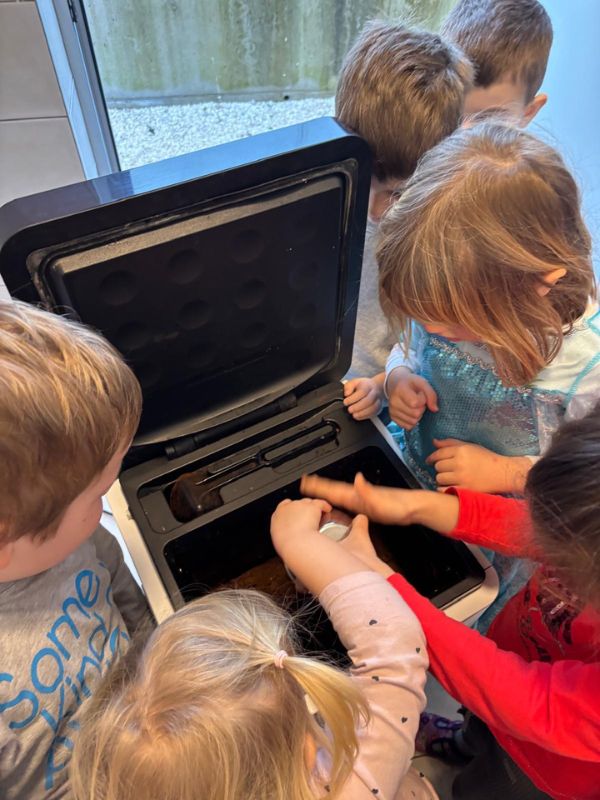
The composter became part of everyday life at the kindergarten, where children develop environmentally responsible habits through play and practical application. They actively participate in waste separation, follow the transformation of food waste into compost and use it in the garden. Through this process, they learn what bio-waste is, how nature functions, and why responsible resource management matters.
Teachers point out that children quickly adopted the new habits and even began reminding one another what belongs in the composter and what does not. Most importantly, the children became small ambassadors of sustainability, bringing their knowledge home and encouraging conversations with parents about more responsible environmental behaviour.
“Children explained to their parents at home what compost is and why it is important to separate biowaste. This is a true example of intergenerational knowledge transfer that the AWASTER project promotes,” emphasize the teachers of the Orkulice kindergarten.
Challenges as opportunities for improvement
Although the experiences have mostly been positive, certain challenges were identified. In restaurants, the composter capacity often proved insufficient for the amount of waste generated by large hospitality facilities. In the kindergarten, there was a need for better ventilation solutions.
Nevertheless, composters proved to be a simple yet effective solution. The circular economy does not begin with large strategies written on paper,but with small, consistent changes in everyday life. Composters reduce waste, restore value to bio-waste, and encourage behavioural change.
The observations gathered from restaurants and the kindergarten are extremely valuable because they contribute to the development of future guidelines and solutions — precisely what AWASTER aims to achieve through its activities. When we stop seeing waste as a burden and start seeing it as a resource, we open the path toward a healthier and more responsible society for future generations.
What comes next?
Although the AWASTER project is officially coming to an end, the composters will remain in use at all participating facilities. User feedback will serve as a valuable contribution to future initiatives and the development of more effective solutions for different users.
Most importantly, the project has shown that the circular economy does not begin with large systems, but with small changes in everyday habits. Practical examples like these remain an important incentive for further discussions about responsible waste management and the sustainable use of resources in local communities.
