
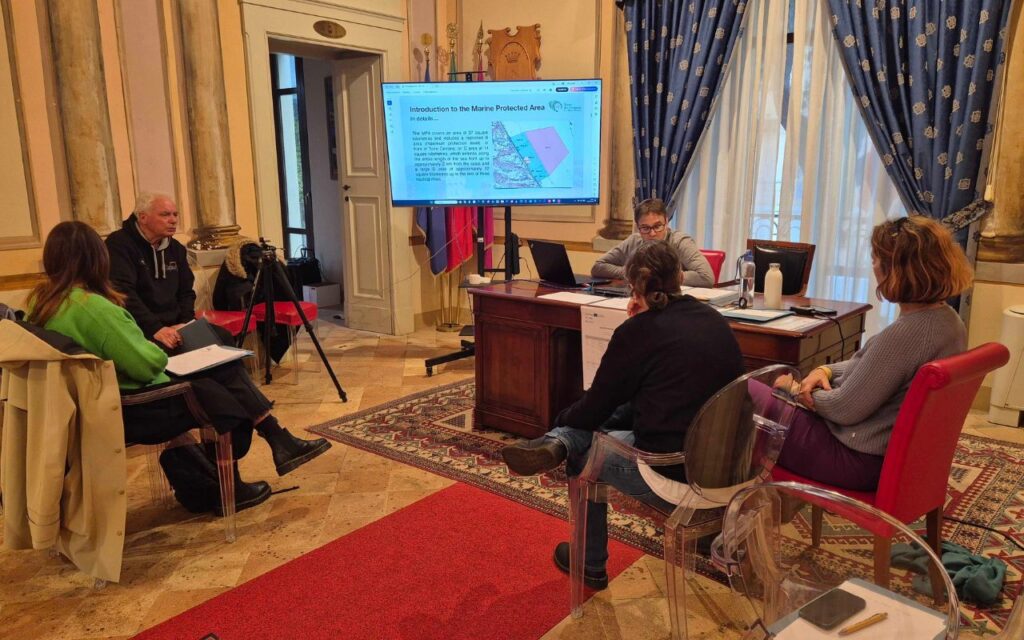
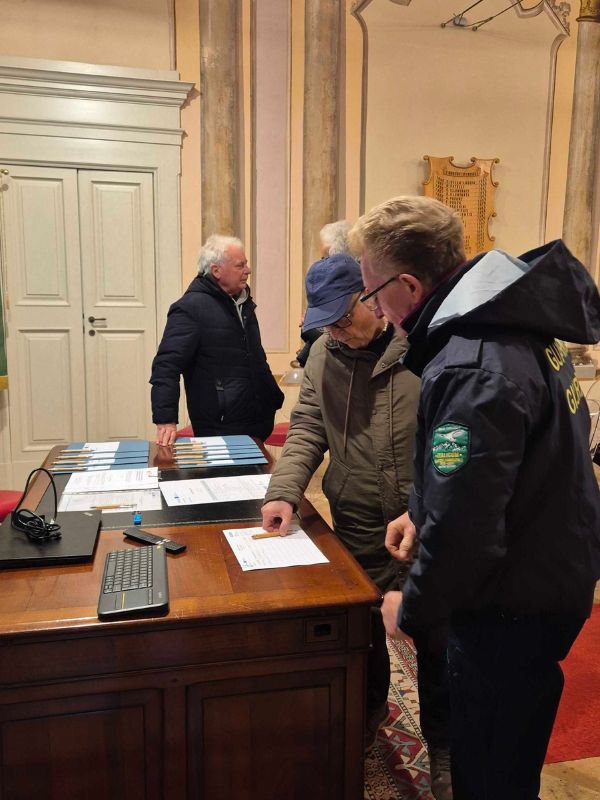
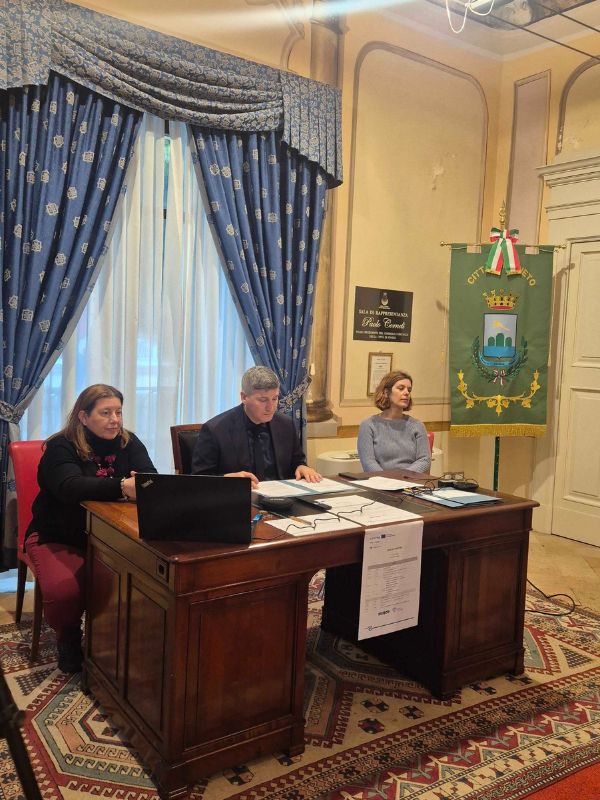
The kick-off meeting of the ADRIWATCH project was held on March 27 in the Italian town of Pineto, officially marking the start of this new Croatian–Italian initiative aimed at improving surveillance and data management in marine protected areas of the Adriatic Sea.
The meeting, organised within the Interreg Italy–Croatia 2021–2027 cross-border cooperation programme, brought together project partners to lay the foundations for effective collaboration and successful implementation. Discussions focused on key aspects of project management, daily coordination of activities, financial management, monitoring, evaluation, and risk management. Special emphasis was placed on establishing an efficient internal communication system, developing a communication plan, and further elaborating initial project activities.
Focus on marine protected areas
The ADRIWATCH project is led by the Association for Nature, Environment and Sustainable Development Sunce, in partnership with the Italian Torre del Cerrano Marine Protected Area Consortium.
This protected area is one of the most significant marine sites along the Italian Adriatic coast, located between the towns of Pineto and Silvi in the Abruzzo region. It stretches across approximately seven kilometres of coastline and extends up to three nautical miles offshore, covering a total area of more than 3,400 hectares.
The marine area features typical Adriatic sandy seabed ecosystems as well as underwater reefs, making it an important habitat for numerous species of fish, molluscs, and plants. Its value is further enhanced by the coastal belt of dunes and pine forests, creating a unique transition between land and sea. The overall landscape – combining green pine trees, golden sand and crystal-clear waters – makes it one of the most ecologically valuable areas of the Italian Adriatic.
– Many marine habitats today are under increasing pressure from human activities, which is why there is a growing need for a systematic and integrated approach to their protection. Marine protected areas play a crucial role in preserving biodiversity by regulating activities such as intensive fishing and nautical tourism, allowing ecosystems to recover and thrive. Biodiversity conservation is directly linked to the effectiveness of surveillance systems – areas with consistent and systematic surveillance show greater species richness and more resilient ecosystems. Experience and scientific research demonstrate that such areas benefit not only nature, but also local communities through resource preservation and support for sustainable development, – explained Matea Špika, Project Manager at Sunce.

The need for more systematic data collection
One of the key challenges in managing marine protected areas in the Adriatic is the lack of high-quality, systematically collected surveillance data.
– Data are often collected unevenly, even among institutions within the same system, and are still largely recorded on paper forms. This makes them less accessible, harder to analyse and compare, and further limits our understanding of the real situation on the ground, – Špika added.
Such fragmentation, as Špika further explains, significantly reduces the ability of competent authorities to assess surveillance effectiveness, identify key threats, and plan better, evidence-based management. Moreover, the absence of centralised and digitalised databases hinders cooperation between institutions involved in surveillance and enforcement.
Strengthening marine monitoring systems in the Adriatic
The ADRIWATCH project directly addresses these challenges by tackling the lack of effective and harmonised surveillance systems in marine protected areas. Building on the results of the previous EFFICIENTN2K project, ADRIWATCH will develop and test a cross-border digital system for standardised data collection and management. This is a key prerequisite for more effective surveillance, better law enforcement, and the long-term preservation of marine biodiversity.
– Through the EFFICIENTN2K project, we clearly identified key weaknesses in surveillance systems in protected areas – from insufficient financial and human resources, to limited coordination between responsible institutions, and gaps in the implementation of existing legal frameworks. These findings highlighted the importance of developing a more efficient, coordinated, and data-driven surveillance system, which is one of the main goals of ADRIWATCH, – Špika emphasised.
Planned project activities include:
- analysing existing gaps in data collection systems
- developing a digital surveillance database
- strengthening institutional capacities through training and cooperation
- involving young people and students in project activities
- increasing transparency and public awareness.
A shared responsibility for the sea we share
The Adriatic Sea represents a unique ecological and economic space, and its effective protection requires coordinated action and cooperation between countries. This is one of the core messages of the ADRIWATCH project – to ensure reliable and comparable data and to enhance institutional cooperation in marine surveillance.
The kick-off meeting in Pineto marked an important first step in that direction, enabling partners to align expectations, define common goals, and establish a foundation for long-term collaboration. You can follow all activities and news related to the ADRIWATCH project on the project’s official website.
The ADRIWATCH project will run until July 2027, with a total budget of €252,660.57, co-financed by the European Union.