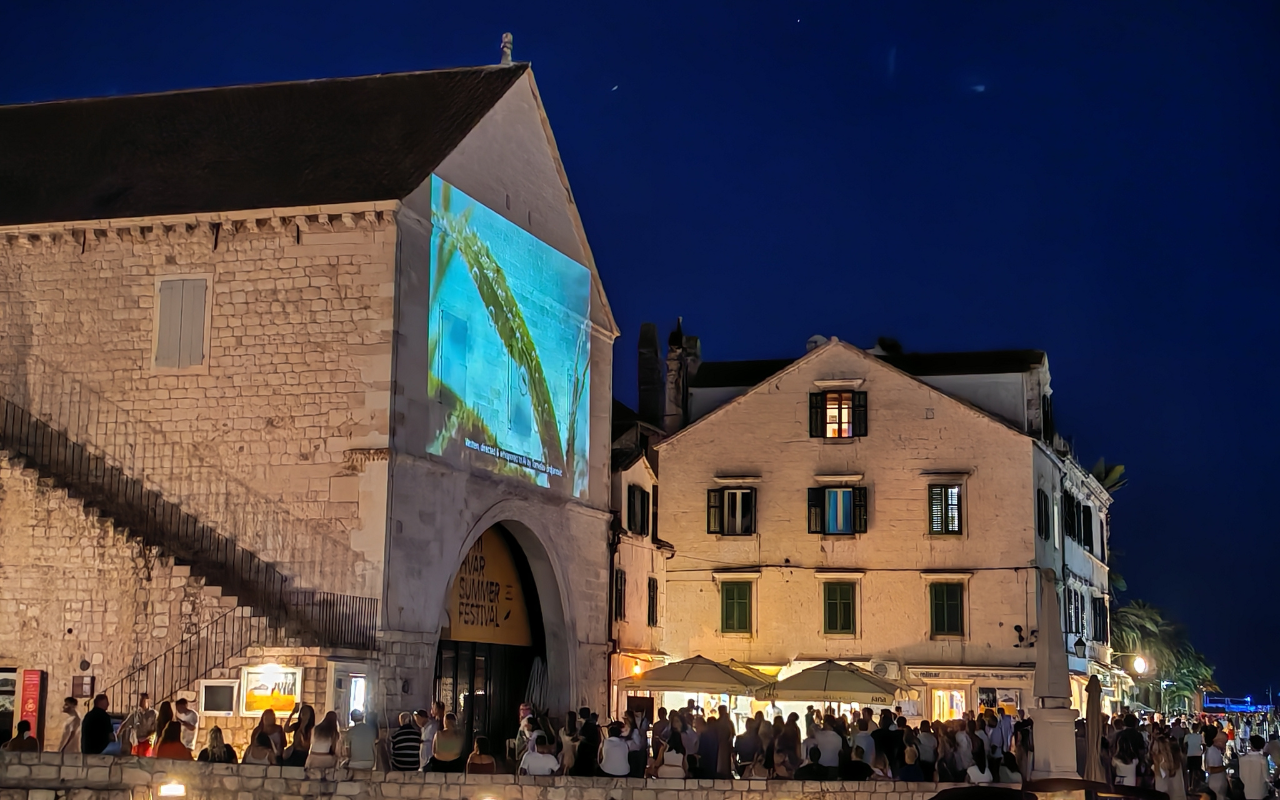
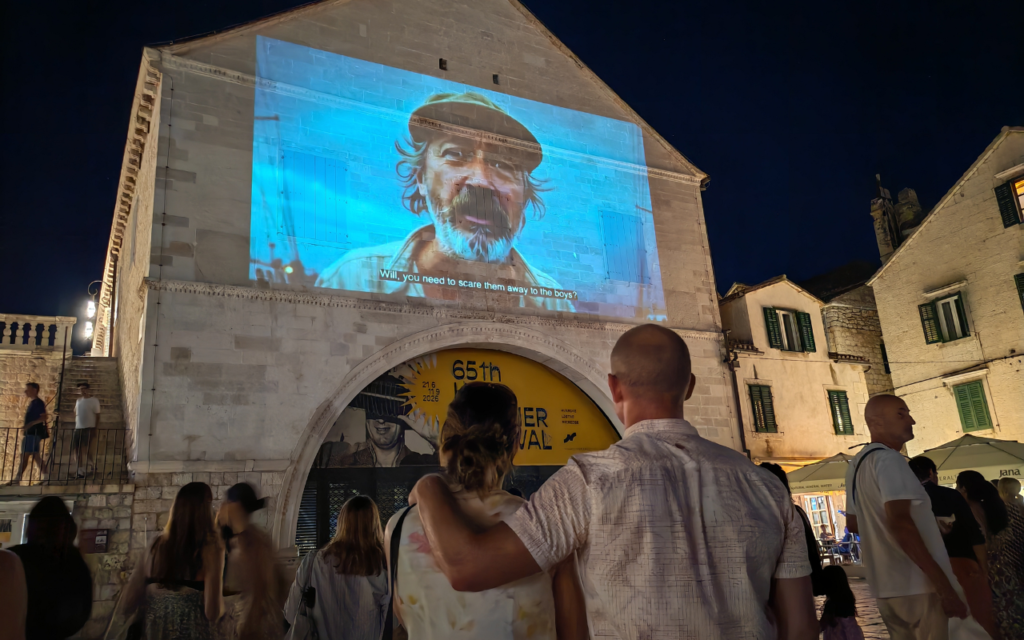
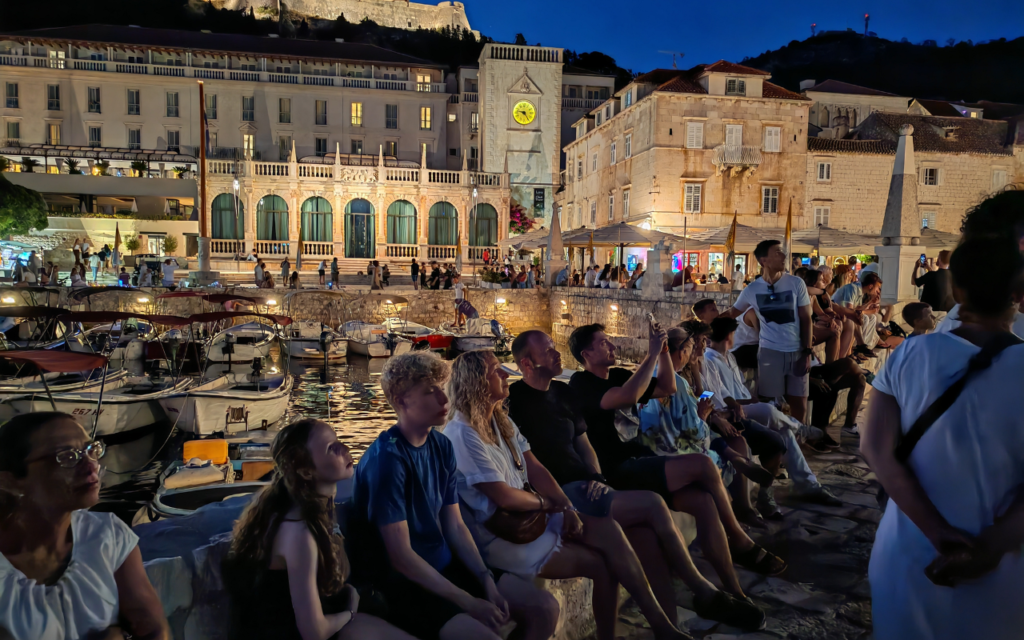
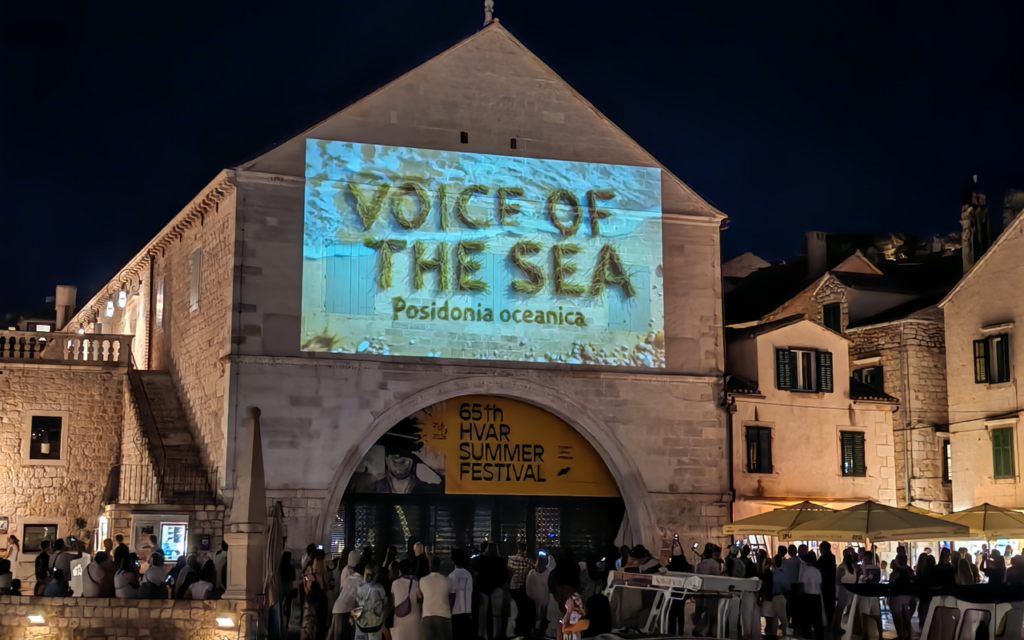
Last night, the historic Arsenal building in Hvar once again became a stage where the sea told its story. The light show Voice of the Sea – Posidonia oceanica, created by artist Tomislav Brđanović as part of the BIOPRESSADRIA project, brought together locals and visitors, inviting them to discover one of the Adriatic’s most important yet often overlooked inhabitants – Posidonia oceanica – through art, sound, and emotion.
– Last year, our goal was simply to introduce people to Posidonia. This year, we found that many already understand why it matters. Local residents came up to us saying they remembered the light show, recognised Posidonia, and understood why it deserves protection. For us, that’s perhaps the strongest proof that events like this truly make a difference, – said Zrinka Jakl, BIOPRESSADRIA Project Manager at Sunce.
Conversations that inspire hope
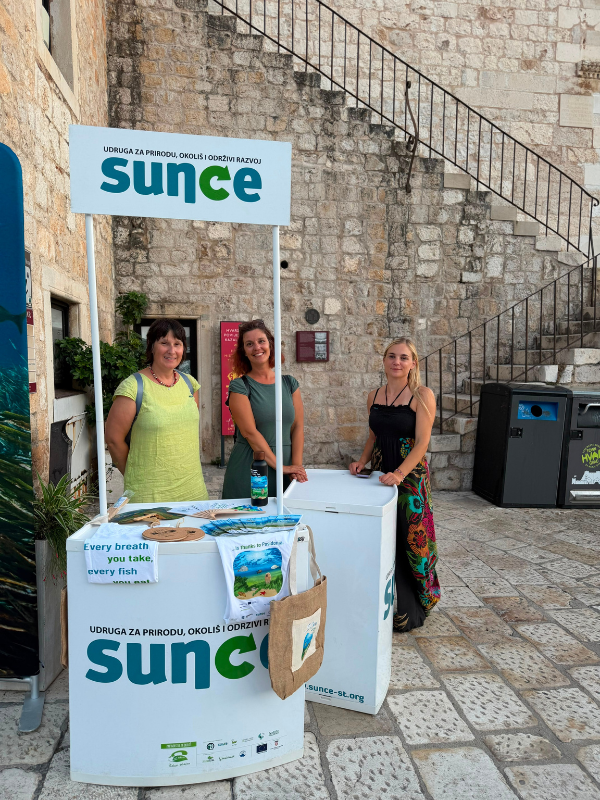
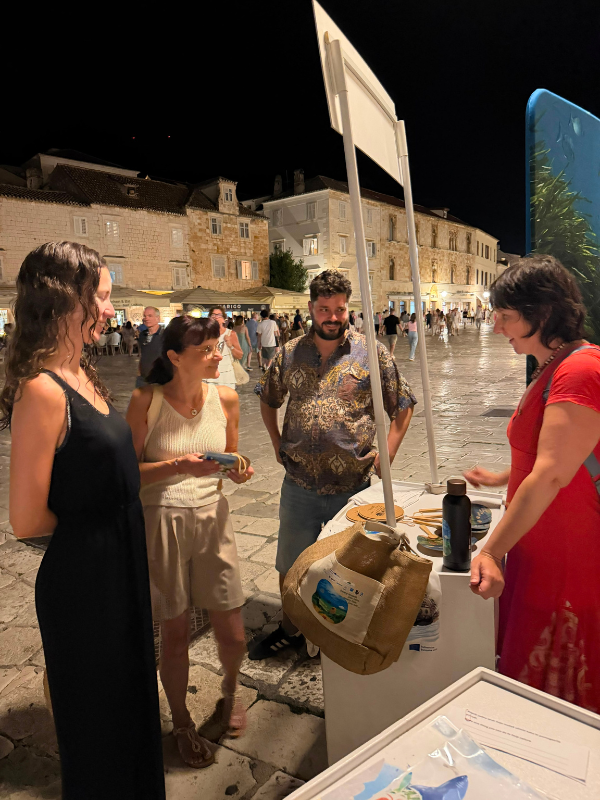
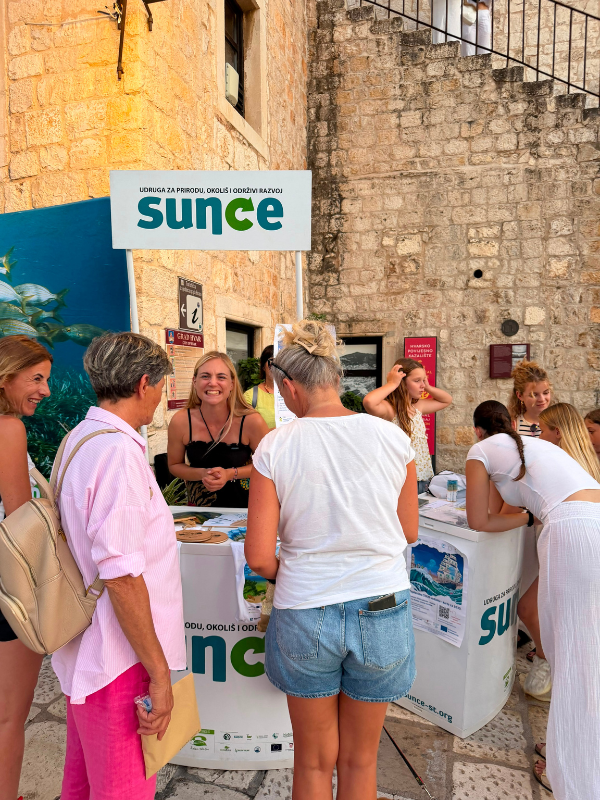
Throughout the evening, the striking light show encouraged many passers-by to stop and learn more. Visitors regularly stopped at Sunce’s information stand, where they shared their impressions and asked questions about Posidonia and marine conservation.
– The projection genuinely moved me. It presents the importance of Posidonia in such a simple yet powerful way and highlights how little most of us actually know about it. I don’t think people damage Posidonia intentionally – it usually happens because they simply aren’t aware. That’s why initiatives like this are so important. Every year, thousands of tourists and boaters visit Hvar, and many unknowingly cause long-term damage by anchoring on Posidonia meadows. The more people understand its role, the better our chances of protecting it, – said one visitor.
Another attendee explained how the light show had completely changed the way she viewed this remarkable seagrass.
– When we talk about nature conservation, Posidonia is rarely part of the conversation. It’s much easier to connect emotionally with dolphins or sea turtles than with a seagrass that many people mistake for ordinary seaweed. This projection changed that perspective. It reminded us that without Posidonia, there can be no healthy sea. Tonight, Posidonia gained a face and a story that will stay with me every time I see it.
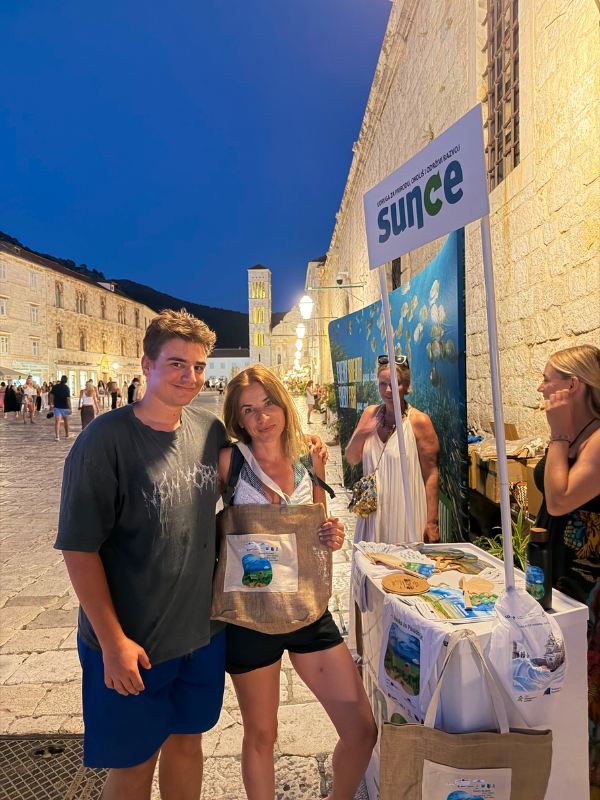
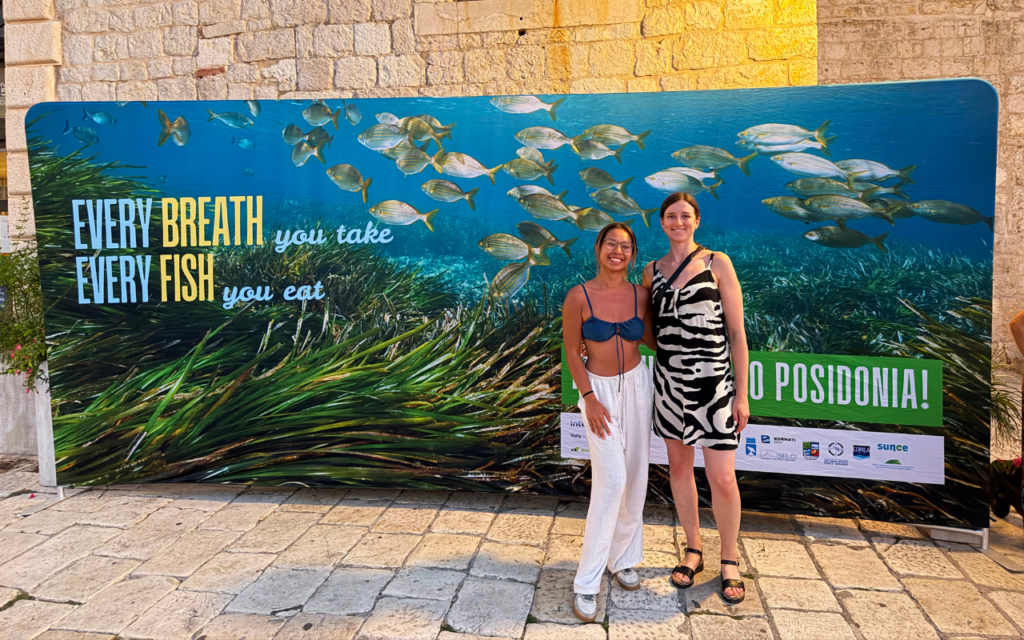
Many visitors also posed for photos in front of a Posidonia-inspired photo corner, subscribed to Sunce’s newsletter, and won prizes that will serve as lasting reminders of the evening.
‘From now on, I’ll always look for a sandy spot to anchor’
The Sunce team was especially encouraged by the spontaneous support they received from visitors.
– People approached us with thoughtful questions, shared their own experiences, and showed genuine interest in protecting the sea. Without us even asking for donations, several people chose to support our work financially. The amounts weren’t large, but they showed us that people are willing to support conservation efforts when they understand why they matter, – said Jakl.
One conversation, in particular, stood out to the organisers.
– After the event, a skipper came up to us and said, ‘From now on, I’ll always look for a sandy spot to anchor.’ Moments like that are exactly why we organise these events. We don’t expect behaviour to change overnight, but if we can inspire someone to make a better decision next time, we’ve achieved something meaningful. Last night, Hvar truly listened to the voice of Posidonia, – said Matea Špika, Senior Associate at Nature Conservation Department at Sunce.
Turning awareness into action
Although the light show once again captivated audiences, organisers noticed an interesting shift in the conversations this year.
Last summer, many visitors were fascinated by the fact that the light show had been created with the help of artificial intelligence. This year, however, several people raised questions about AI’s environmental impact.
– It’s fascinating to see how much the conversation has evolved in just one year. People are approaching artificial intelligence more critically and are increasingly interested in its environmental footprint. It shows how quickly public concerns change and reminds us that new technologies must be used responsibly, – said Karla Jelić, Assistant at Nature Conservation Department at Sunce.
She emphasised that the project’s core message remains unchanged.
– Our goal was for people to know about Posidonia. Today, we can say that many do. The next step is turning that knowledge into action. We want people to understand why designated mooring areas are important and why anchoring rules are essential for protecting our marine environment.
Learning through play
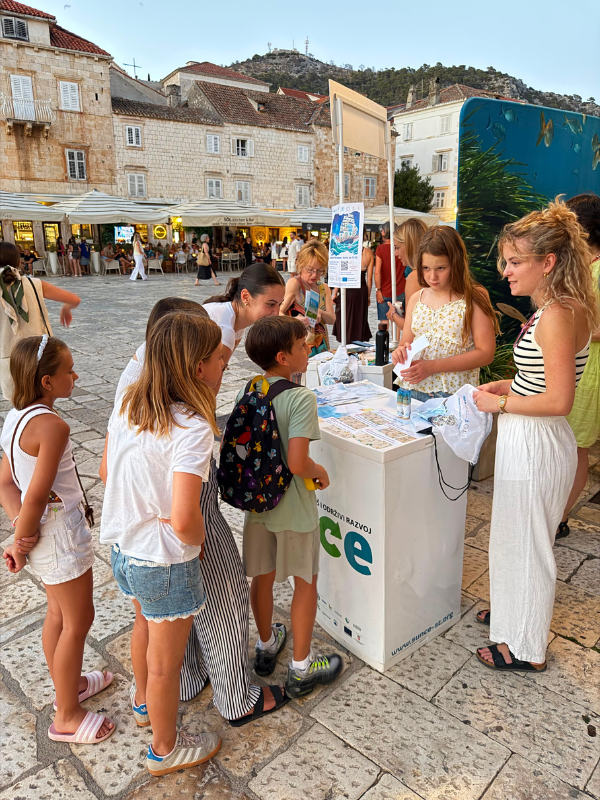
Visitors to the Sunce stand also had the opportunity to take part in a STEM outreach event organised as part of the project Sailing into STEM – A Map to 2030.
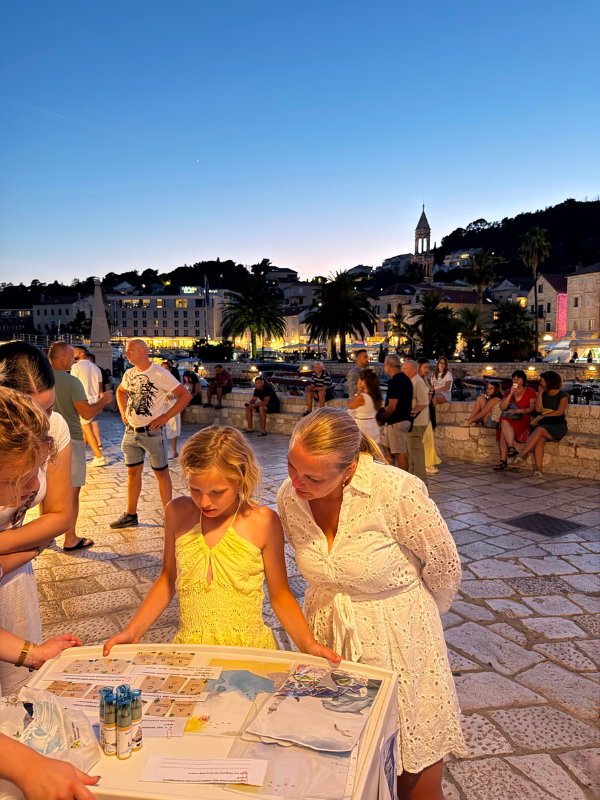
Through hands-on games, experiments, and interactive activities, children explored topics such as marine ecosystems, pollution, and nature conservation, earning small prizes along the way.
– Our STEM stand was undoubtedly the biggest attraction for our youngest visitors. Children enthusiastically completed activities, won prizes such as colouring pencils, reusable tote bags, and water bottles, and even encouraged their friends to join in. The stand was full of laughter and excitement throughout the evening, proving that the best way to teach important environmental values is through fun from an early age, – said Karla Penić, Assistant at Communications and Advocacy Department at Sunce.

The story continues on Vis
Following the successful event in Hvar, Sunce will present Voice of the Sea – Posidonia oceanica once again on 30 July in Komiža, on the island of Vis. The light show will be displayed on the façade of the Fishermen’s Museum (Komuna), alongside another audiovisual work, Adriatic Treasures, created as part of the ASPEH project.
The goal remains the same: to bring people closer to the hidden richness of the Adriatic Sea and to demonstrate that protecting our marine environment begins with understanding the extraordinary world beneath its surface.
