Did you know that the average European company still throws away an astonishing amount of waste that could become a strategic resource for achieving more sustainable and improved business results? While many still see the circular economy as a distant theory, on 24 and 25 February 2026 in Casarano, Italy, the foundations for real change were laid. The AWASTER project brought together key stakeholders to answer an important question: how can we stop throwing money out the window and start managing resources more intelligently?
The path to change: capacity-building training
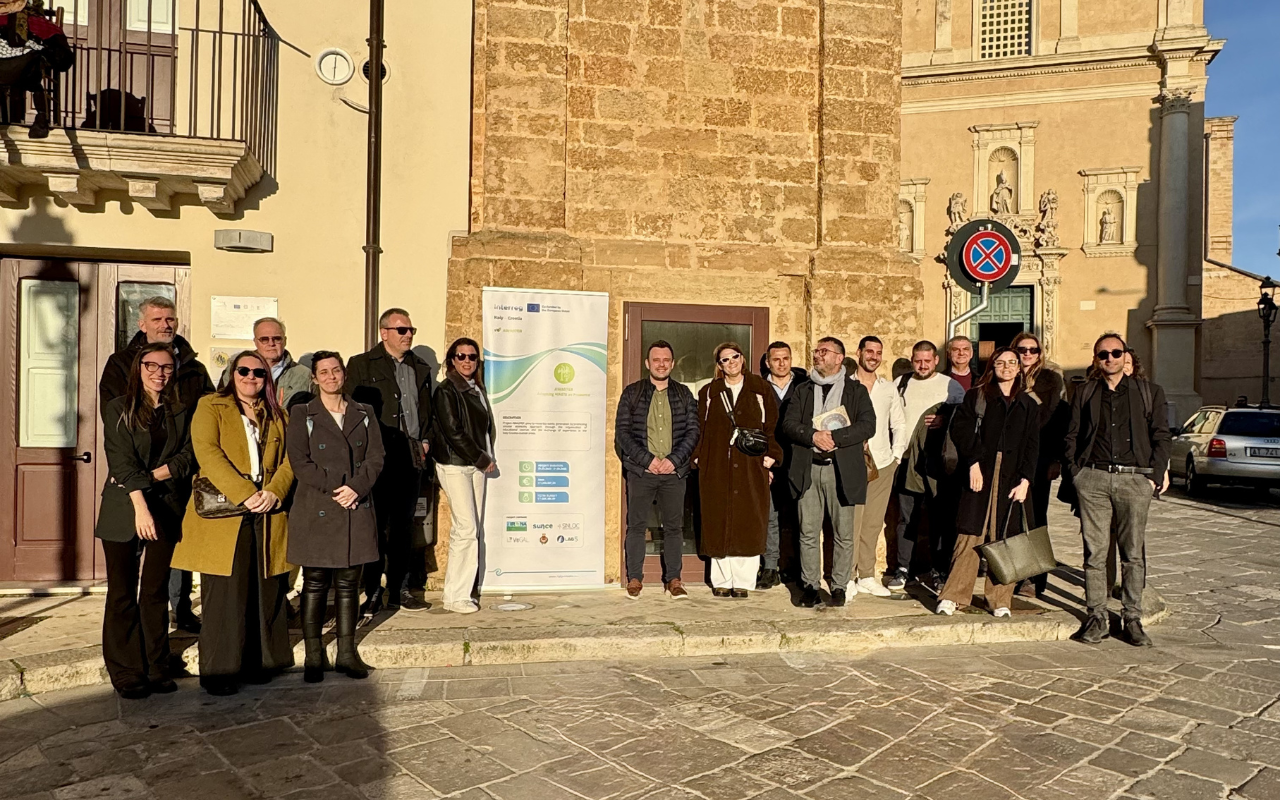
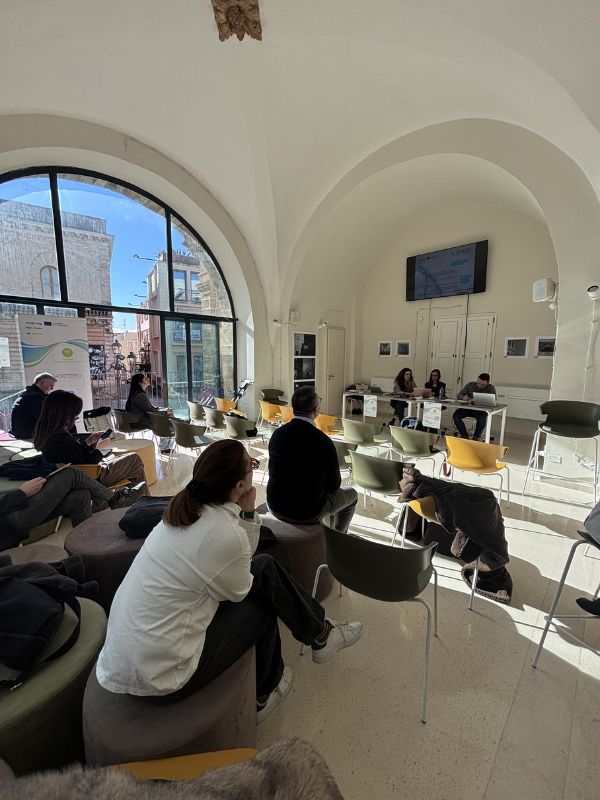
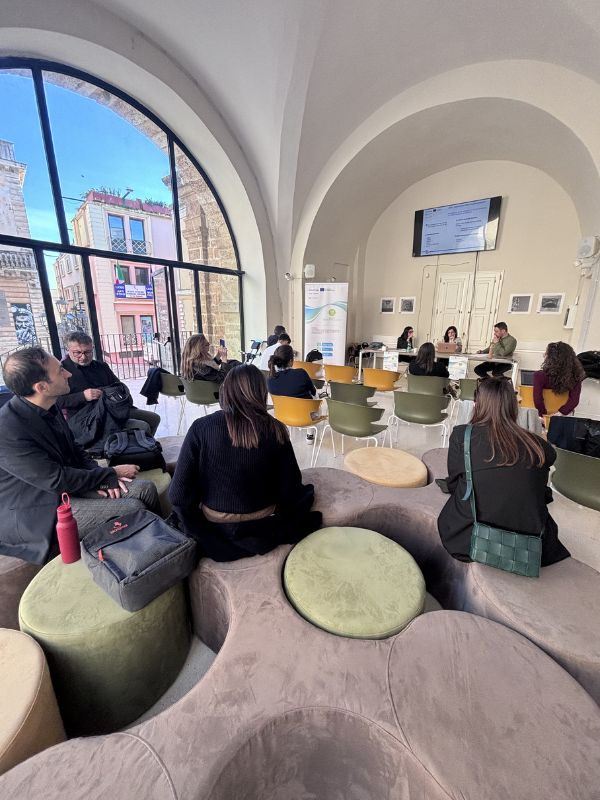
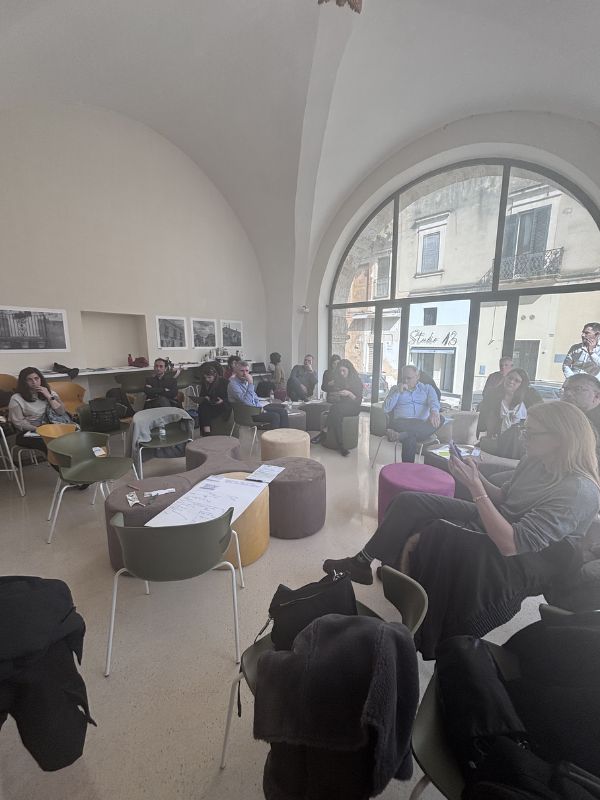
Before we can speak about adopting circular economy principles, we first needed to empower those who drive change: producer associations, development agencies, and utility companies. This was precisely the goal of the second AWASTER Training Session, held on 24 February in the historic setting of the Antico Sedile Comunale. The session presented topics that directly connect the circular economy with the business sector, along with practical examples for small and medium-sized enterprises.
Using the interactive World Café method, participants were divided into thematic groups. They shared their insights and reflections on questions such as: “Where do we lack knowledge?”, “How can we motivate companies to take action?”, “What barriers are holding us back?”, and “What can we learn from the experiences of partner countries?”
– Our goal is not only to educate, but to demonstrate that the circular economy is functional and profitable here and now. We want to provide everyone with the tools and knowledge to achieve this independently, – said Tea Kuzmičić Rosandić, Project Manager at Sunce.
Waste-free event: an event without waste
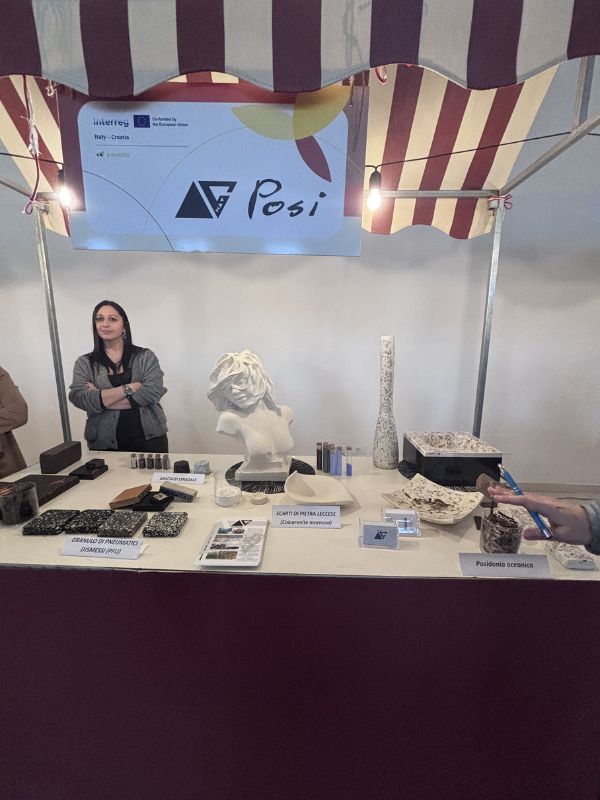
Many claim it is impossible to organize a public event without generating large amounts of waste. Casarano proved them wrong. The first “Waste-Free” event was held at the Ex Mercato Coperto venue. The host and project partner, the Municipality of Casarano, demonstrated what the theory presented during the training looks like in practice. They showed how public gatherings can be successfully organized with a minimal environmental footprint, promoting local products and eliminating single-use materials.
– Congratulations to the Municipality for organizing such an event. Unfortunately, public gatherings often leave piles of waste on the streets. We hope events like this will become the standard, – said one citizen attending the public event.
During the program, examples of good practice in the field of circular economy were presented, with a focus on material reuse, reduction of single-use plastics, responsible waste management, and the promotion of local and sustainable products. Participants had the opportunity to learn about concrete solutions and initiatives that can be applied within local communities and the business sector.
– Events like this show that sustainability is not an abstract concept, but a concrete practice capable of generating value for our territory. Casarano aims to play a leading role in the ecological transition that combines environmental protection, economic growth, and social cohesion. The active participation of citizens and businesses confirms that we are moving in the right direction, – emphasized the Mayor of Casarano, Pompilio Giovanni Ottavio De Nuzzo.
Technical and Steering Committee Meeting
While impressions from the workshops were still settling, the 4th Technical and Steering Committee Meeting was held on 24 and 25 February. On this occasion, project partners thoroughly reviewed the progress achieved so far and the activities implemented, and defined the work plan for the upcoming and final project period.
An internal interactive workshop focused on the dissemination of project activities was also held as part of the meeting.
– Our vision is that AWASTER does not end with the project itself. We have defined steps, target groups, and timelines that will ensure the lessons learned become a lasting standard in our regions. We want a community where the circular economy is synonymous with business success, – concluded Andrea Poldrugovac from IRENA – the Istrian Regional Energy Agency and lead partner of the AWASTER project.
The AWASTER project is focused on educating and supporting companies in adopting circular economy principles.