Every tourist season brings a large number of domestic and international boaters who come to enjoy the beauty of the Adriatic Sea. However, the growing number of vessels also places increasing pressure on the marine and coastal environment. The consequences of this pressure are clearly visible on the sea surface, where intensified maritime traffic and incidents of marine pollution have become common. There are also other, less visible impacts of nautical tourism, hidden beneath the surface.
The high density of vessels during the tourist season generates underwater noise, increases greenhouse gas emissions, reduces seawater quality, and results in anchoring within Posidonia oceanica seagrass meadows. Such anchoring has a devastating impact on this exceptionally important and strictly protected species, as well as on the entire marine ecosystem.
What is the actual pressure of anchoring on Posidonia meadows in Croatia?
The results of detailed satellite monitoring of vessel distribution conducted as part of the Interreg BIOPRESSADRIA project in 2023 and 2025 show that, depending on the location, between 25% and 65% of vessels were anchored directly within Posidonia oceanica meadows. The study covered Kornati National Park, the Pakleni Islands, and ecological network sites in Dubrovnik-Neretva County, where Posidonia is a designated habitat of conservation importance.
The proportion of vessels anchored on Posidonia meadows was lower in areas with a higher level of protection and established eco-moorings, such as Kornati National Park. In contrast, the proportion was significantly higher in ecological network sites such as the Pakleni Islands and Badija.
One of the most effective ways to reduce anchoring pressure is the installation of ecological moorings. But what exactly are eco-moorings, how do they differ from conventional mooring systems, and how do they contribute to marine conservation?
Conventional moorings an unsustainable tradition
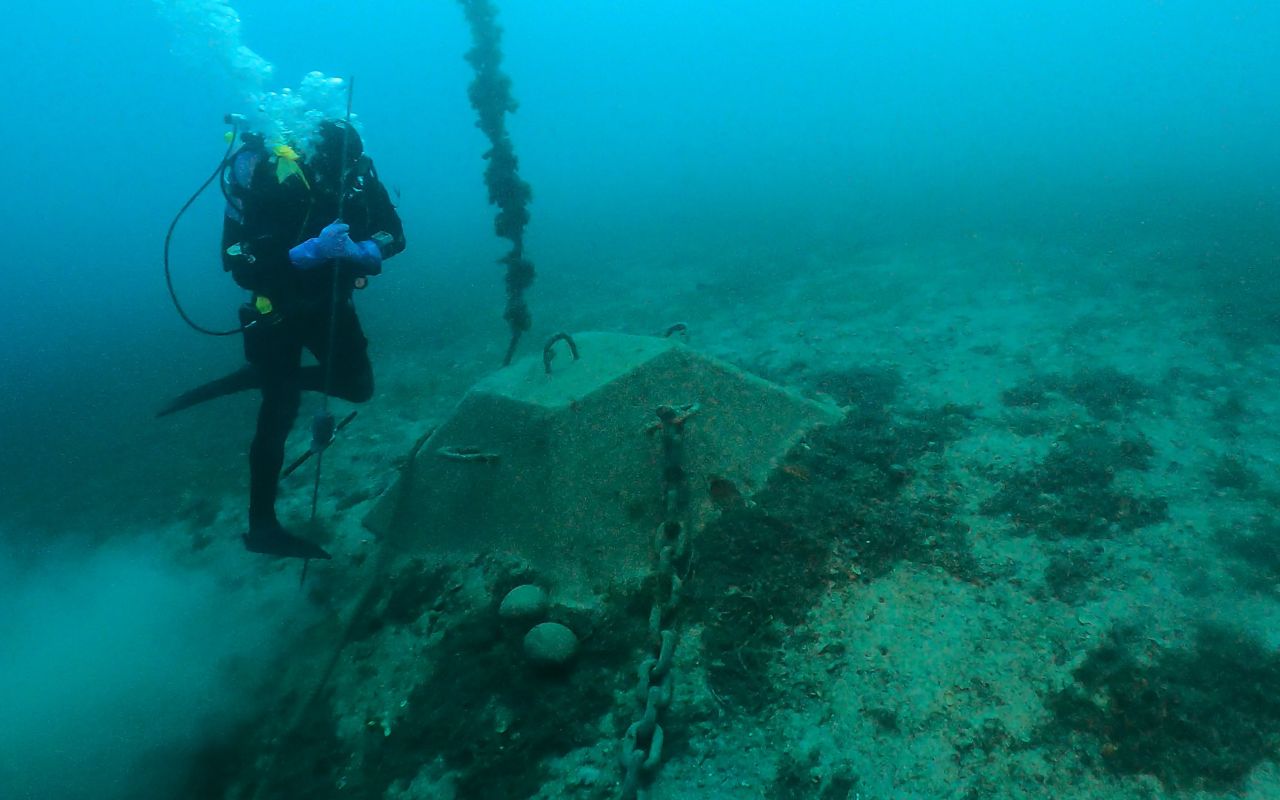
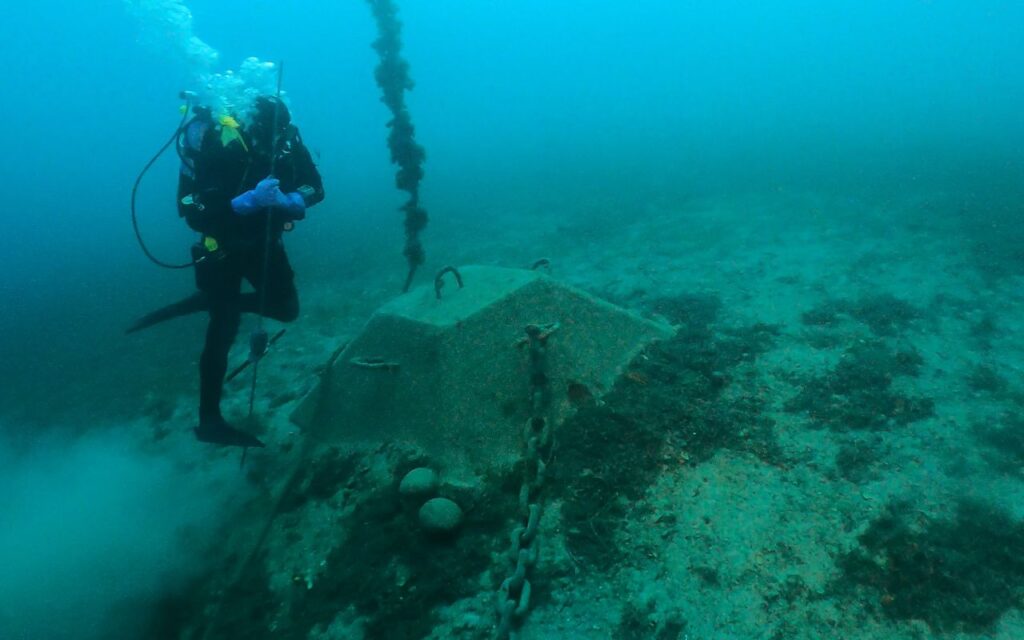
Traditional mooring systems typically consist of a concrete or stone block (corpo morto) placed on the seabed, connected to a heavy ground chain, rope, and a surface buoy. The concrete block serves as the anchor point for the buoy, to which boaters secure their vessels.
Although these systems have been used for decades, their long history does not necessarily make them the best solution. On the contrary, they have numerous negative impacts on the marine environment. Large concrete blocks occupy substantial areas of the seabed, destroying all marine organisms beneath them.
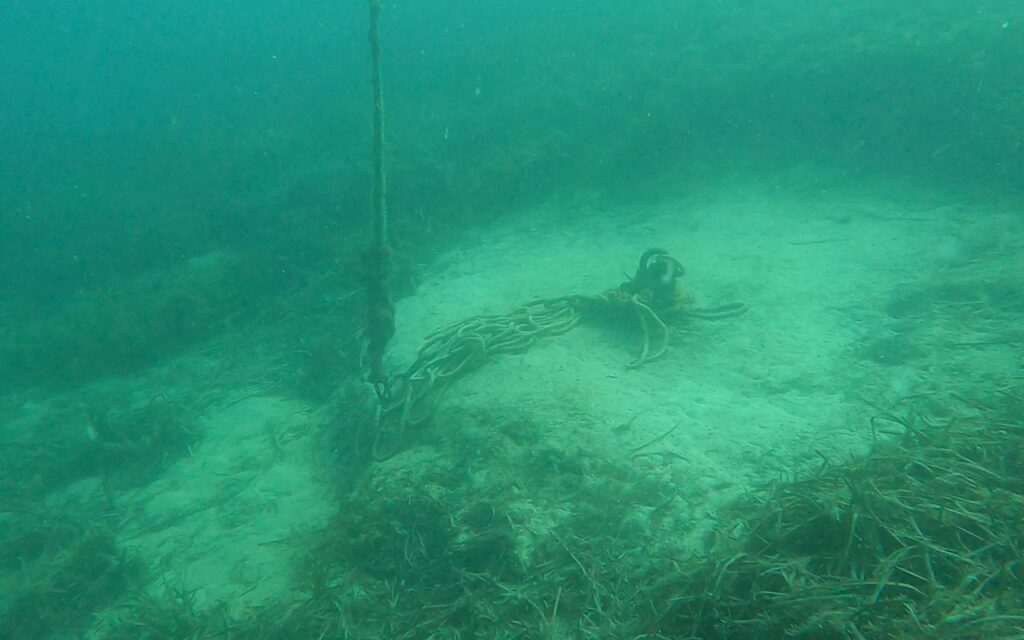
Furthermore, due to their smooth surface and chemical composition, they generally provide poor substrate for the settlement of new marine organisms. Conventional moorings are usually equipped with heavy ground chains attached directly to the concrete block, with the chain resting on the seabed. As moored vessels move under the influence of wind, currents, and waves, the chain drags across the seabed, scraping away marine habitats and creating barren patches.
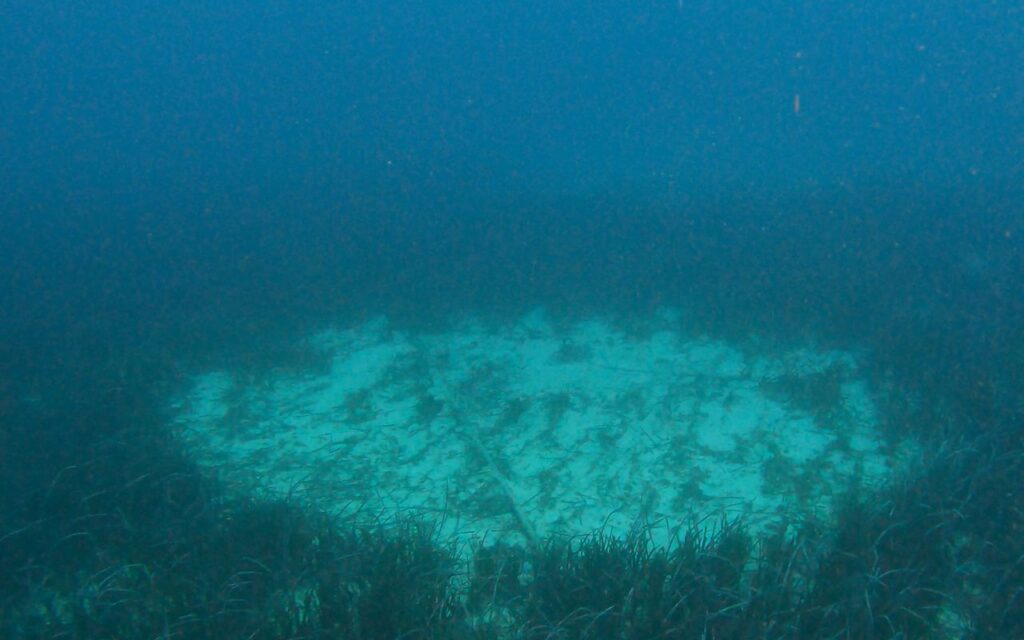
The greatest environmental impact occurs when conventional mooring systems with concrete blocks are installed within Posidonia oceanica meadows. The resulting damage is known as the halo effect, referring to the circular barren areas that develop around the mooring system. Because Posidonia regenerates extremely slowly, recovery takes decades, making such damage effectively permanent from an ecological perspective.
The environmental impacts of conventional mooring systems also extend to their manufacture, installation, and eventual removal. Producing the concrete blocks requires substantial quantities of cement, the manufacture of which carries a significant environmental footprint. The blocks must then be transported and installed on the seabed using heavy cranes and diving lift vessels. Their considerable weight and size require heavy machinery, resulting in increased fuel consumption and associated air pollution.
These mooring systems also have a limited service life and are typically installed under fixed-term concessions. Although the concrete itself can theoretically be recycled, removing the blocks from the seabed is an extremely complex operation. In fact, removal is often more difficult and costly than installation due to the adhesion forces that develop between the underside of the concrete block and the seabed over time. Consequently, abandoned concrete blocks are, in most cases, left on the seabed, where they become permanent marine debris. The same often applies to associated ropes, chains, and buoys.
Because of their massive size, concrete blocks and heavy chains create an impression of strength, stability, and safety. In reality, however, their holding capacity is often lower than that of modern ecological mooring systems. Due to buoyancy, the effective submerged weight of a concrete block can be reduced by as much as 40%.
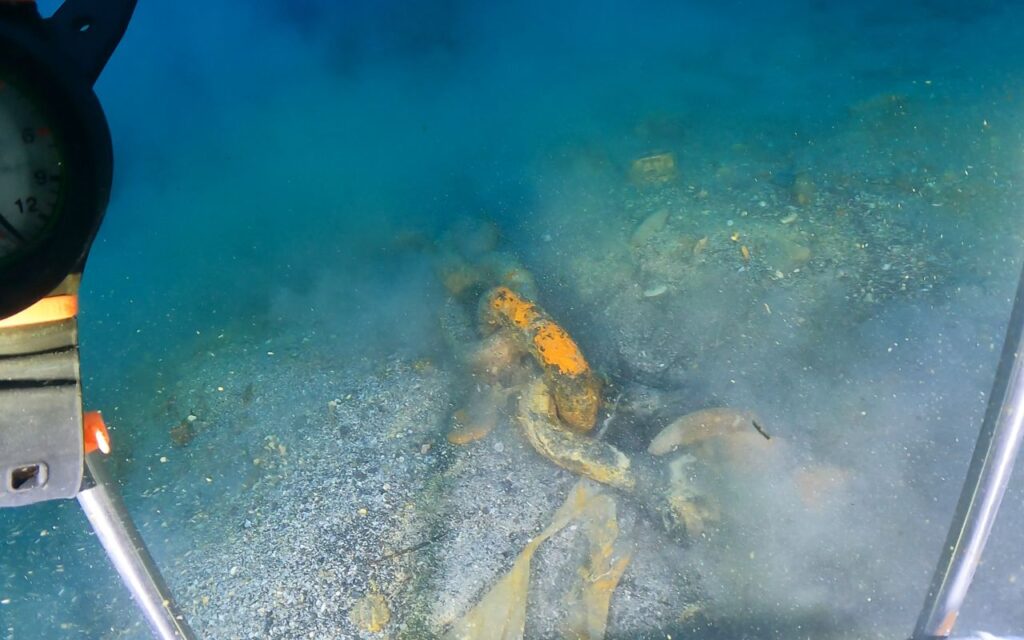
Under the influence of currents and wave action, concrete blocks may also slide across soft sediments, causing additional damage to the seabed while increasing maintenance costs. Metal fittings used to secure chains and ropes are continuously exposed to seawater, making them susceptible to corrosion and structural failure. Conventional mooring systems also contain a relatively large number of metal components exposed to harsh marine conditions.
Ecological mooring systems, an advanced solution
An ecological mooring is a designated mooring area equipped with a series of environmentally friendly permanent mooring lines that enable vessels to berth safely without causing damage to the seabed.
In practice, an eco-mooring is an advanced system that replaces the traditional concrete block and ground chain with a combination of a geotechnical anchor, an elevated ground line, and a mooring line, which may also be designed as an elastic line. The system includes a properly sized submerged buoy (known as a riser buoy) that keeps the ground line suspended above the seabed, together with a surface buoy fitted with a short mooring pendant for securing vessels.
This design ensures that the entire installation remains suspended within the water column, with the only contact with the seabed occurring at the point where the geotechnical anchor is installed. As a result, the number of metal connection components exposed above the sediment to corrosion and mechanical loads is kept to a minimum.
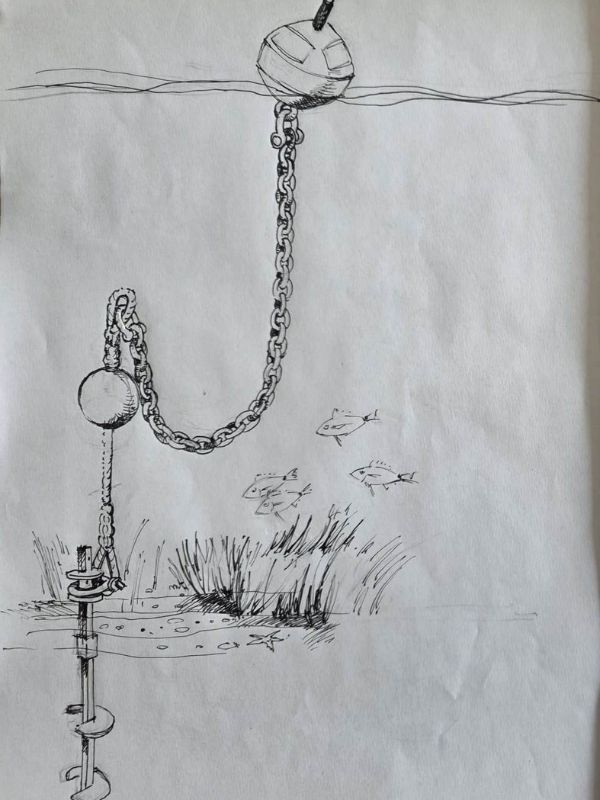
Today, the market offers a wide range of eco-friendly geotechnical anchors and elastic mooring lines equipped with specially designed surface and submerged buoys, allowing different solutions to be selected according to seabed type, vessel size, and the investor’s financial capacity. Geotechnical anchors are available for installation in rock, sand, silt, and even directly within the rhizomes of Posidonia oceanica.
By connecting multiple geotechnical anchors using steel connecting beams, it is also possible to create mooring systems suitable for large vessels. Modern elastic mooring lines optimize the required swinging area within a mooring field, reducing it by up to 40% compared with conventional systems, thereby increasing the efficiency of vessel layout and the overall capacity of the mooring area.
A comprehensive approach to establishing ecological moorings
In addition to selecting appropriate materials, several key prerequisites must be met to ensure the successful establishment of an ecological mooring field. The first is careful spatial planning, including determining the number and size of vessels as well as their optimal distribution within the mooring area. Equally important is conducting a detailed seabed survey to determine the type, composition, and thickness of the sediment layer, as this is essential for selecting the most suitable type of geotechnical anchor.
Anchor installation should be carried out by experienced contractors who, in addition to ensuring high-quality workmanship, apply installation methods that minimize environmental impacts. Professional supervision during installation is another important factor for successful implementation. To ensure the long-term safety and reliability of the mooring field, regular maintenance is also essential. This includes systematic inspections of anchors, mooring and ground lines, buoys, and all other system components to identify and address any signs of damage, wear, or vandalism in a timely manner.
An increasing number of experienced professionals now specialize in the planning, installation, and management of ecological mooring systems. In addition to their environmental and technical advantages, ecological moorings are also economically competitive. They can be supplied with quality certifications and long-term warranties, providing the basis for obtaining insurance coverage and ensuring greater safety for users.
Besides having only a minimal impact on the marine ecosystem during installation and operation, eco-mooring systems are also designed with sustainability in mind throughout their entire life cycle. From the selection of materials and manufacturing processes to installation, durability, and eventual removal, eco-moorings outperform conventional mooring systems in virtually every respect. For this reason, they are increasingly referred to as advanced mooring systems (AMS).
Many modern geotechnical anchors are fully reversible, meaning they can be easily removed, recovered from the sea, recycled, or reinstalled at another location. Likewise, modern mooring lines and buoys are manufactured from high-quality, long-lasting materials that are resistant to corrosion and marine fouling, with recycling programs often provided by the manufacturers themselves. Consequently, ecological mooring systems have a significantly smaller environmental footprint than conventional moorings, both locally and globally.
The importance of education
Although the advantages of eco-moorings are becoming increasingly well understood, their wider implementation still depends on educating all relevant stakeholders, including public authorities, managers of protected areas, mooring concession holders, and recreational boaters. For this reason, growing attention is being given to professional training and the exchange of knowledge on the planning, installation, and management of eco-mooring systems, which are among the most effective tools for reducing pressure on sensitive marine habitats.
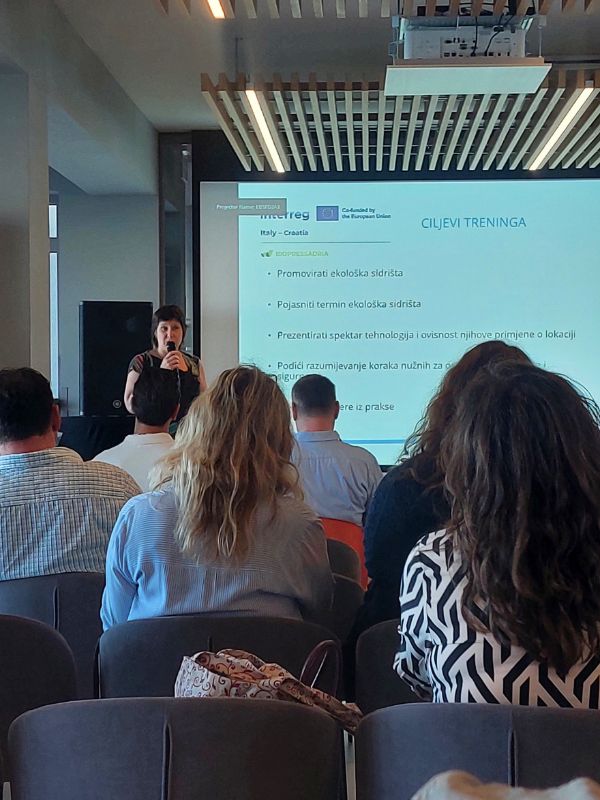
As part of the BIOPRESSADRIA project, Sunce participated at professional training courses on ecological mooring systems in Dubrovnik in march and in Murter in june 2026. The training brought together representatives of government ministries, county authorities, public institutions responsible for managing protected areas, non-governmental organizations, mooring concession holders, and individuals interested in the conservation of the Adriatic Sea.
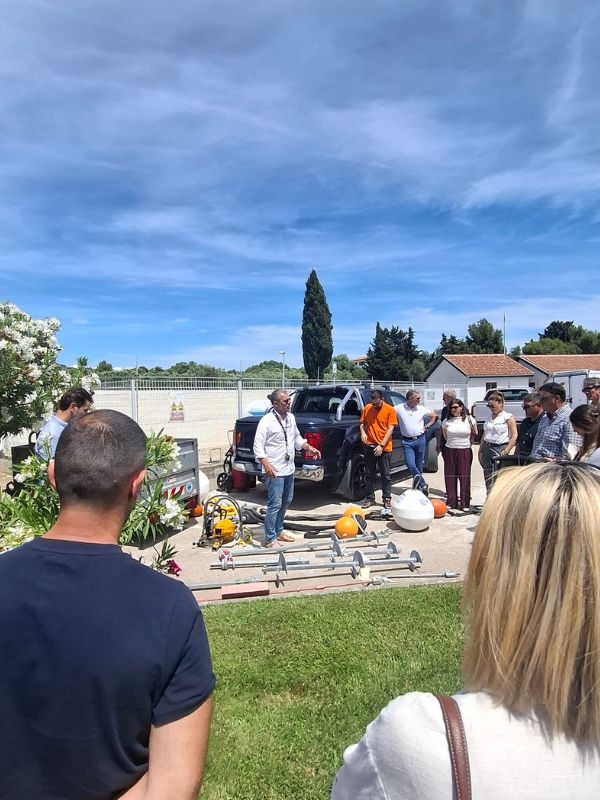
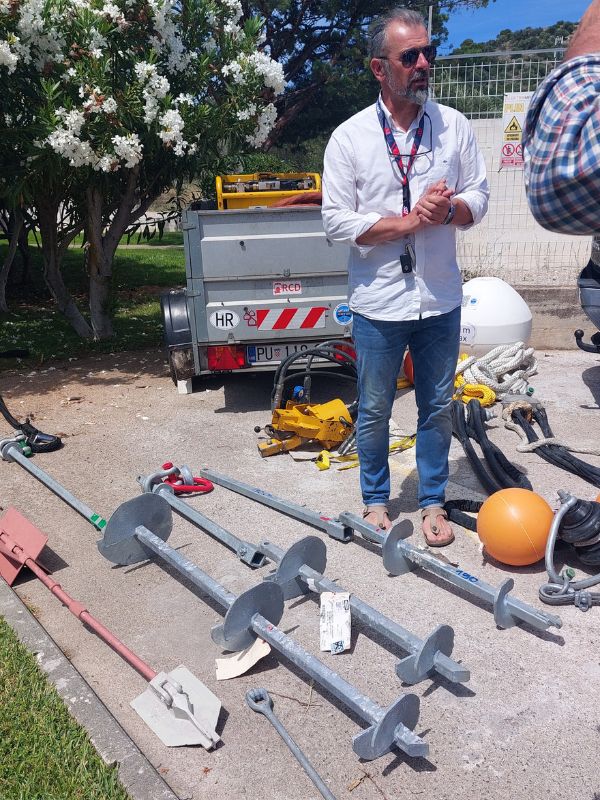
Participants learned about the planning and design of nautical mooring fields, the application of eco-mooring technologies, and the management, inspection, and maintenance of mooring systems, with particular emphasis on installations within Posidonia oceanica meadows and other sensitive marine habitats. Representatives of eco-anchor, mooring line, and buoy manufacturers also presented their products and led an interactive workshop in which participants designed an ecological mooring field.
Training initiatives of this kind raise awareness of the pressures that nautical tourism places on the marine environment while also providing practical, sustainable solutions. Although conventional mooring systems still predominate throughout the Adriatic, growing interest in eco-moorings demonstrates their key role in the future of sustainable nautical tourism.
The installation of eco-moorings must be accompanied by effective regulations restricting anchoring over Posidonia oceanica meadows, robust enforcement at sea, and continuous education of all marine users. Only through this integrated approach can we preserve these invaluable habitats and safeguard the long-term productivity and ecological integrity of the Adriatic Sea.
